ADHD Focus Music
Ambient sounds designed to help you concentrate.
Why Focus Music Helps ADHD
For people with ADHD, silence can be distracting. The brain seeks stimulation, and without it, attention wanders. Ambient focus music provides just enough background stimulation to keep your brain engaged without pulling focus from your work.
Fills the silence
The ADHD brain craves stimulation. Music provides it without requiring attention, reducing the urge to seek other distractions.
Masks distractions
Background music creates a consistent audio environment, making sudden noises and interruptions less likely to break your focus.
Dopamine boost
Music triggers dopamine release, something ADHD brains are often low on. This can improve mood and motivation for boring tasks.
Creates a signal
Using the same music for focus creates a Pavlovian response. Your brain learns to associate the sounds with work mode.
Focus levels by audio condition
How different audio environments affect focus for ADHD vs neurotypical individuals.
Best Focus Sounds for ADHD
Not all music helps focus. Lyrics and complex melodies can compete for attention. The best focus music for ADHD is predictable, atmospheric, and undemanding.
Ambient / drone
Best for deep workSteady, atmospheric textures that create a sonic blanket without demanding attention.
Lo-fi beats
Great for studyingRepetitive, low-energy rhythms that provide gentle stimulation.
Nature sounds
Good for calmingRain, waves, forest ambience. Natural and non-intrusive.
White / brown noise
Maximum maskingBroadband noise that blocks out distractions effectively.
What to avoid
- Lyrics. Words compete for language processing and can be distracting.
- Complex melodies. Your brain will try to follow them.
- Unpredictable music. Sudden changes break concentration.
- Favourite songs. Too engaging. Your brain will want to sing along.
Pomodoro Technique + Music
The Pomodoro Technique breaks work into 25-minute focused sessions with short breaks. Combined with focus music, it creates an ideal environment for ADHD brains.
Time-boxing reduces overwhelm
25 minutes feels manageable. You're not committing to hours of work, just one short session. This makes it easier to start.
Built-in breaks
Your ADHD brain craves variety. Scheduled breaks give you permission to step away, reducing the urge to seek distractions mid-task.
External accountability
The visible timer creates urgency and accountability. It's harder to drift when you can see time passing.
Music as a ritual
Starting focus music becomes a signal to your brain: it's time to work. Over time, this conditioning makes it easier to enter focus mode.
Distraction resistance over time
Focus music helps maintain attention across multiple Pomodoro sessions.
Tips for Using Focus Music with ADHD
- Start music before working. Let it signal "focus time" to your brain.
- Keep volume low. Loud enough to hear, quiet enough to fade into background.
- Stick with one station. Avoid the temptation to browse and change tracks.
- Use headphones. Block external distractions and improve immersion.
- Pair with Pomodoro. Structure plus music is more effective than either alone.
- Be consistent. Use the same music for focus to build the association.
Research on music and ADHD shows promising results. A 2020 study found that background music improved attention and reduced hyperactivity in children with ADHD. Multiple studies show ambient music can help adults with ADHD maintain focus on repetitive or boring tasks.
The key is finding what works for you. Some people with ADHD prefer complete silence for certain tasks, while others need constant audio stimulation. Experiment with different sounds and pay attention to when you're most productive.
Built for ADHD brains
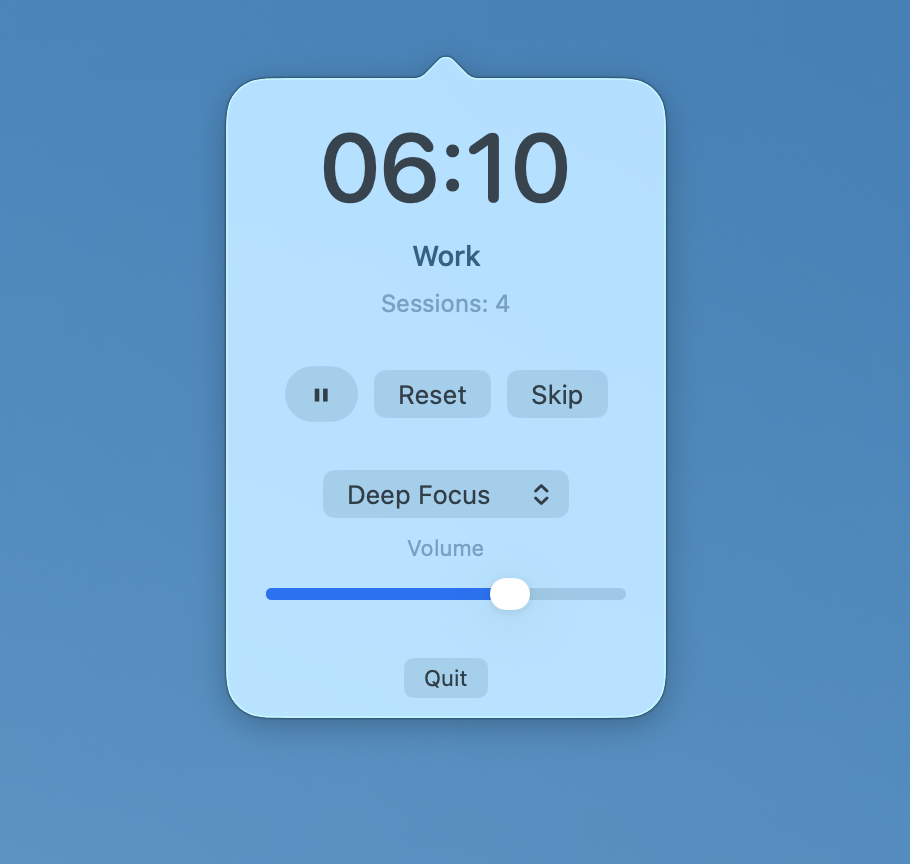
Tomatoes combines Pomodoro timing with curated ambient music. No distracting interfaces, just a simple menu bar timer.
Try For Free