Best Frequency for Studying
Understanding Hz, brain waves, and which frequencies help you focus
What Are Focus Frequencies?
Your brain produces electrical patterns called brain waves, measured in Hertz (Hz). Different frequencies correspond to different mental states—from deep sleep to high alertness. Certain sound frequencies can help guide your brain toward a focused, productive state.
Delta Waves
0.5-4 HzDeep sleep, healing, and regeneration
Theta Waves
4-8 HzLight sleep, meditation, creativity, and insight
Alpha Waves
8-13 Hz — Best for FocusRelaxed alertness, calm focus, optimal for learning
Beta Waves
13-30 HzActive thinking, problem-solving, alertness
Gamma Waves
30-100 HzPeak concentration, cognitive processing, memory
Brain Wave Frequency Ranges
Best Frequencies for Different Tasks
Different frequencies work better for different types of cognitive work. Here's a guide to matching frequencies to your task:
10 Hz (Alpha)
Ideal for learning, reading, and information retention. Promotes a relaxed but alert state perfect for absorbing new material.
12 Hz (Alpha)
Great for sustained reading and studying. Balances focus with calm, reducing anxiety during long study sessions.
14-18 Hz (Low Beta)
Best for active problem-solving, coding, and analytical work. Increases alertness and processing speed.
40 Hz (Gamma)
For deep concentration and memory consolidation. Research links 40 Hz to enhanced cognitive function and recall.
Frequency Effectiveness by Task
How different frequencies perform across cognitive tasks
How to Use Focus Frequencies
There are several ways to incorporate focus frequencies into your work routine:
Binaural Beats
Two slightly different frequencies played in each ear. Your brain perceives the difference as a "beat" at the target frequency. Requires headphones for the effect to work.
Isochronic Tones
Regular pulses of sound at the target frequency. Can be used with speakers or headphones. Some find these more effective than binaural beats.
Ambient Music
Some ambient music naturally incorporates frequencies that promote focus without requiring specific Hz targeting. Often more pleasant for long work sessions.
Binaural Beats Effect Over Time
Focus and relaxation levels build gradually over a listening session
Tips for Best Results
- • Give it time — Effects typically take 10-15 minutes to kick in
- • Use headphones — Required for binaural beats, recommended for others
- • Keep volume moderate — Too loud can be distracting and fatiguing
- • Be consistent — Using the same audio cue helps train your brain
- • Experiment — What works varies between individuals
Research on audio frequencies and focus is ongoing. While some studies show promising results for binaural beats and specific frequencies, the effects vary between individuals. What works best is often personal.
For many people, simple ambient music without specific frequency targeting works just as well. The key is consistency: using the same audio cue to signal "focus time" to your brain creates a Pavlovian response over time.
Skip the Frequency Hunting
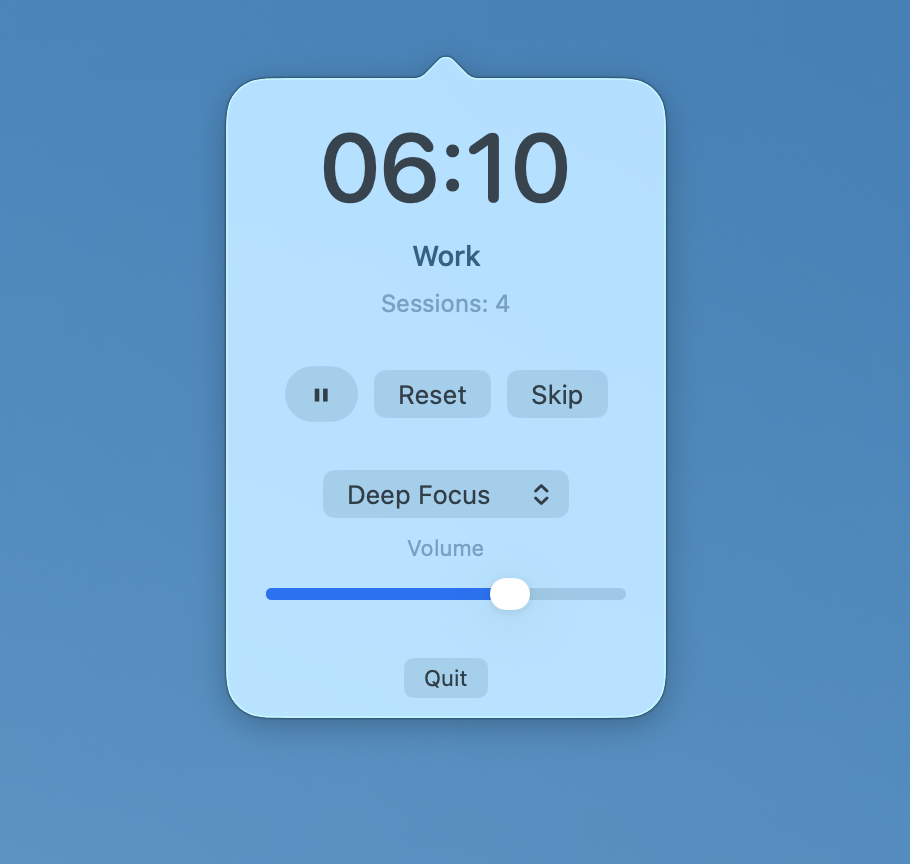
Tomatoes includes curated ambient music designed for focus—no need to search for the right Hz yourself.
Try For Free