Blog
Articles about focus, productivity, and the science of concentration.
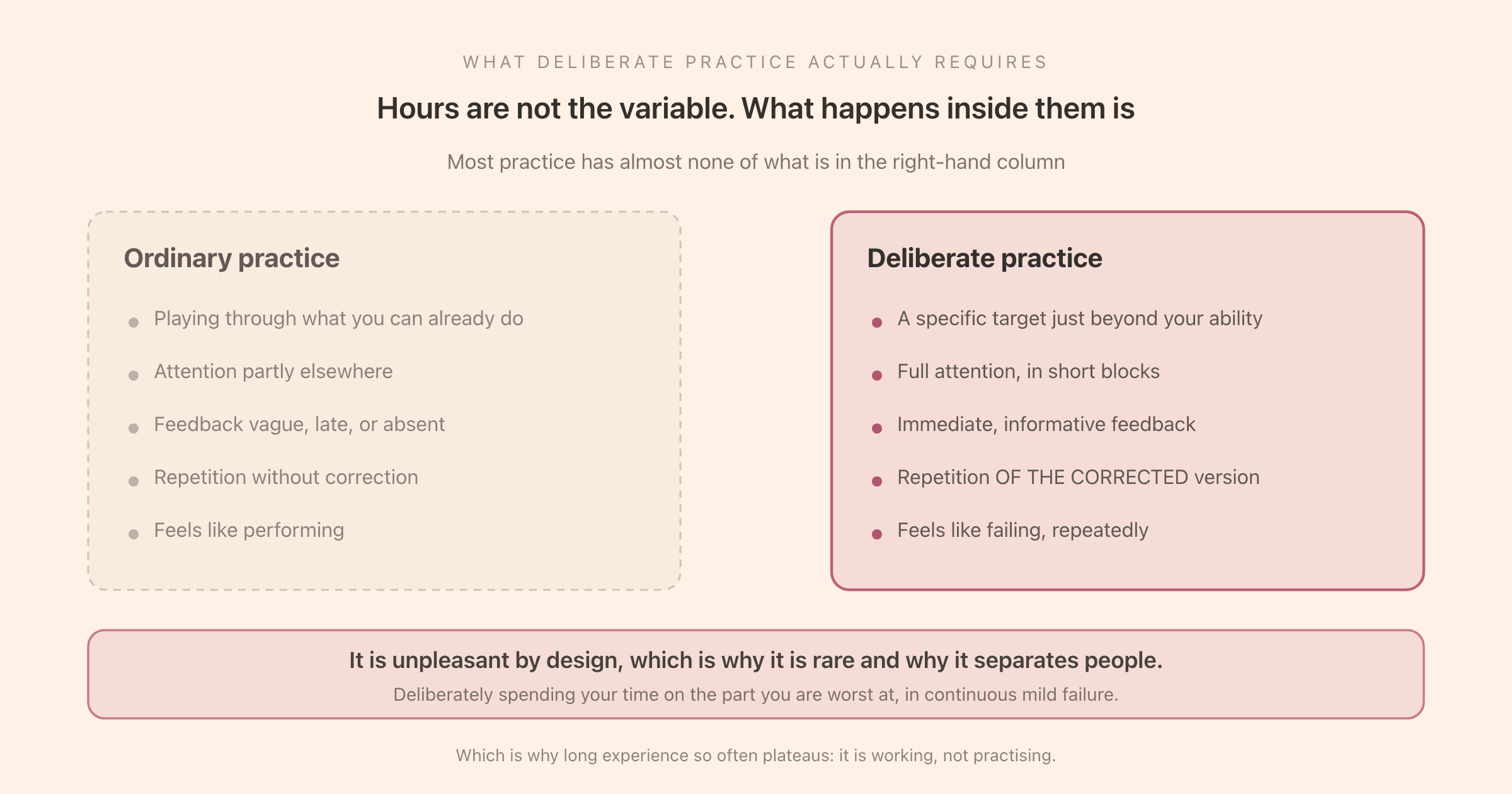
Expertise: What Actually Builds Skill, and Why the 10,000 Hour Rule Is Wrong
Perception: Why You Do Not See What Is There, and What That Means for Attention
Perception is not a recording of the world, it is your brain's best guess about it. How prediction works, what inattentional blindness and change blindness show, and why attention decides what you consciously see.
Learning Styles: Why the Visual, Auditory and Kinaesthetic Idea Does Not Hold Up
Almost everyone believes they have a learning style. The evidence does not support it. What the theory actually claims, what the tests found, why the belief persists, and what genuinely improves learning instead.
Curiosity: What It Actually Is, Why It Makes Things Stick, and How to Get More of It
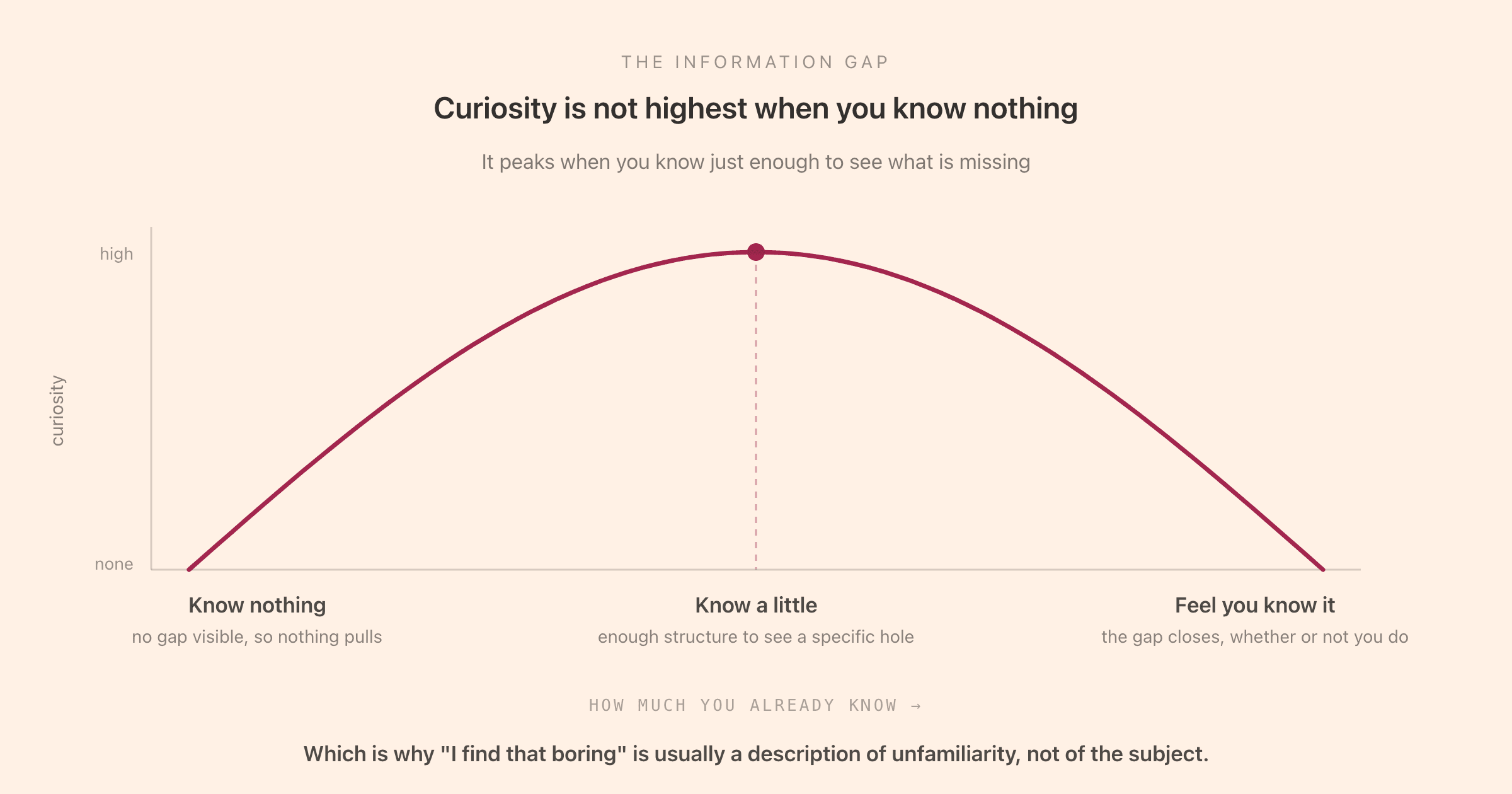
Curiosity is the pull towards information you do not have. The information-gap theory, the two kinds of curiosity, the research showing curiosity improves memory even for unrelated things, and how to make dull material interesting.
Boredom: Why It Feels So Bad, What It Is For, and Why Your Phone Makes It Worse
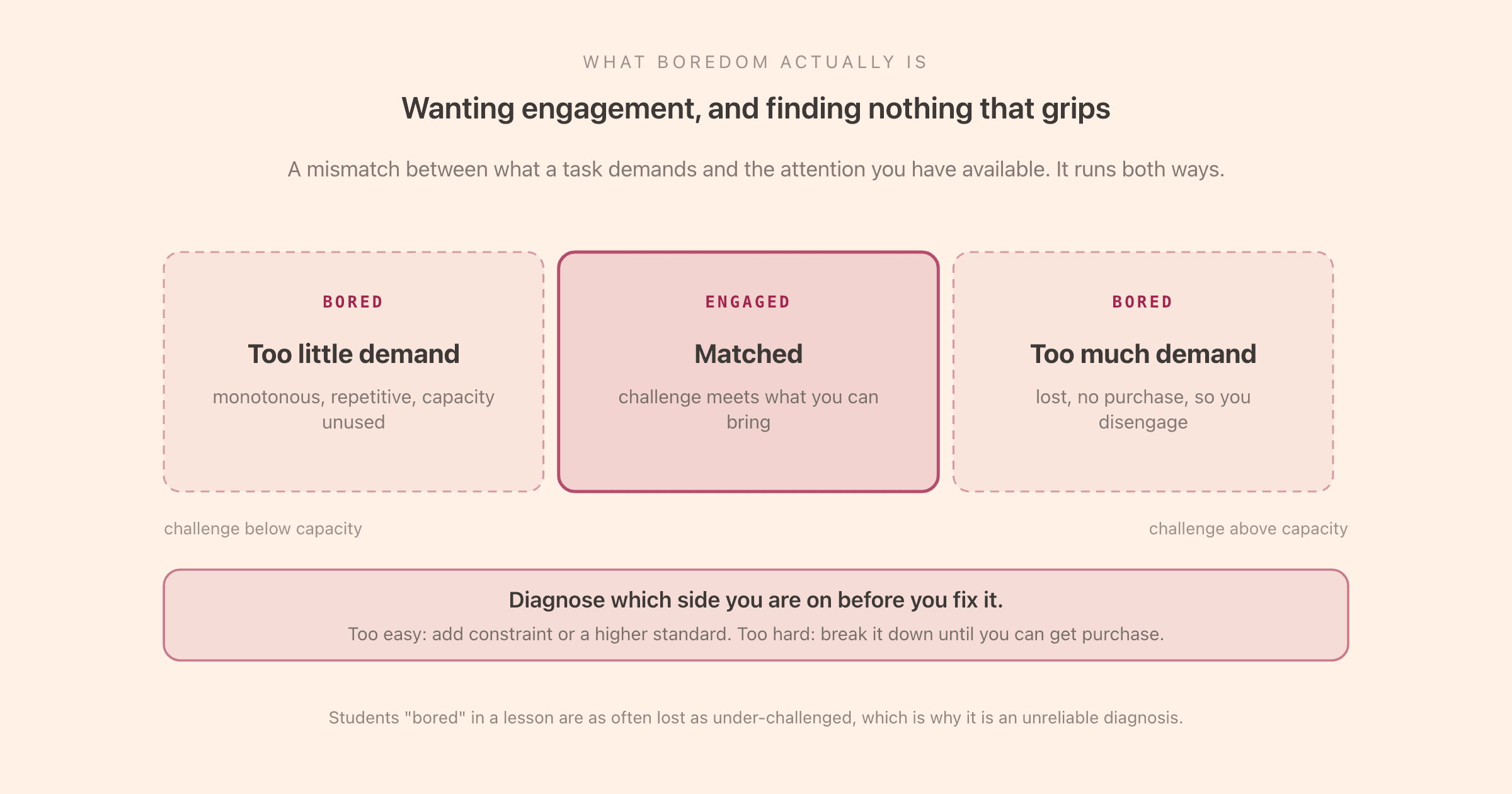
Boredom is not laziness or an absence of things to do. What it actually is, the research on how much people will do to avoid it, why phones have made it harder to tolerate, and what you lose by never being bored.
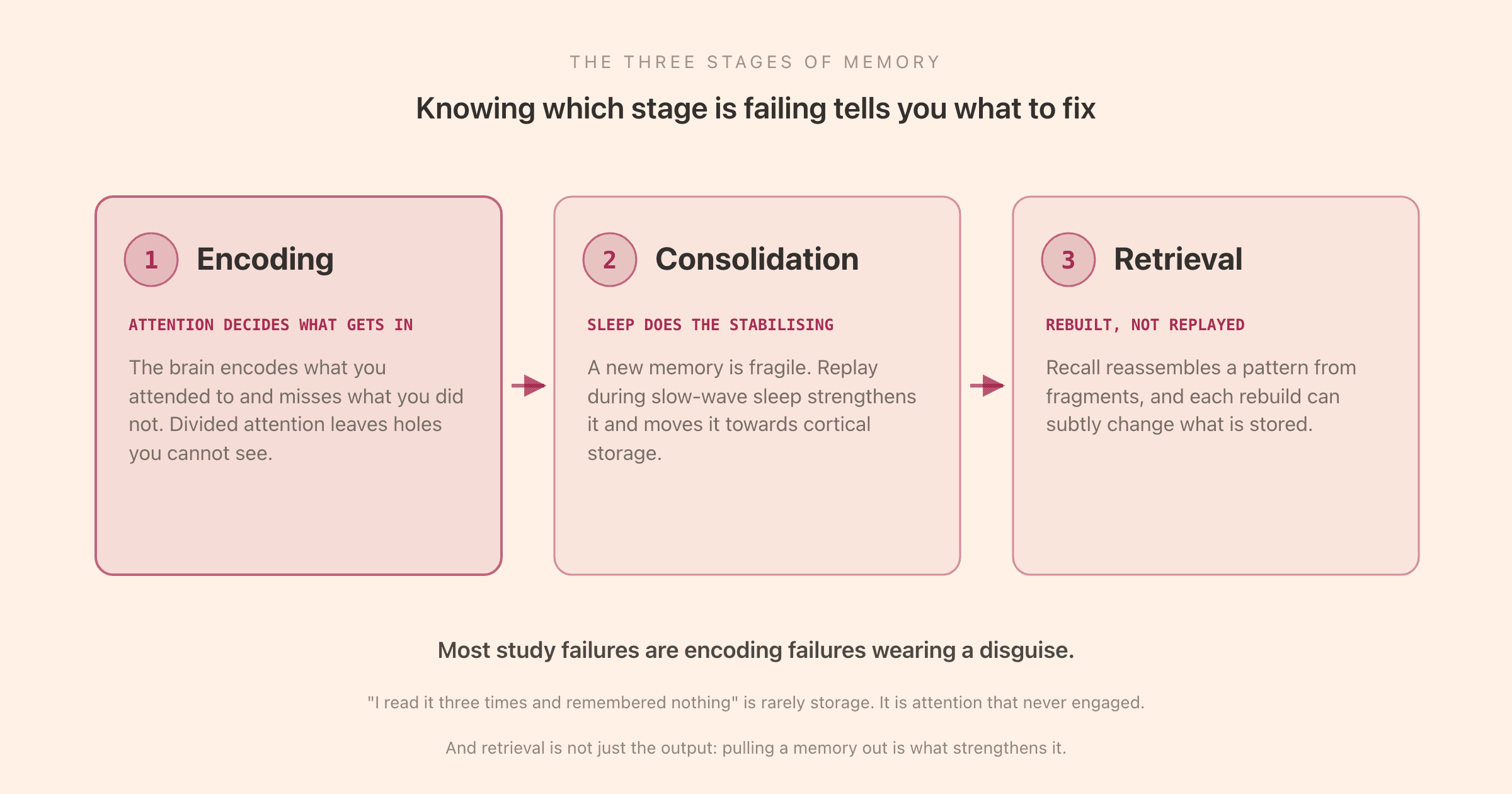
Memory: How It Actually Works, the Types, and Why Recall Is Not Playback
A guide to human memory: the three stages, the main types from working memory to procedural, how consolidation works during sleep, why memory is reconstructive rather than a recording, and what genuinely improves it.
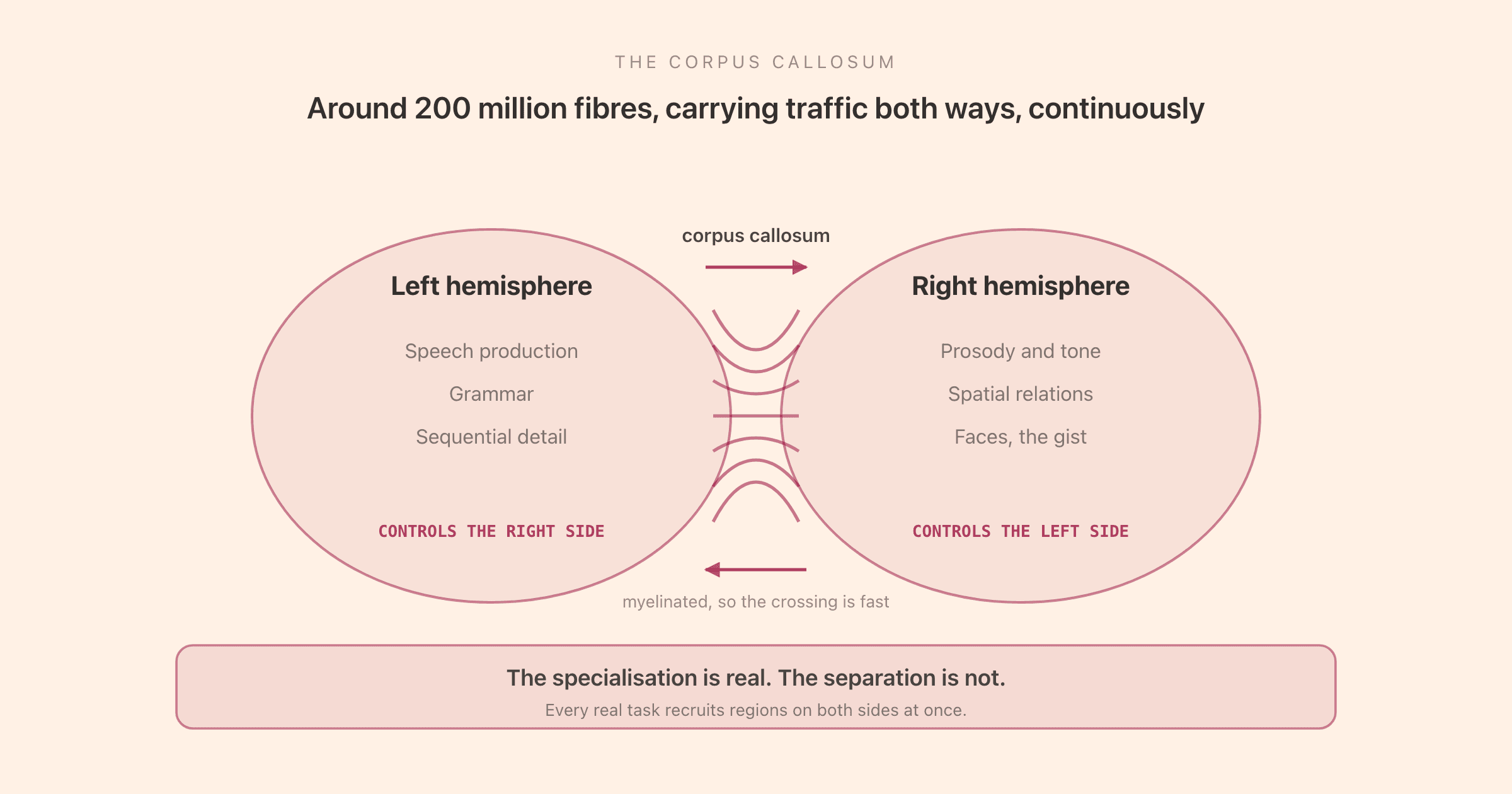
The Corpus Callosum: The Bridge Between Your Brain's Halves, and the Myth It Debunks
The corpus callosum is the huge bundle of fibres connecting your two hemispheres. What it does, what split-brain research revealed, why the left-brained and right-brained story is wrong, and what integration means for focus.
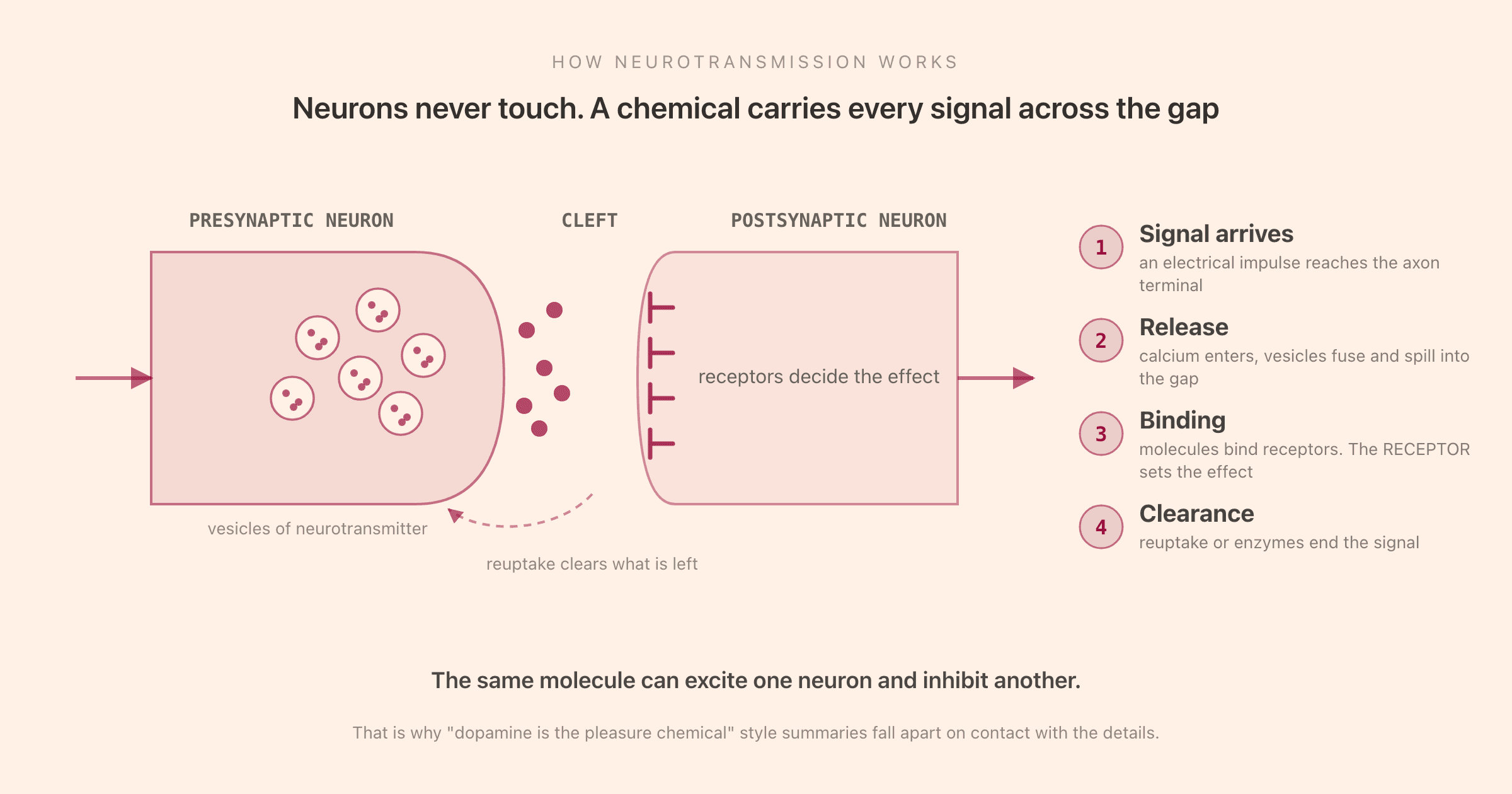
Neurotransmitters: The Brain's Chemical Messengers, and What Each One Does
Neurotransmitters carry every signal in your brain. How neurotransmission actually works, the main neurotransmitters and their jobs, why the chemical imbalance story is misleading, and what genuinely influences them.
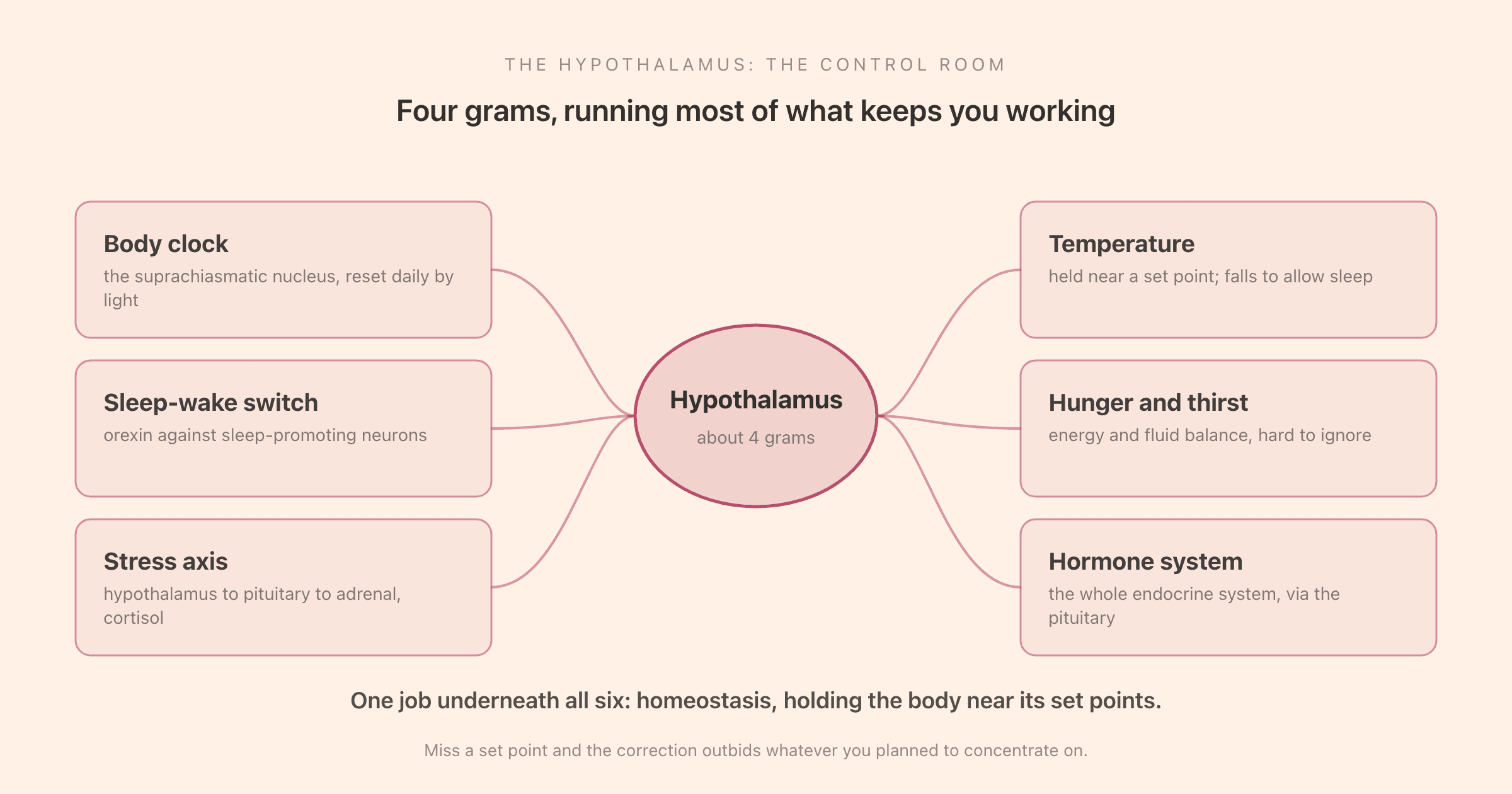
The Hypothalamus: The Brain's Control Room for Sleep, Stress, and Energy
The hypothalamus is a tiny region that runs your body clock, your sleep-wake switch, your stress response, your temperature, and your hunger. What it does, and why your ability to focus depends on it.
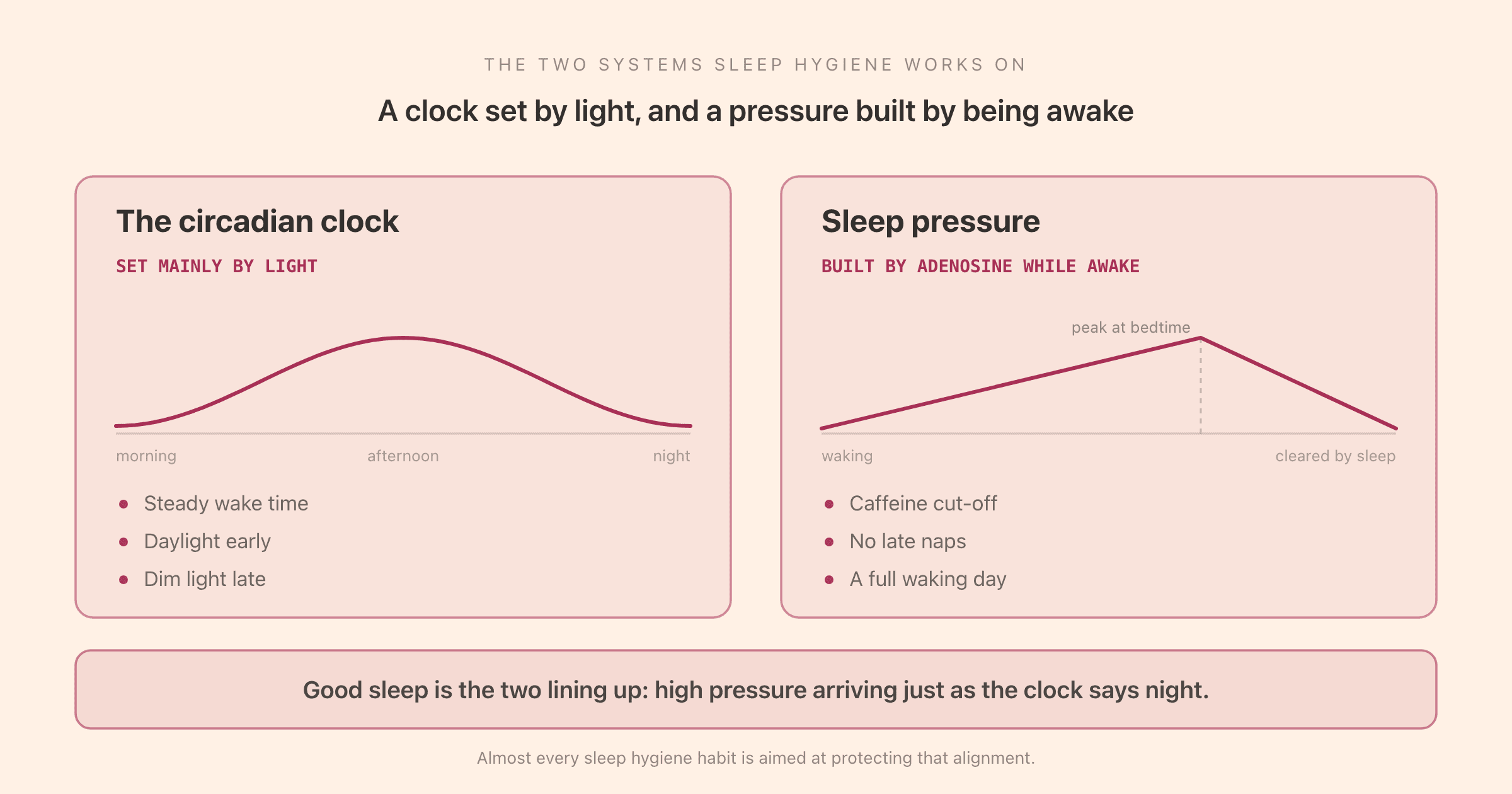
Sleep Hygiene: What It Is, Why It Works, and the Habits That Actually Matter
Sleep hygiene is the set of daily habits that decide how well you sleep. What it is, the two biological systems it works on, the habits that genuinely matter, and what it can and cannot fix.
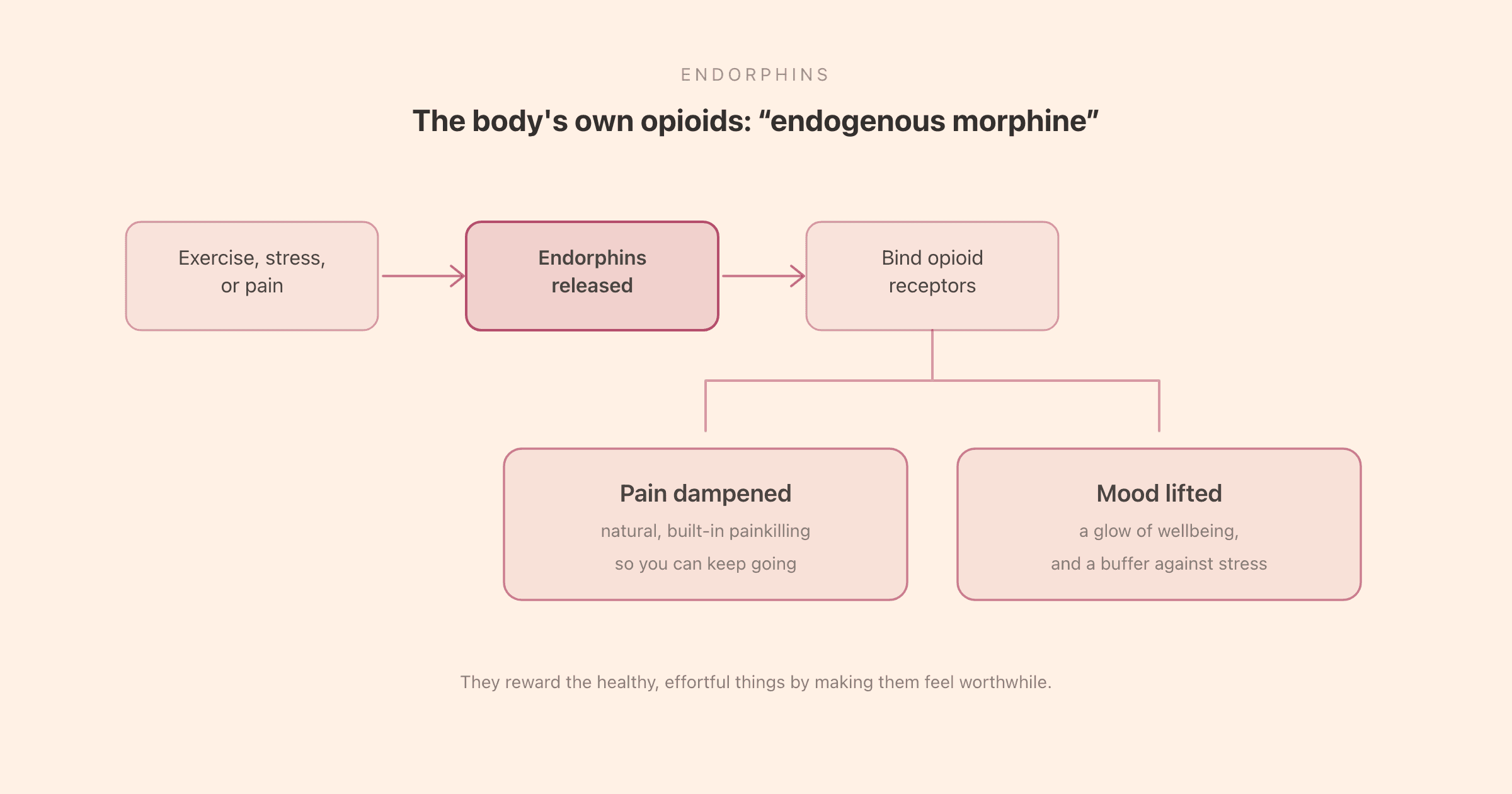
Endorphins: The Body's Natural Painkillers, and How to Get More of Them
Endorphins are the body's own opioids: chemicals that block pain and lift mood. What they are, what they do, the truth about the runner's high, and the natural ways to boost them.
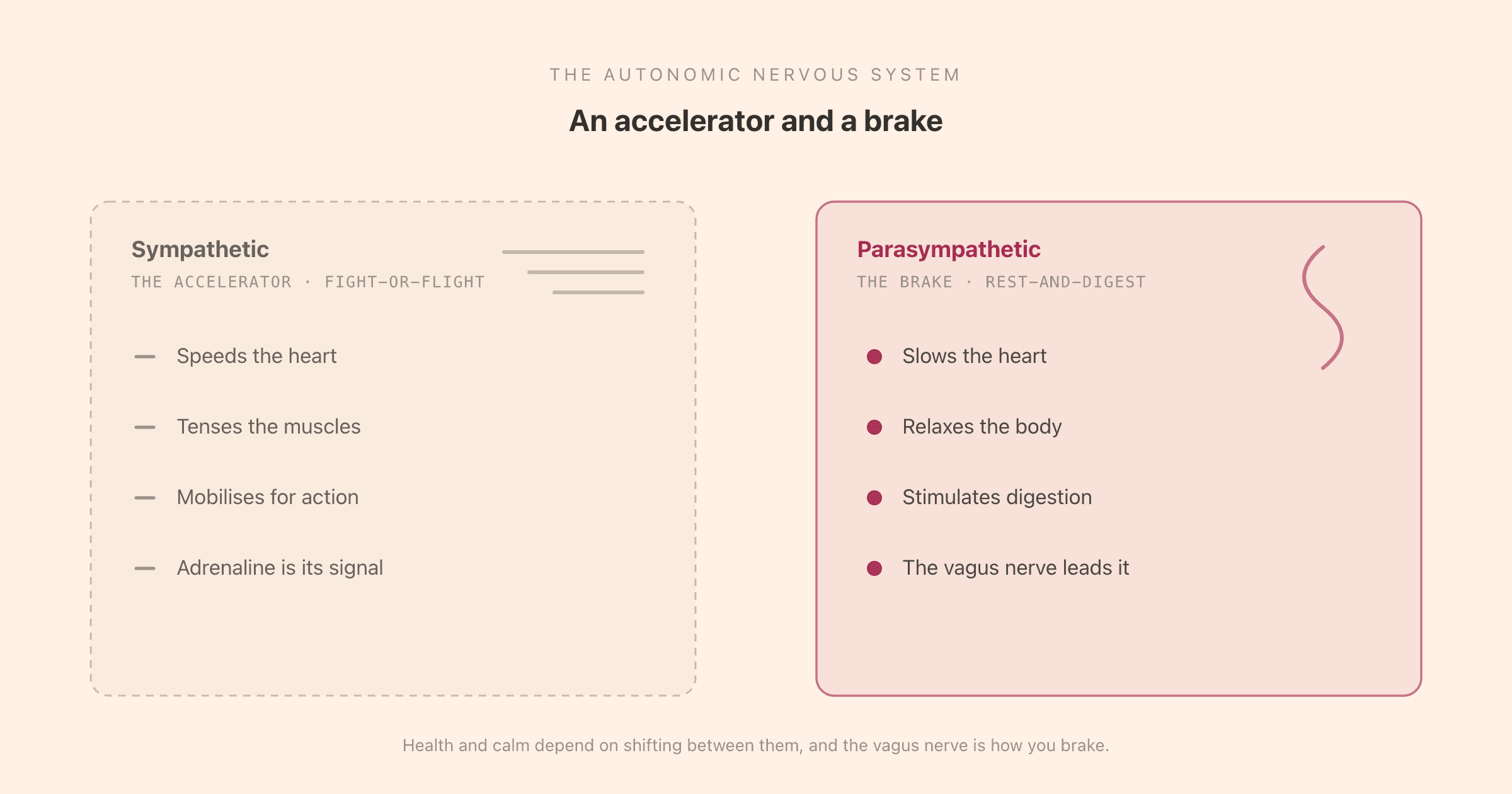
The Vagus Nerve: Your Body's Calm System, and How It Shapes Focus
The vagus nerve is the main nerve of the body's rest-and-digest system, the brake to adrenaline's accelerator. What it is, what vagal tone means, how to stimulate it, and why it matters for calm focus.
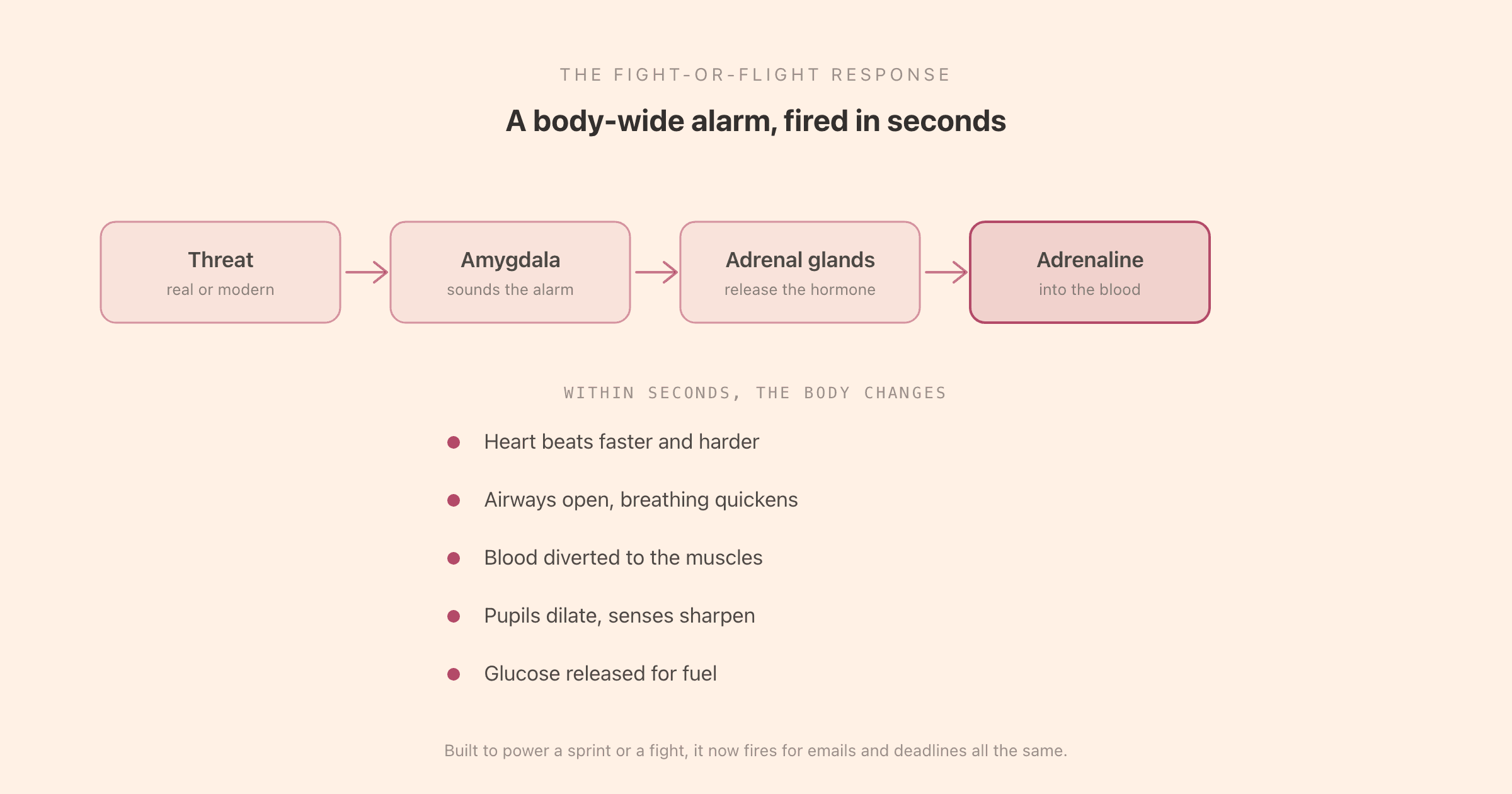
Adrenaline: The Fight-or-Flight Hormone, and What It Does to Your Focus
Adrenaline is the body's fast-acting fight-or-flight hormone. What it is, how the fight-or-flight response works, how it differs from cortisol, and why a little sharpens focus but too much wrecks it.
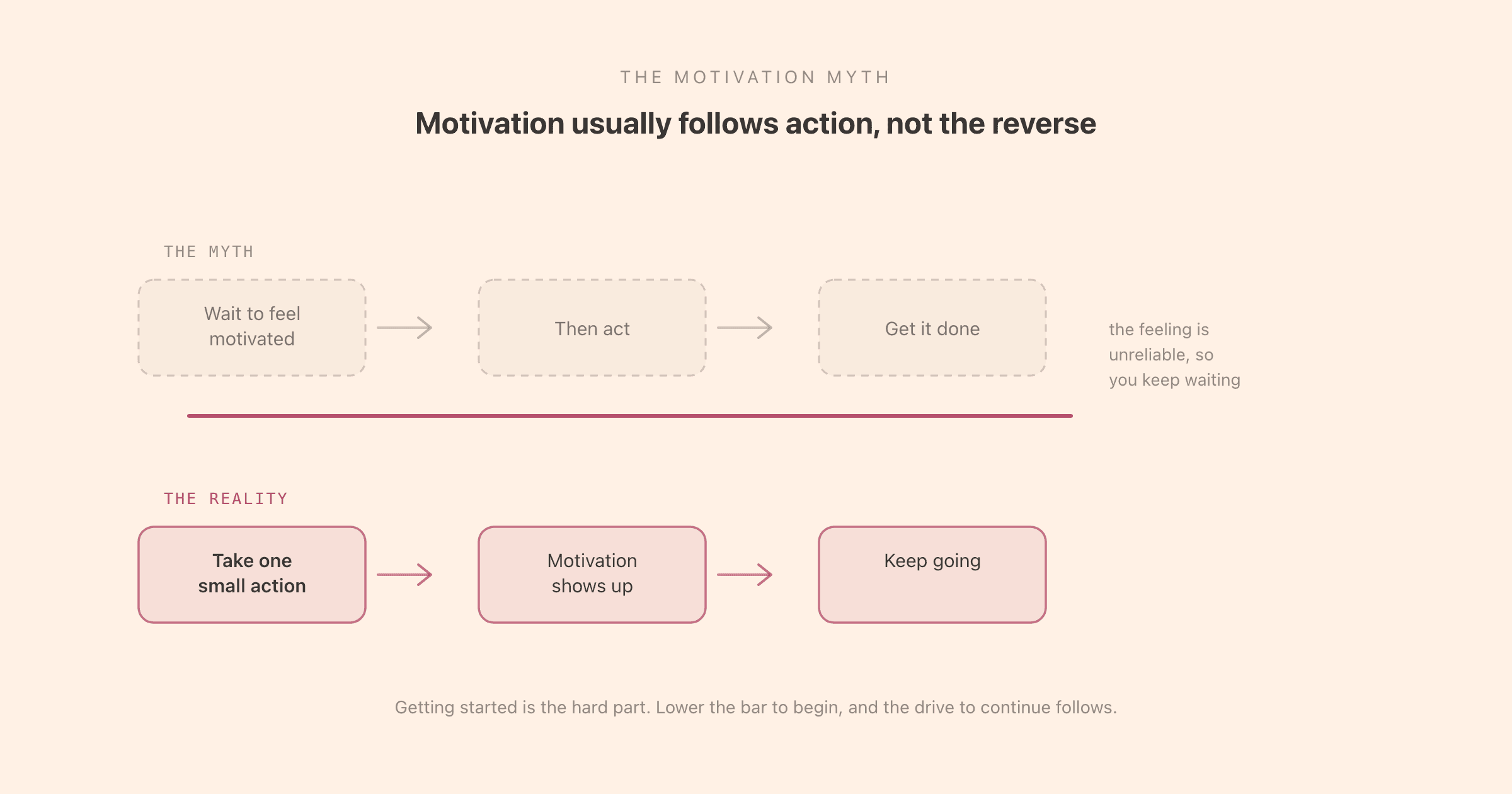
Motivation: What It Actually Is, Why It Comes and Goes, and How to Stop Depending on It
Motivation is the drive to act, but it is an unreliable feeling. What motivation really is, intrinsic vs extrinsic, why it fluctuates, and how to build systems that do not depend on it.
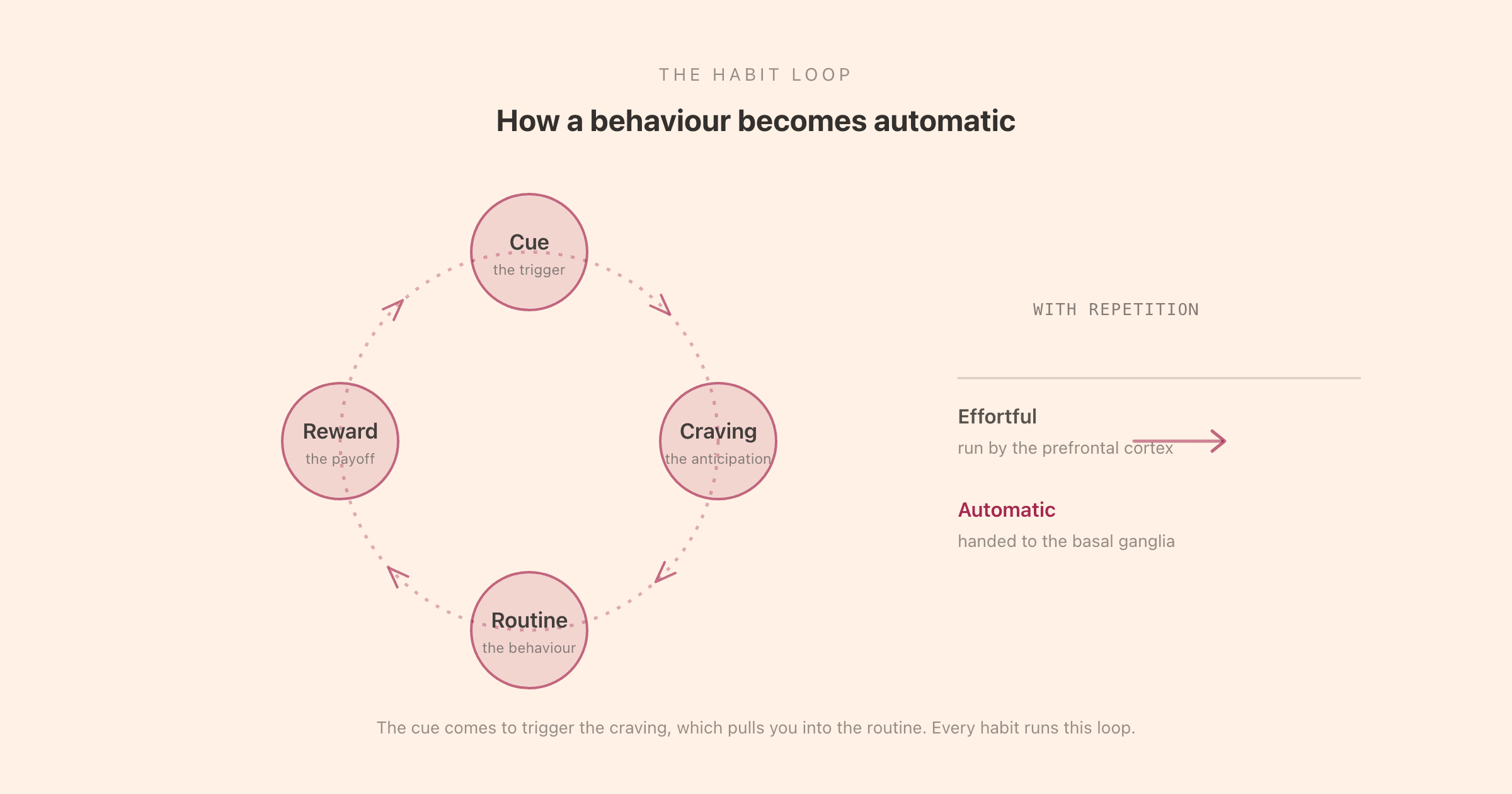
Habit Formation: How Habits Actually Form, and How to Build Ones That Stick
Habit formation is how the brain turns a repeated behaviour into an automatic one. The habit loop, how long it really takes, and how to build good habits and break bad ones.
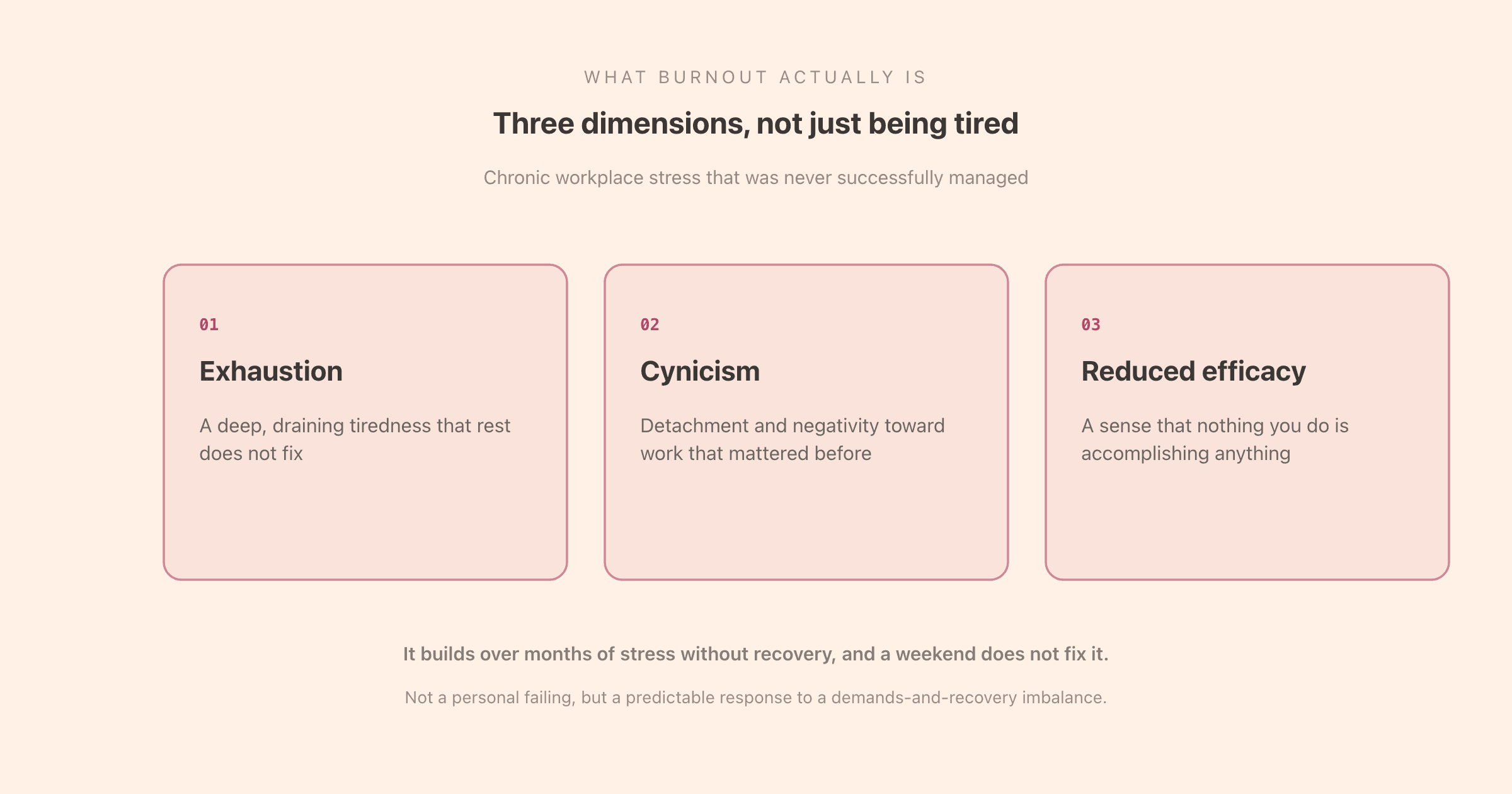
Burnout: What It Really Is, the Warning Signs, and How to Recover
Burnout is chronic stress without recovery, not just tiredness. Its three dimensions, how it differs from stress, the warning signs, what causes it, and how to actually recover.
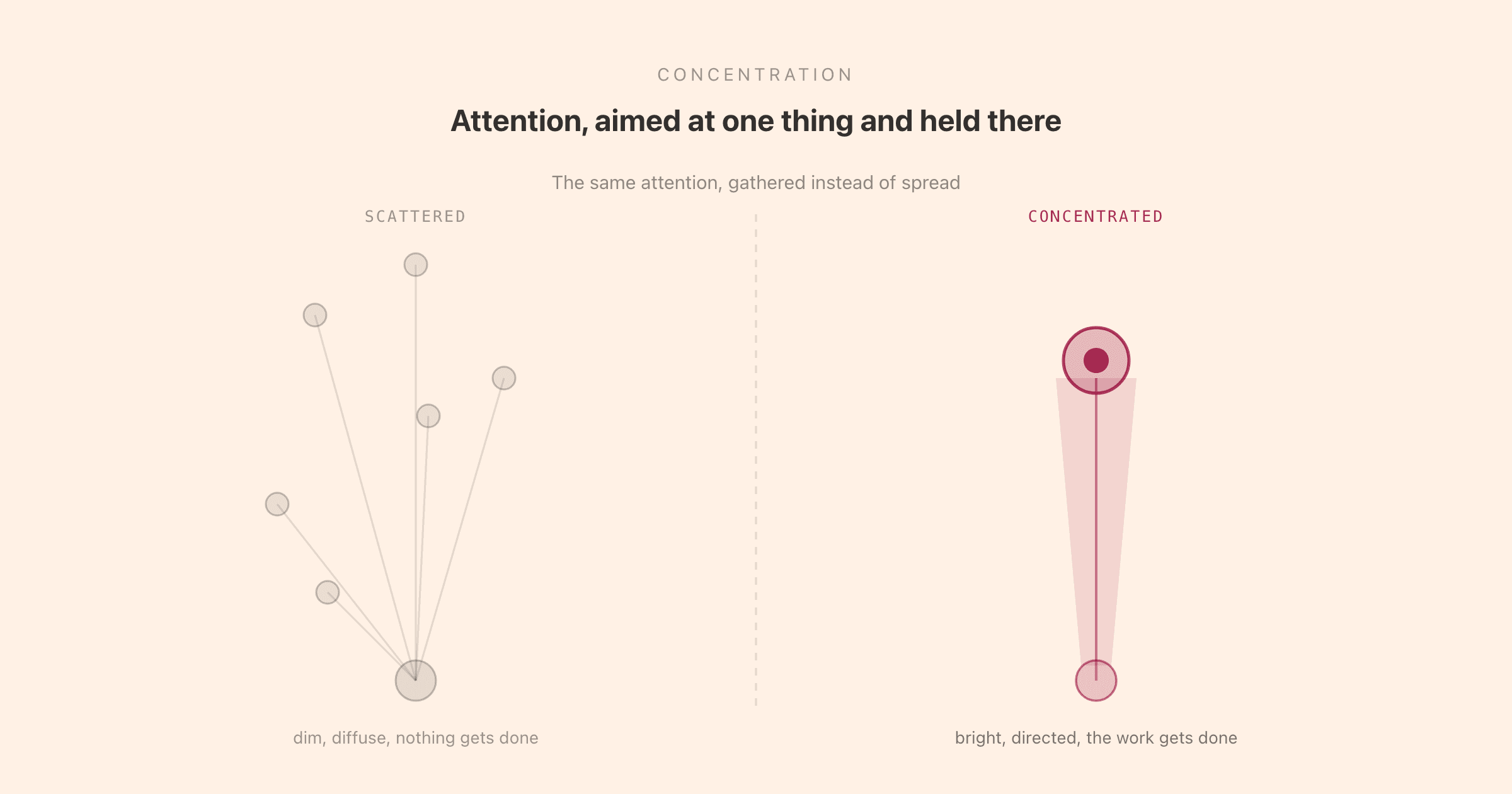
Concentration: What It Is, Why It Fails, and How to Improve It
Concentration is the skill of directing and sustaining attention on one thing. What it actually is, why it breaks down, and the habits and techniques that genuinely improve it.
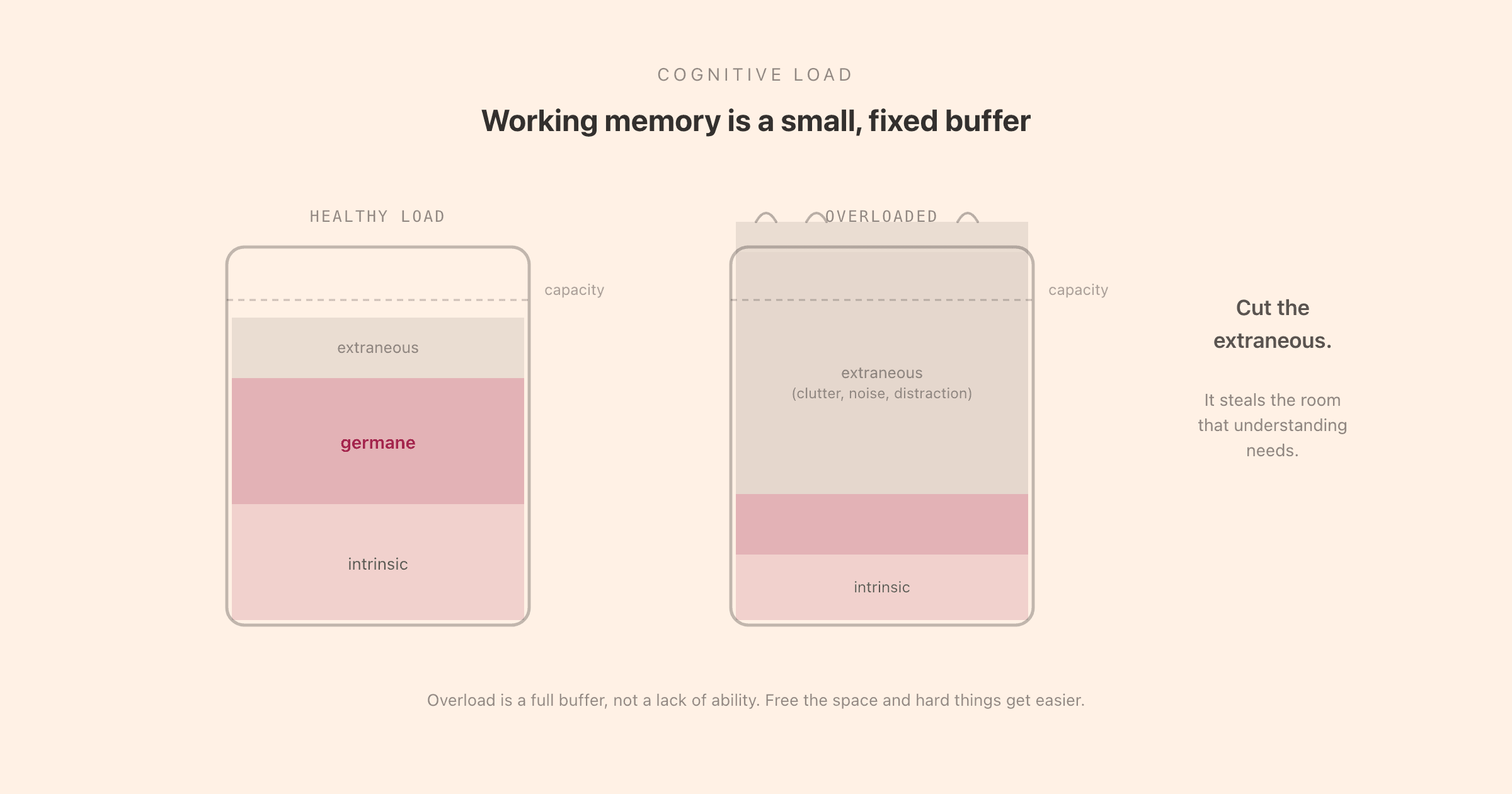
Cognitive Load: Why Your Brain Overloads, and How to Work Within Its Limits
Cognitive load is the amount of mental effort your working memory is holding. What it is, the three types, why working memory is the bottleneck, and how to reduce the load that wastes it.
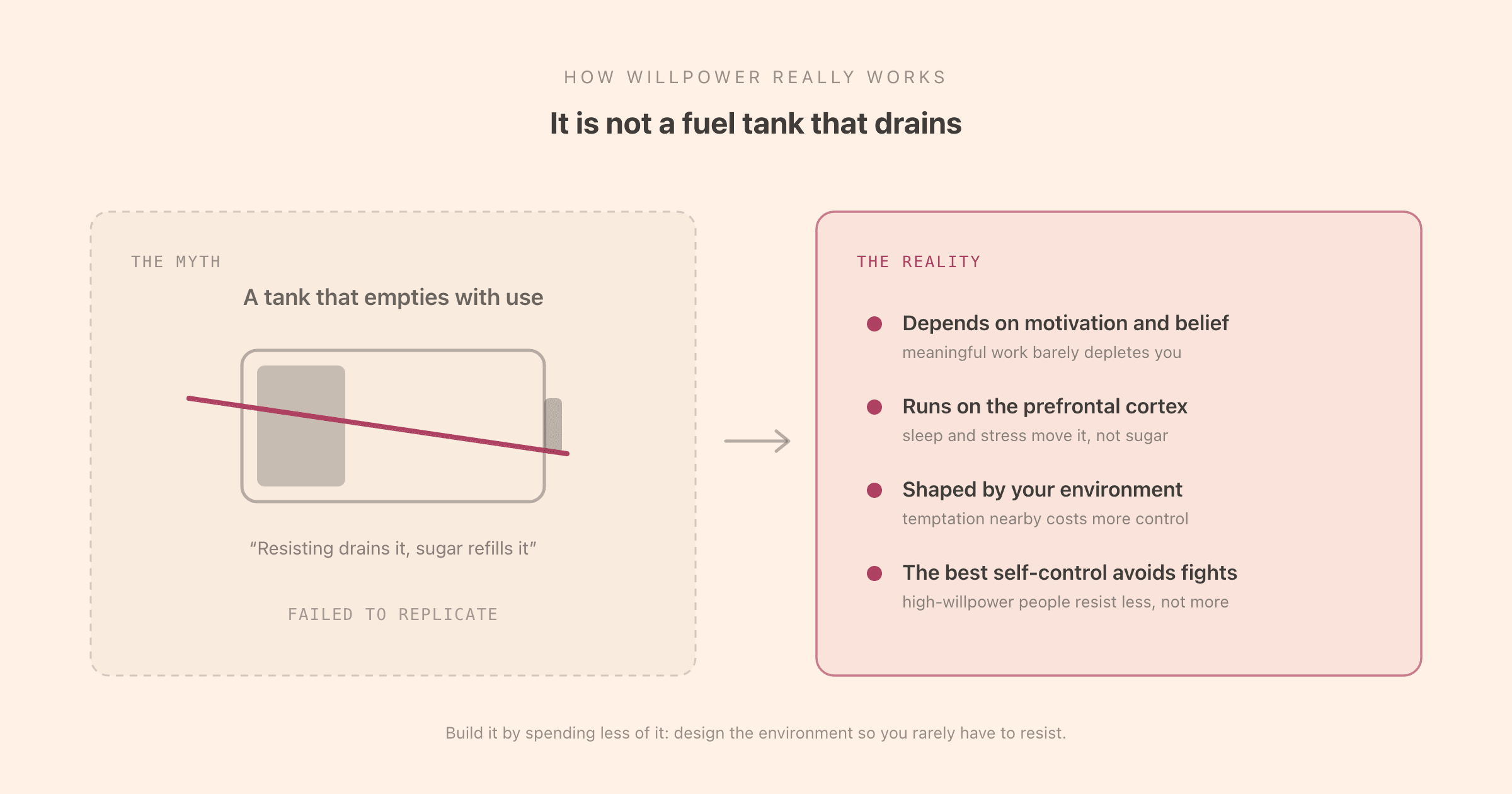
Willpower and Self-Control: What They Really Are, the Ego-Depletion Myth, and How to Build Them
Willpower is not a fuel tank that runs out. What willpower and self-control actually are, why the ego-depletion theory failed to replicate, and the habits that build real self-control.
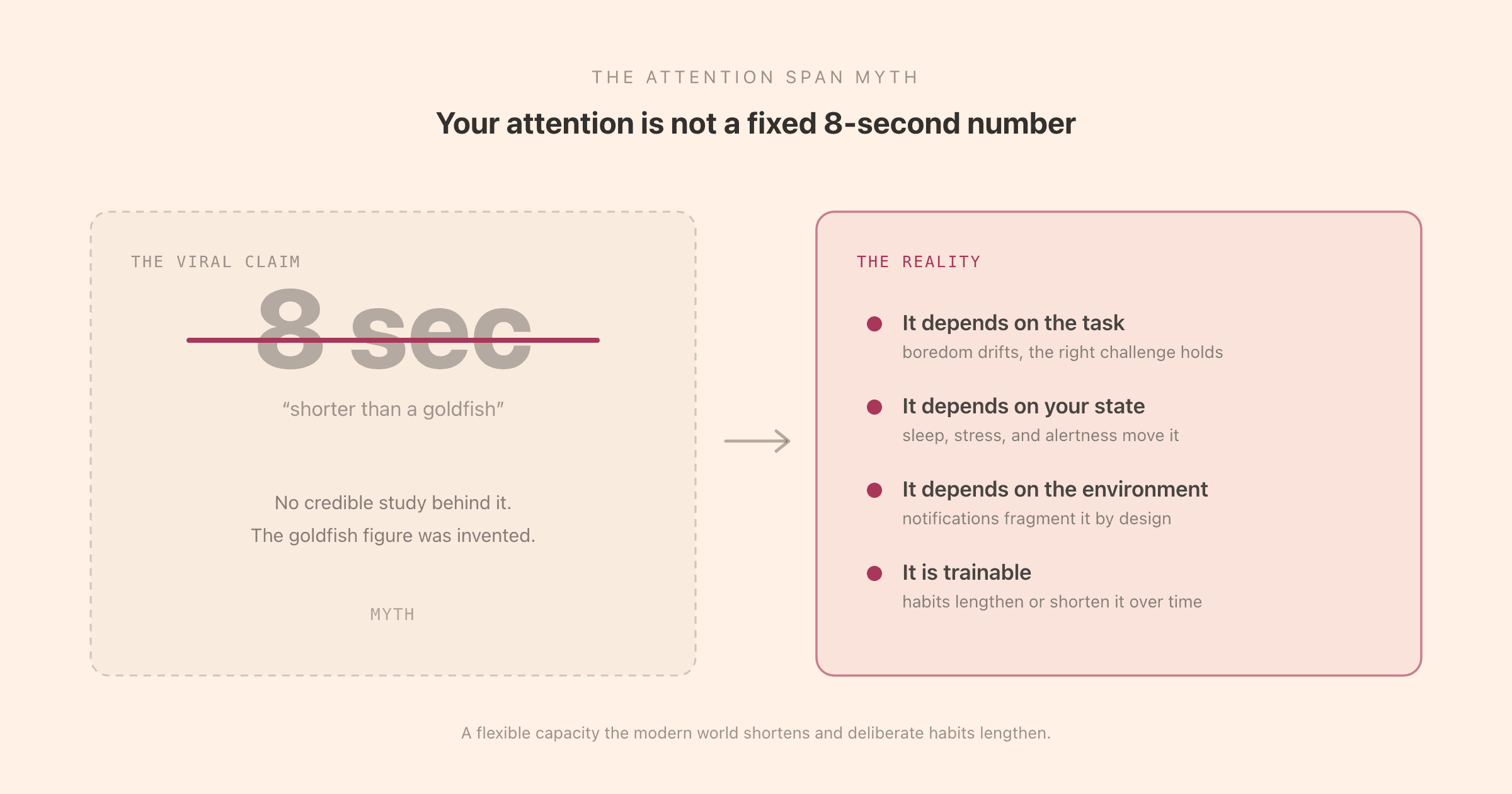
Attention Span: What It Really Is, Why the Goldfish Myth Is Wrong, and How to Lengthen It
Your attention span is not a fixed 8-second number. What attention span actually is, why the goldfish claim is a myth, what determines it, and the habits that genuinely lengthen it.
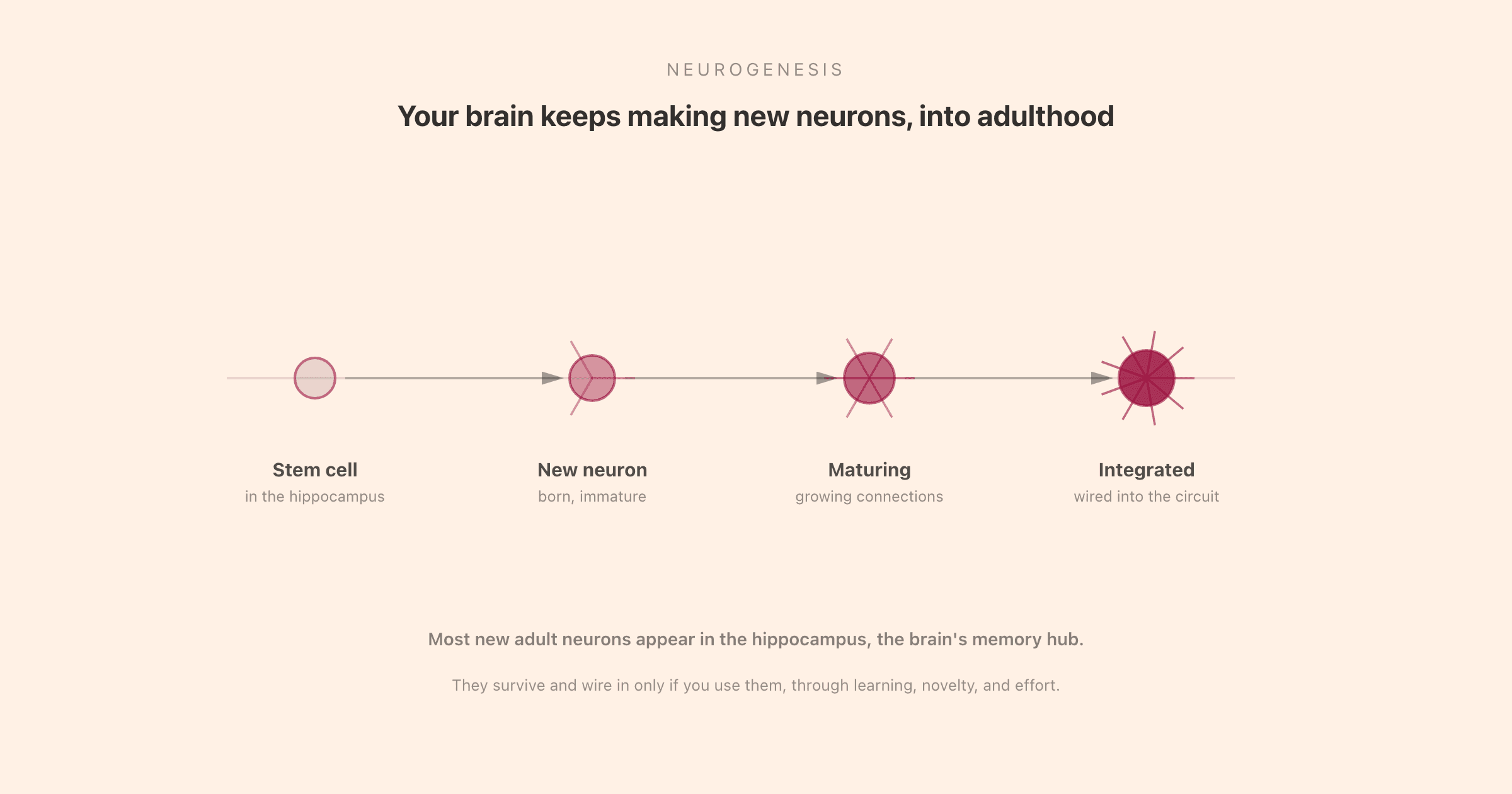
Neurogenesis: How Your Adult Brain Grows New Neurons, and What Helps It
Neurogenesis is the birth of new neurons, and it continues into adulthood. What it is, where it happens, why it matters for memory and mood, and the habits that boost or suppress it.
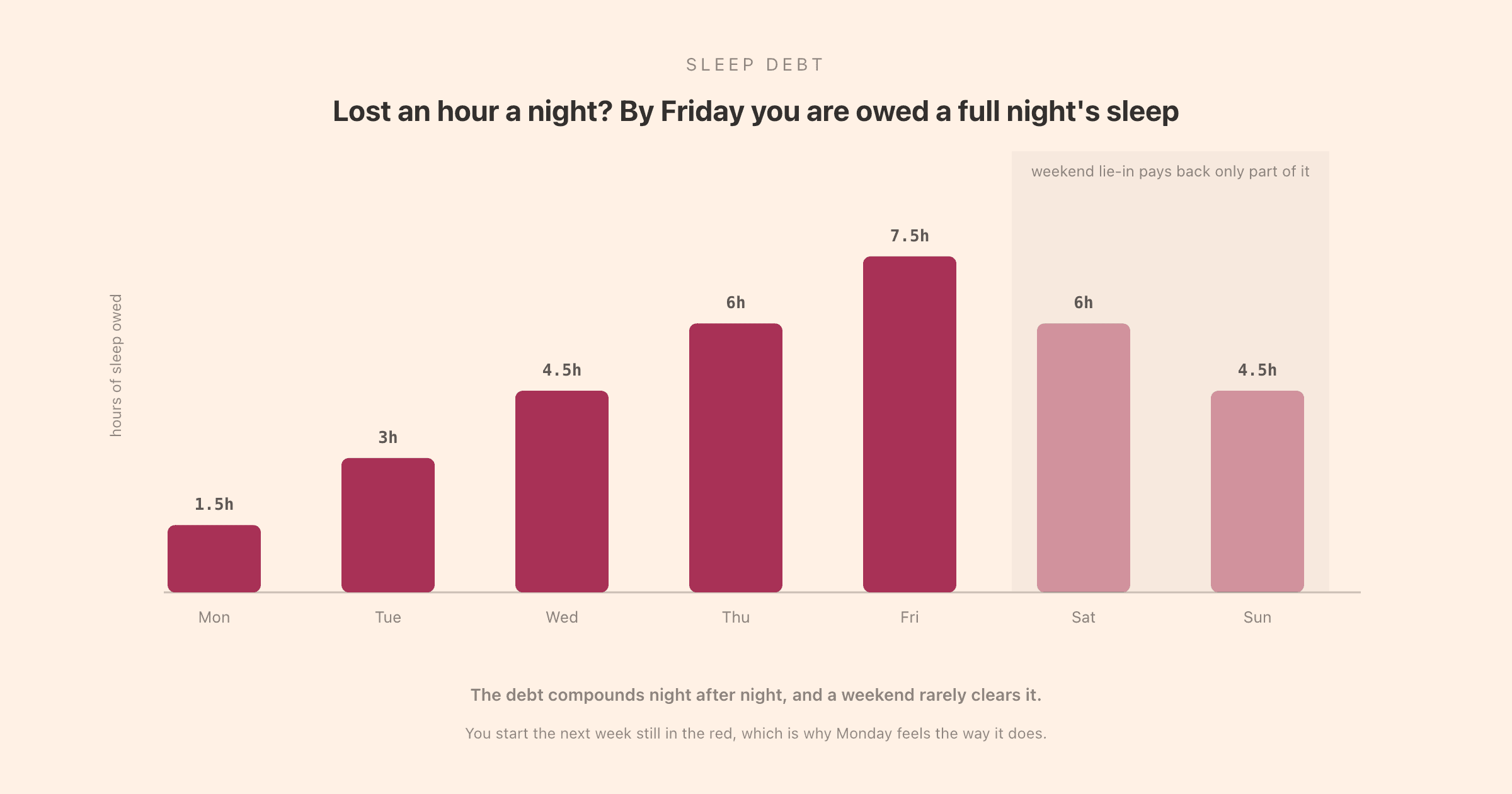
Sleep Debt: Why It Wrecks Your Focus and Why You Can't Fully Catch Up on the Weekend
Sleep debt is the running deficit from under-sleeping, and it quietly destroys focus. How it accumulates, why you stop noticing the impairment, and how to actually pay it down.
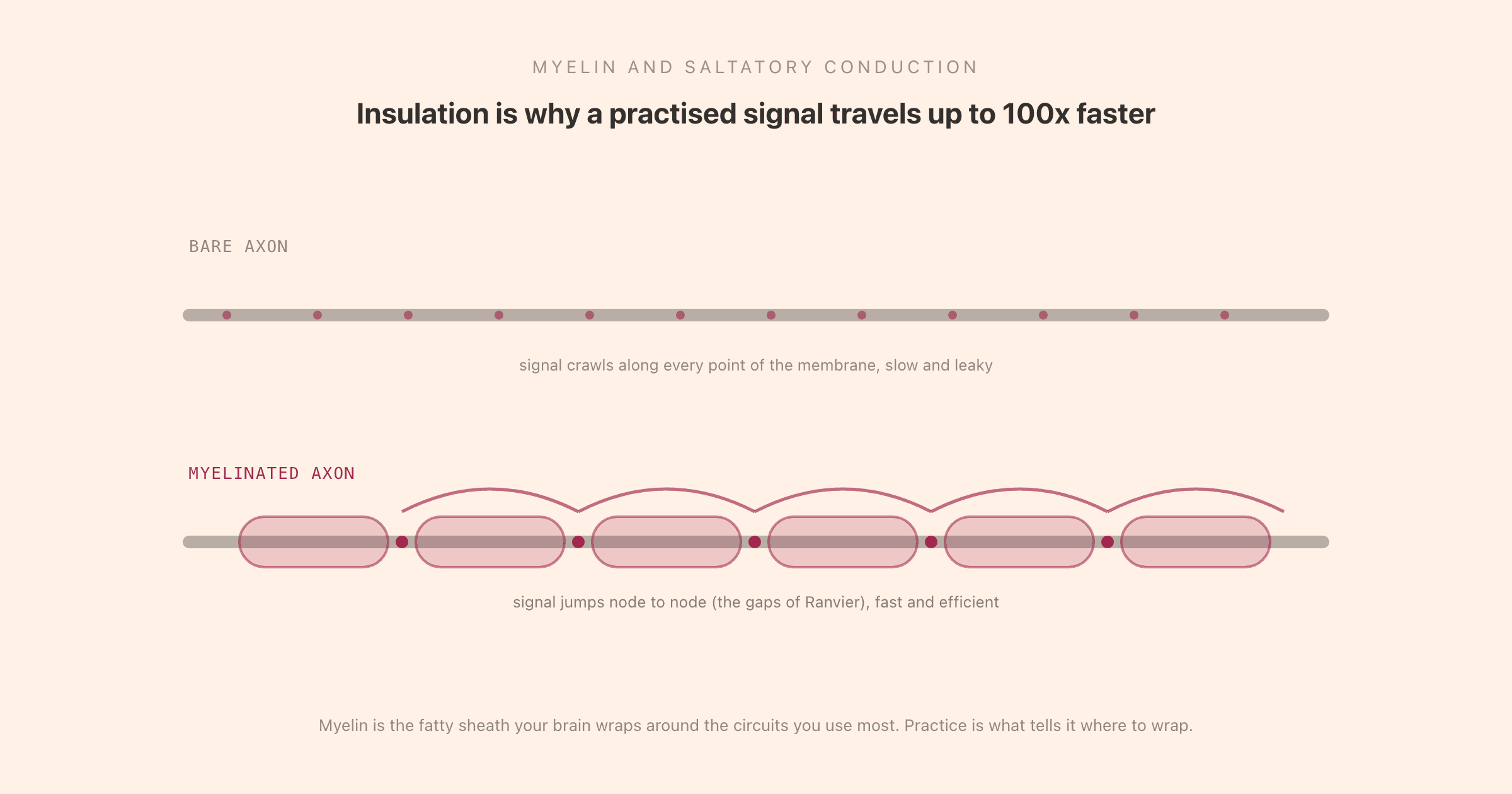
Myelin: The Brain's Insulation and the Physical Reason Practice Works
Myelin is the fatty sheath that makes practised brain circuits fast. What it is, how focused repetition builds it, and why myelination is the biology behind skill and deep work.
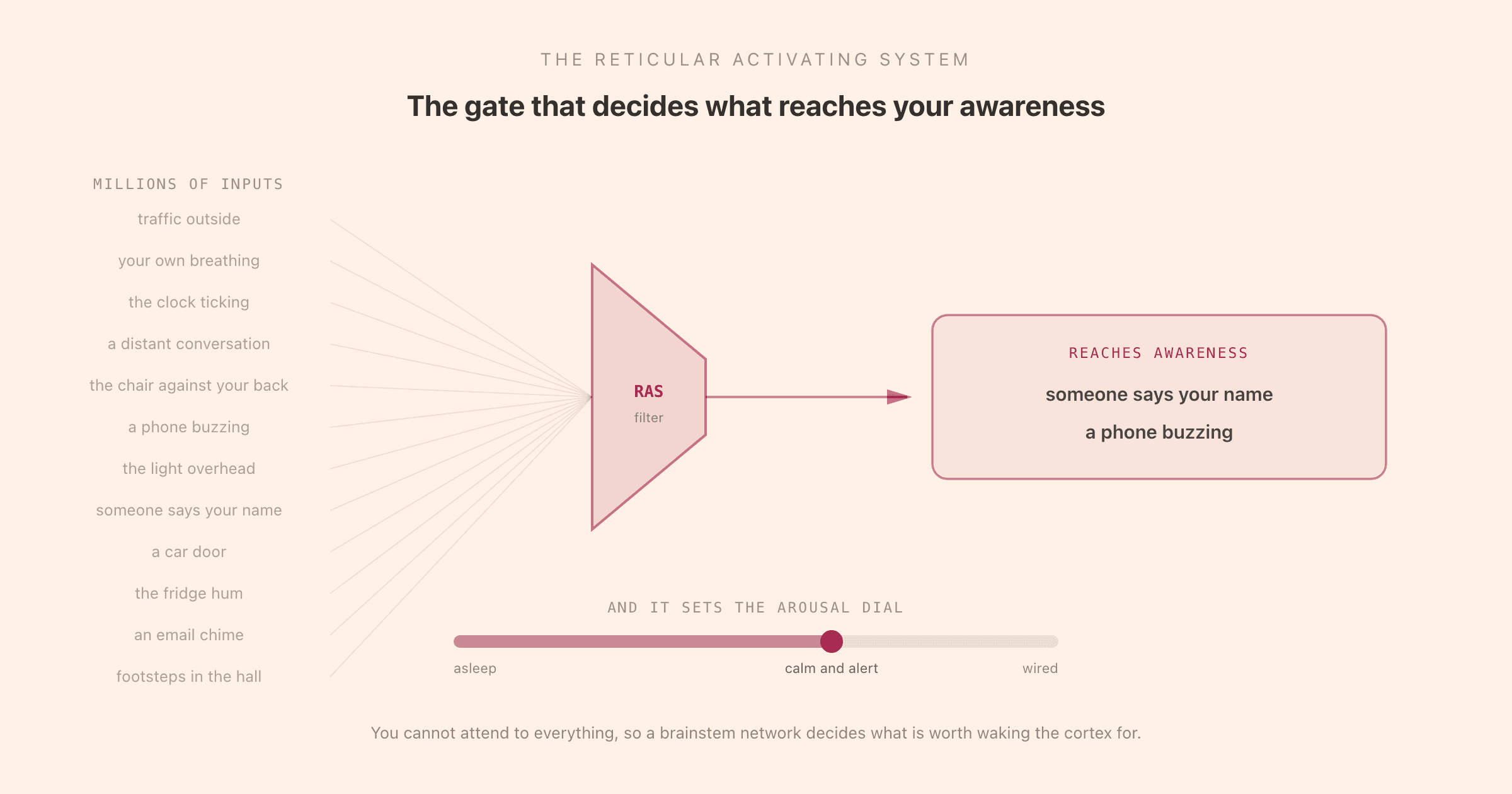
The Reticular Activating System: The Brain's Gatekeeper of Attention and Alertness
The reticular activating system decides what reaches your awareness and how alert you are. What the RAS is, how it filters and arouses, and how to work with it for focus.
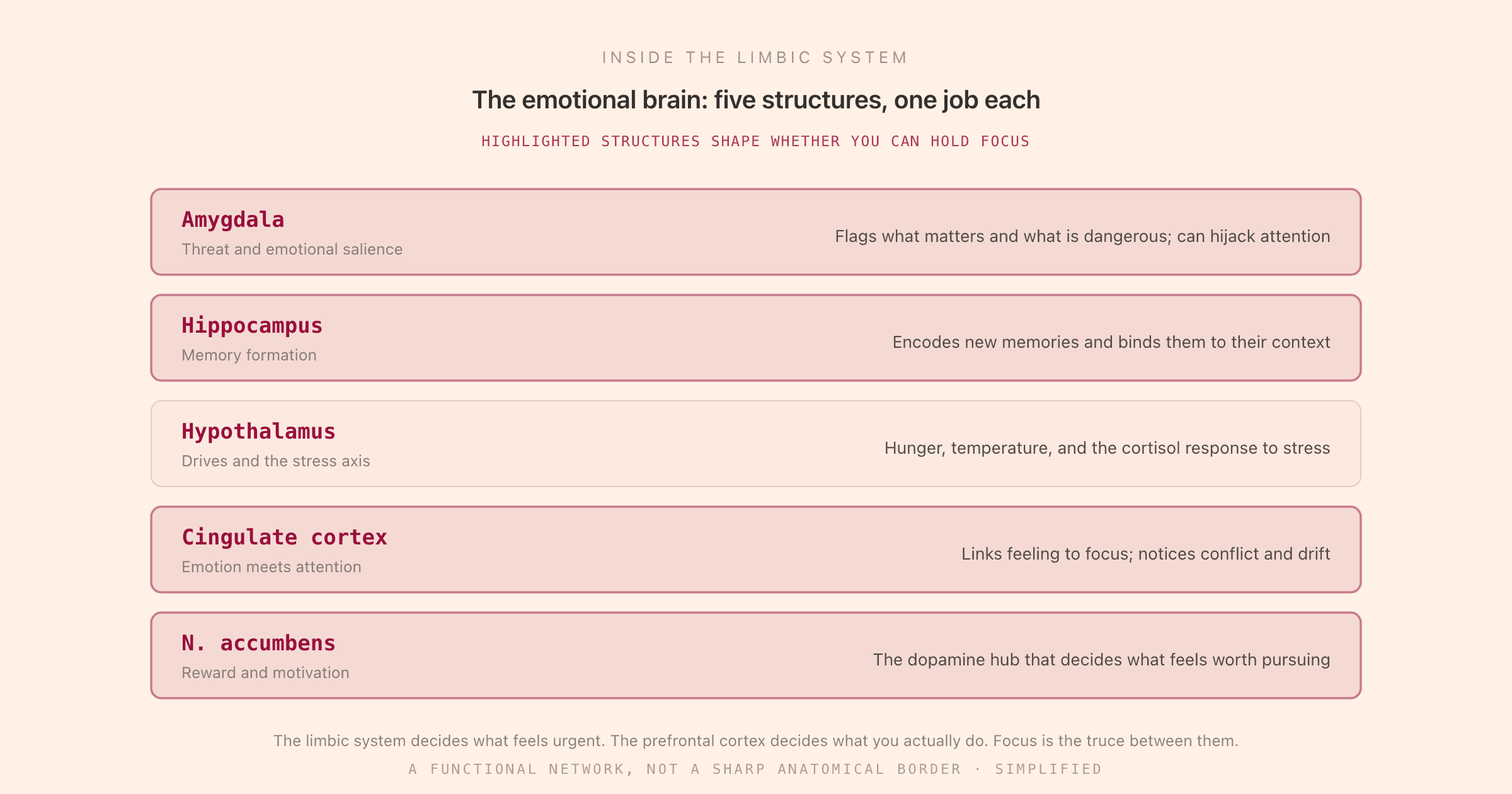
The Limbic System: How the Emotional Brain Decides Whether You Can Focus
The limbic system is the brain's emotional core. What it is, the structures it contains, and how its tug-of-war with the prefrontal cortex decides whether you concentrate or get hijacked.
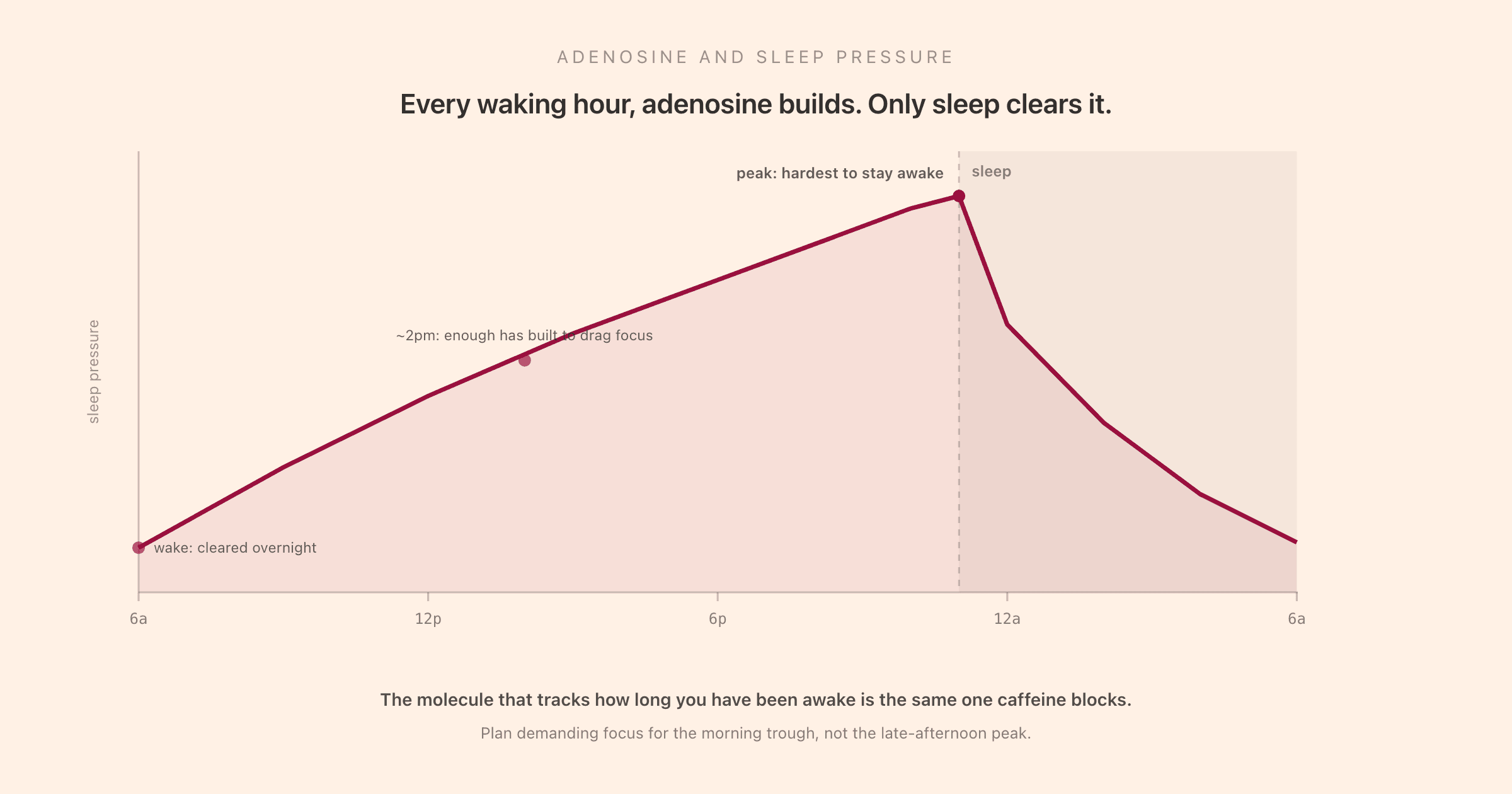
Adenosine: The Molecule That Decides How Focused You Can Be Today
Adenosine is the brain's sleep-pressure signal and the reason caffeine works. How it builds, why focus sags by mid-afternoon, and how to time deep work around it.
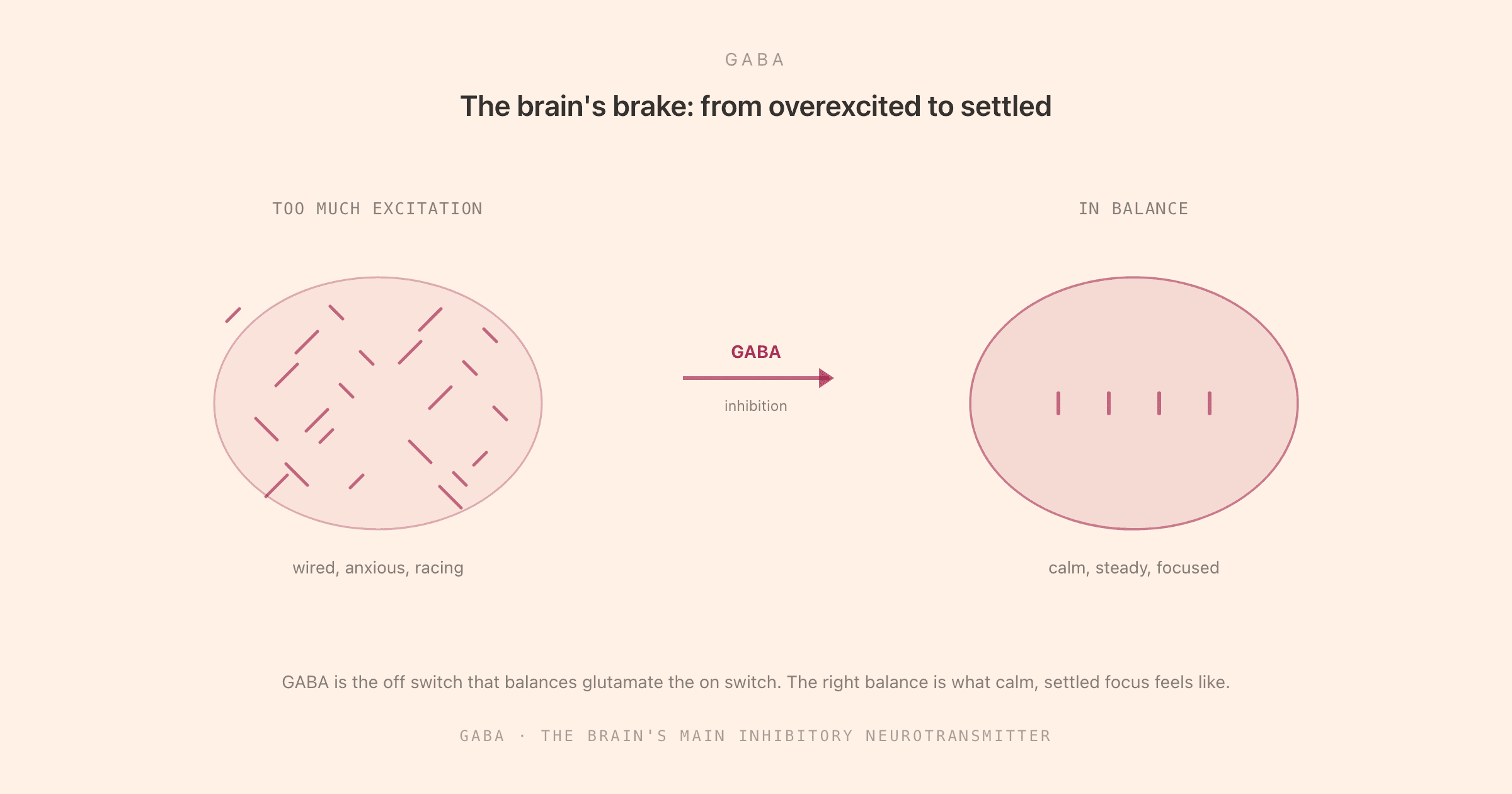
GABA: The Brain's Main Inhibitory Neurotransmitter and Its Calm (What It Does, the Glutamate Balance, and the Supplement Myth)
GABA explained for calm and focus: what it is and does, why it is the brain's main inhibitory neurotransmitter, its balance with glutamate, how alcohol and anxiety drugs act on it, and the truth about GABA supplements.
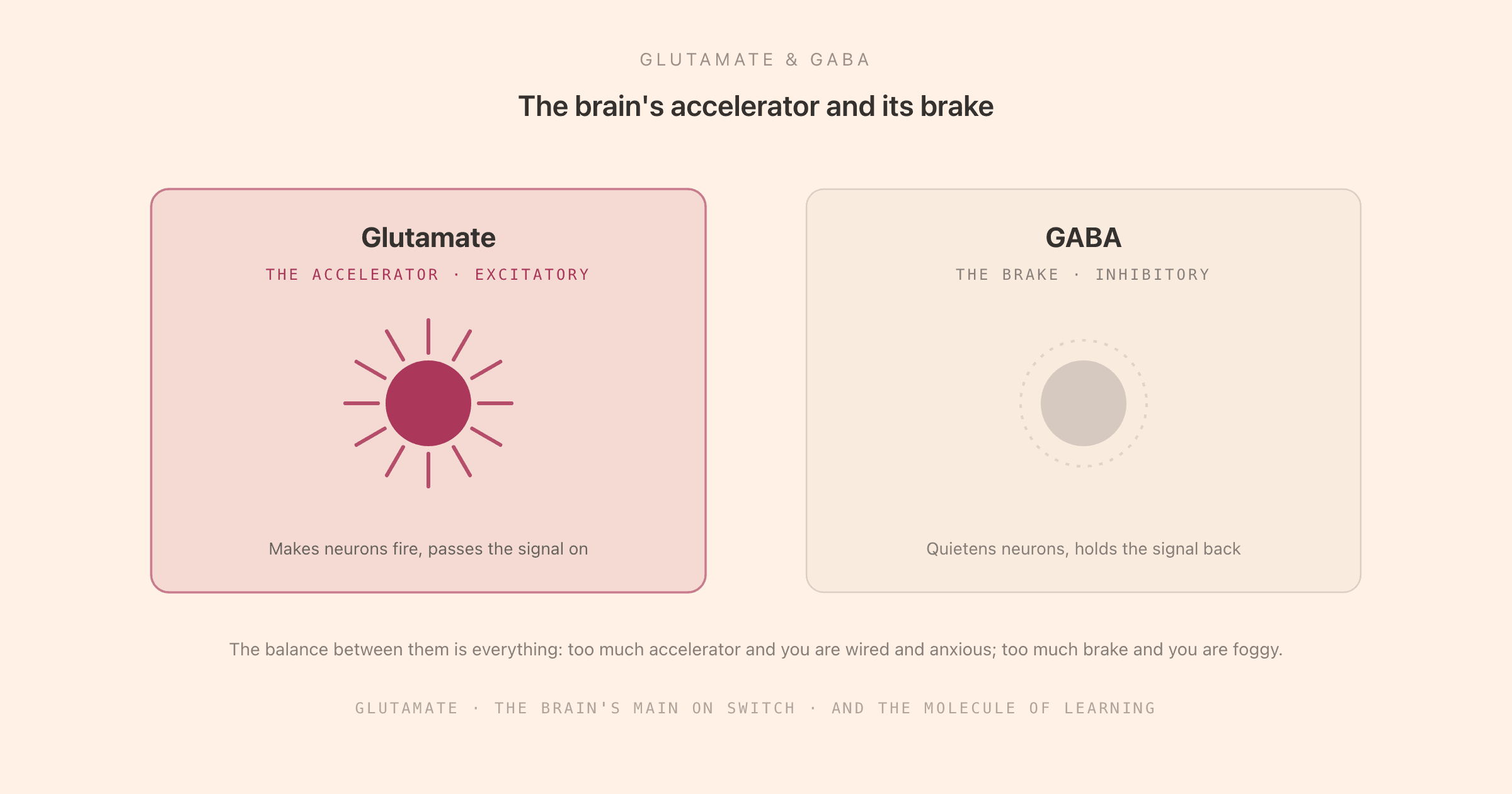
Glutamate: The Brain's Main Excitatory Neurotransmitter and the Molecule of Learning (What It Does, the GABA Balance, and How Memories Form)
Glutamate explained for focus and learning: what it is and does, why it is the brain's main excitatory signal, its balance with GABA, how it drives long-term potentiation and memory, and why too much is harmful.
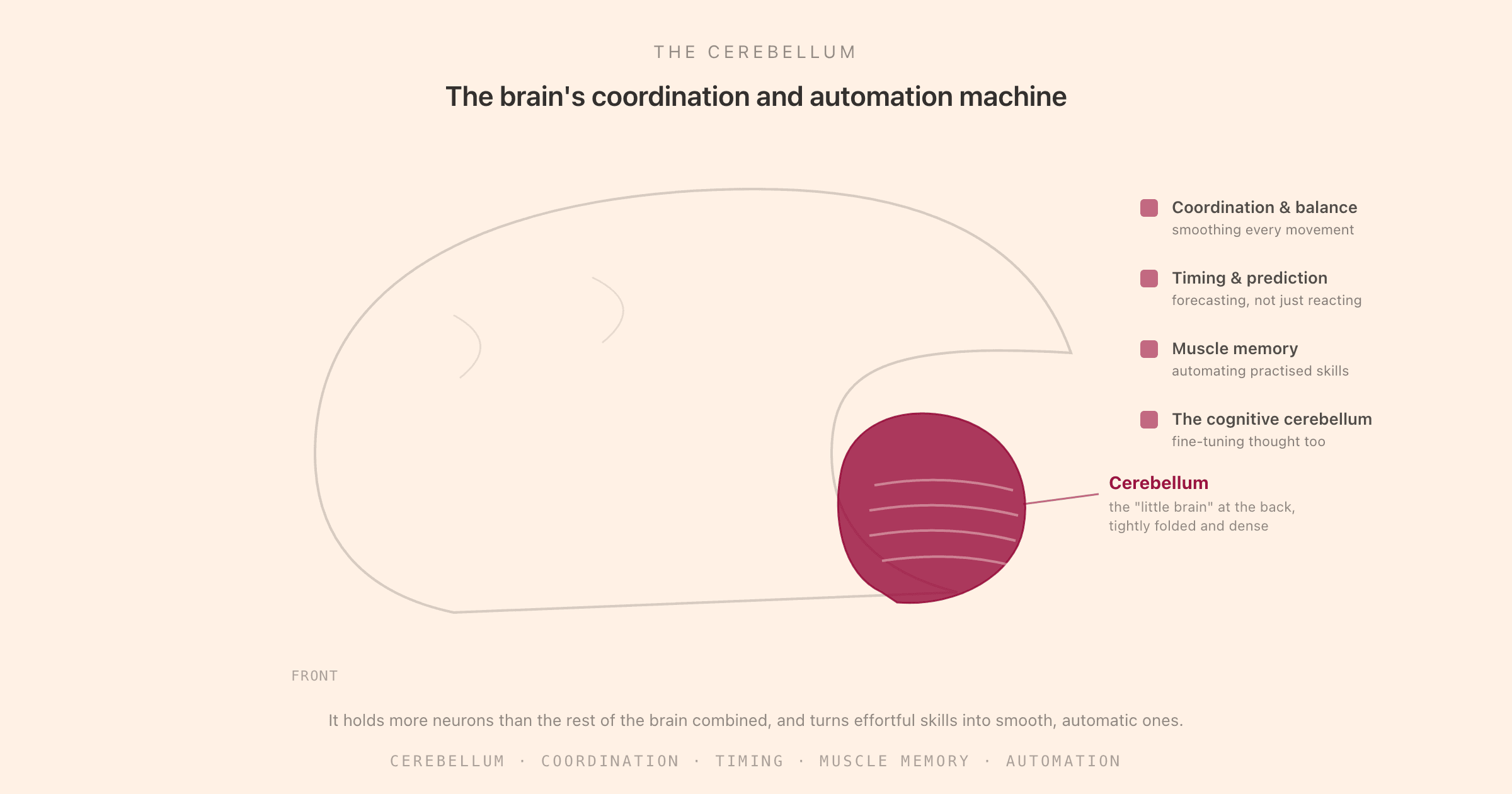
The Cerebellum: The Brain's Coordination and Automation Machine (What It Does, Muscle Memory, and Why Practice Makes Things Effortless)
The cerebellum explained for focus and skill: what it is and does, where it sits, how it coordinates and fine-tunes movement, builds muscle memory and procedural skill, and increasingly shapes thought, the cognitive cerebellum.
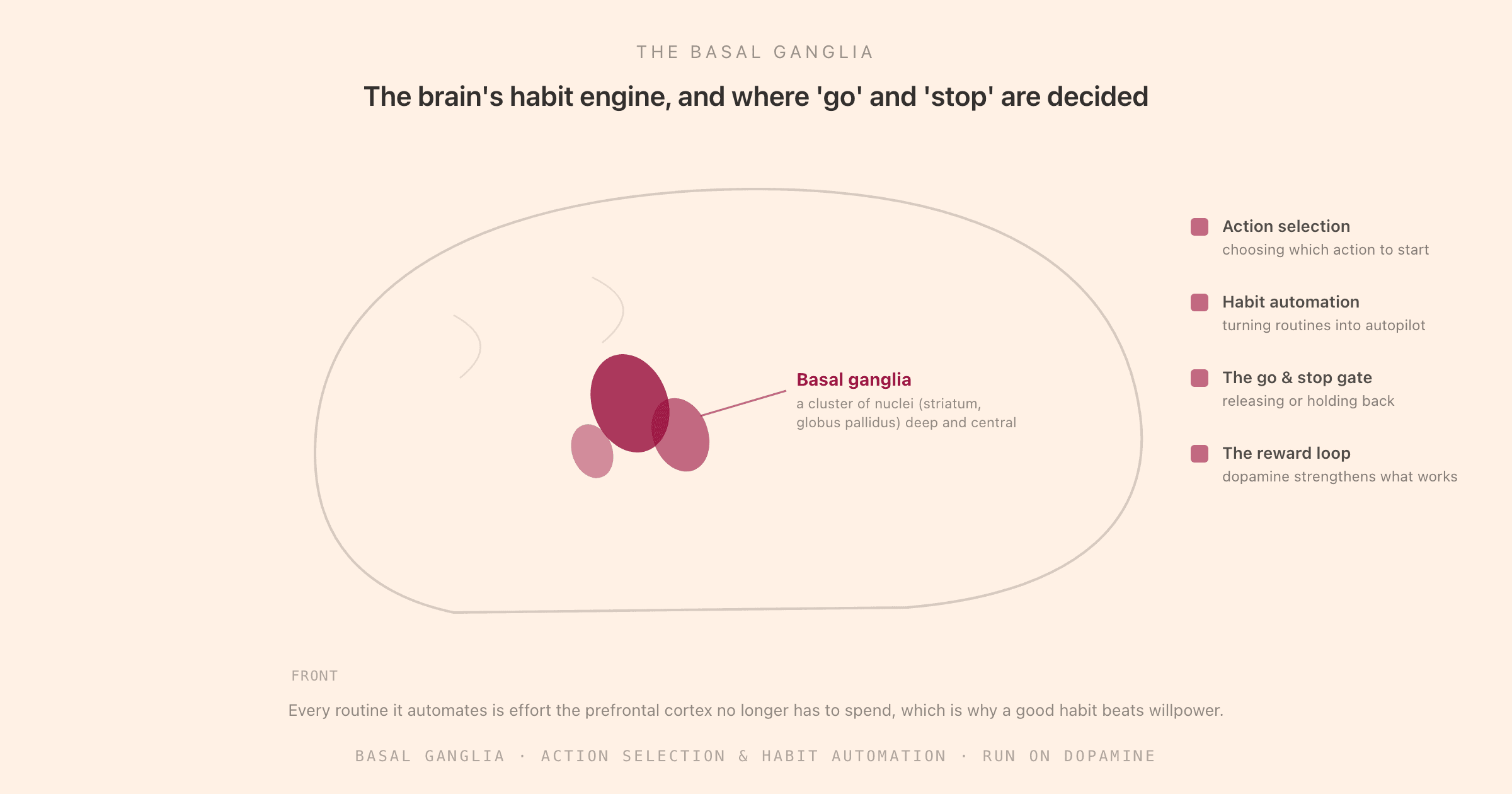
The Basal Ganglia: The Brain's Habit Engine and Why Starting Is the Hardest Part (What It Does, Habit Formation, and the Cue-Routine-Reward Loop)
The basal ganglia explained for focus and habits: what they are and do, how they select actions and automate them into habits, the cue-routine-reward loop, dopamine's role, and why this frees the prefrontal cortex for real focus.
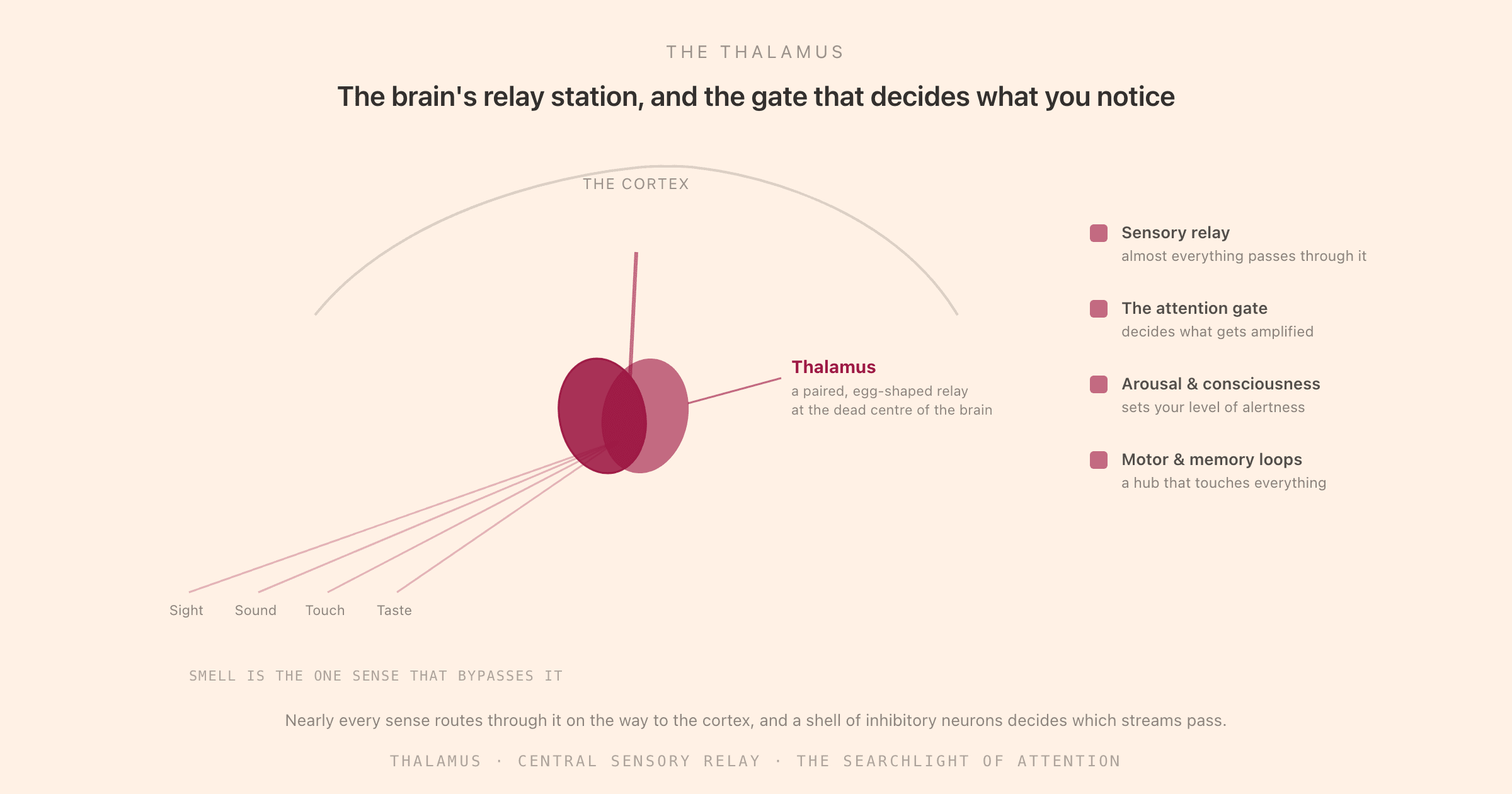
The Thalamus: The Brain's Relay Station and the Gate That Decides What You Notice (What It Does, Where It Is, and How It Filters Attention)
The thalamus explained for focus: what it is and does, where it sits, how it relays nearly all sensory information to the cortex, and how its reticular nucleus acts as the searchlight of attention that decides what reaches awareness.
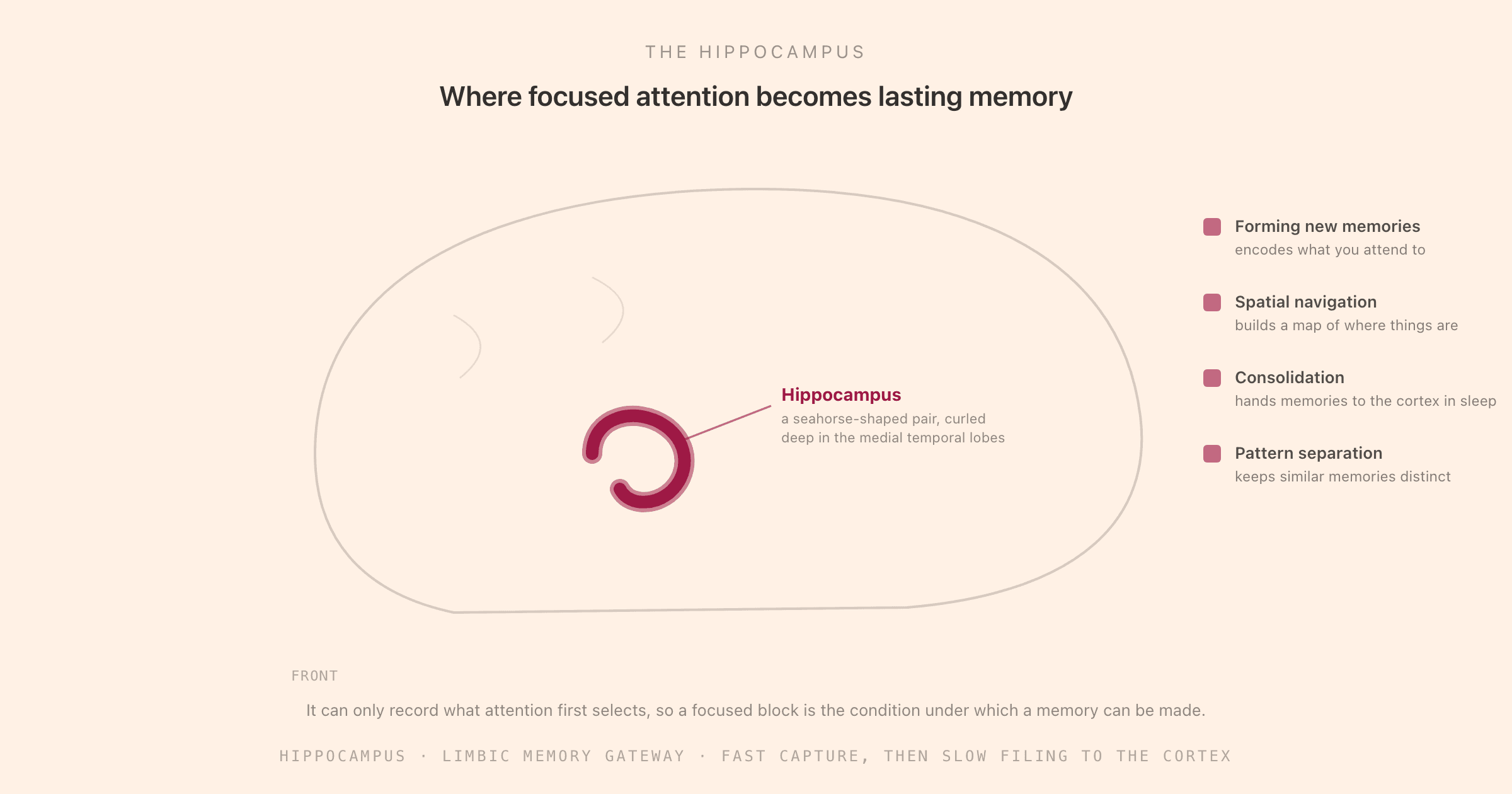
The Hippocampus: Where Focused Attention Becomes Lasting Memory (What It Does, Where It Is, and How to Protect It)
The hippocampus explained for focus and learning: what it is and does, where it sits in the brain, how it turns attention into durable memory through encoding and consolidation, and why sleep and spacing make focus stick.
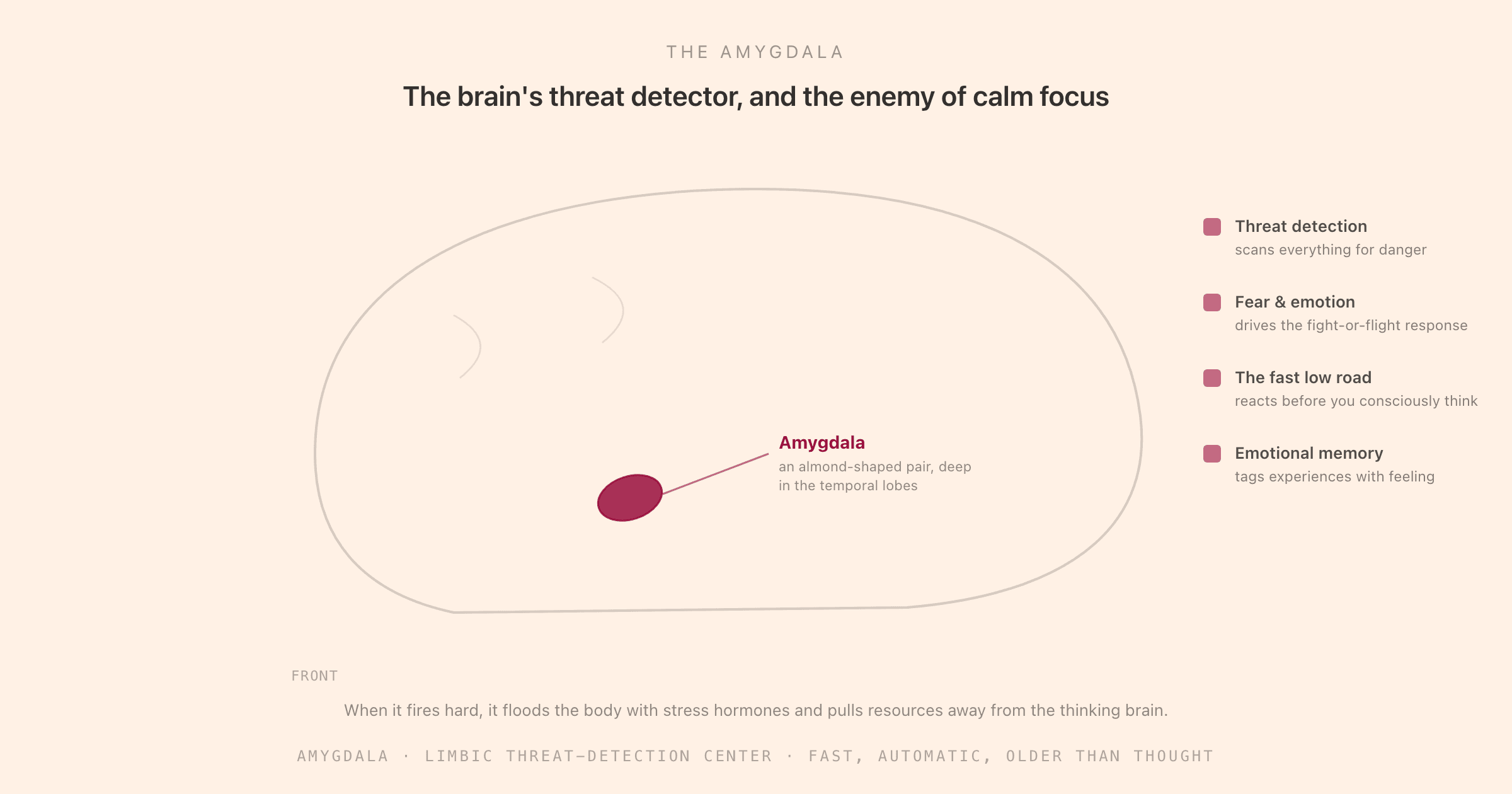
The Amygdala: The Brain's Threat Detector and Why It Hijacks Your Focus (What It Does, the Amygdala Hijack, and How to Calm It)
The amygdala explained for focus: what it is and does, the fast threat-detection low road, the amygdala hijack that takes the prefrontal cortex offline, and evidence-based ways to keep it calm so you can concentrate.

The Prefrontal Cortex: The Brain's Control Center for Focus (What It Does, the Subregions, Why It Goes Offline Under Stress, and How to Protect It)
The prefrontal cortex explained for focus: what it is and does, the dlPFC/ACC/vmPFC/OFC subregions, why it matures last and goes offline first under stress and sleep loss, and how to protect the brain region your attention runs on.
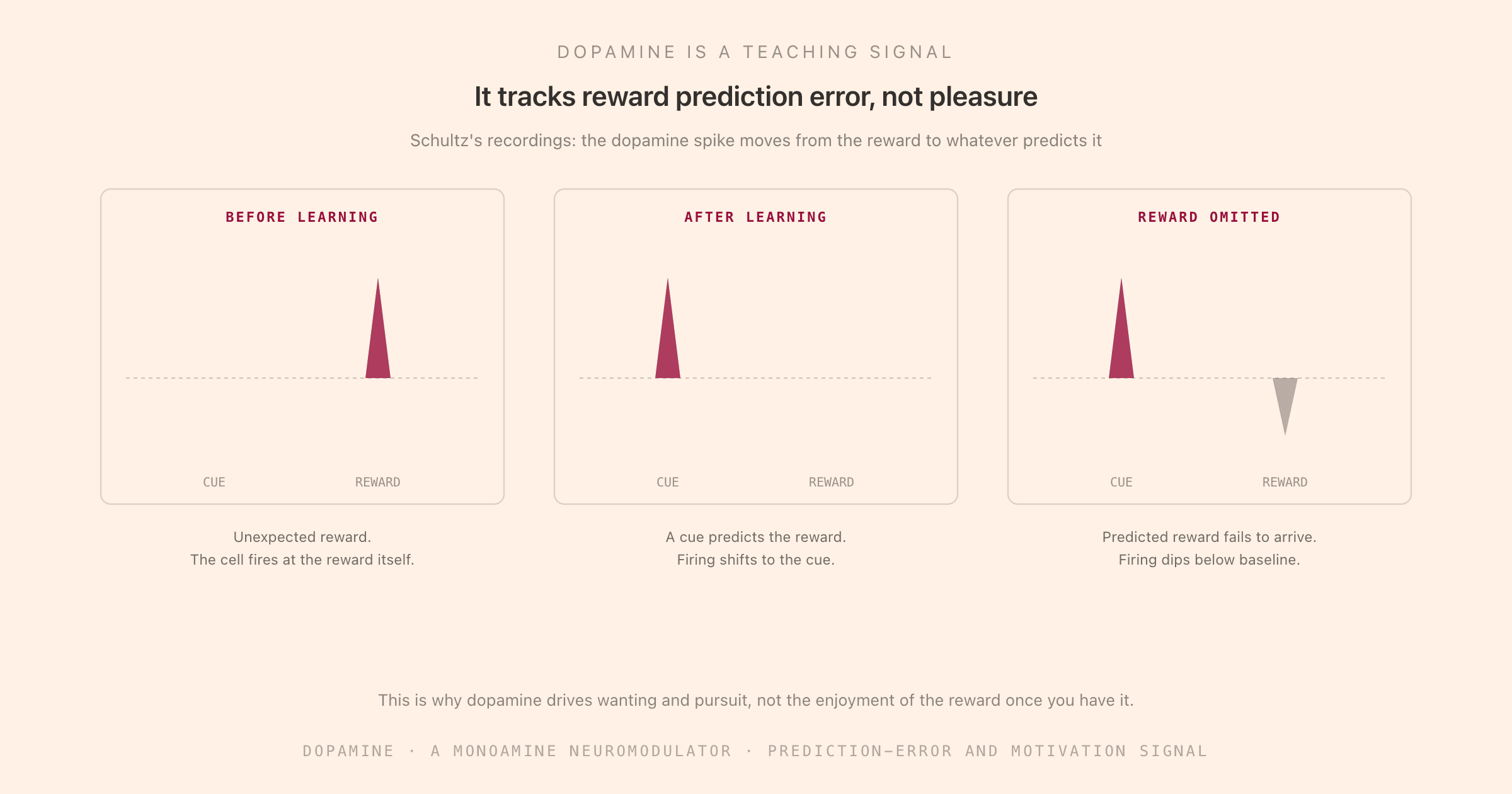
Dopamine: The Motivation and Prediction Signal Your Focus Actually Runs On (What It Is, the Four Pathways, Why It Drives Wanting Not Pleasure, and What Genuinely Raises It)
Dopamine explained for focus: what dopamine actually is and does, the four pathways, the reward-prediction-error theory that makes it a teaching signal rather than a pleasure chemical, what low dopamine looks like, and what genuinely raises it.
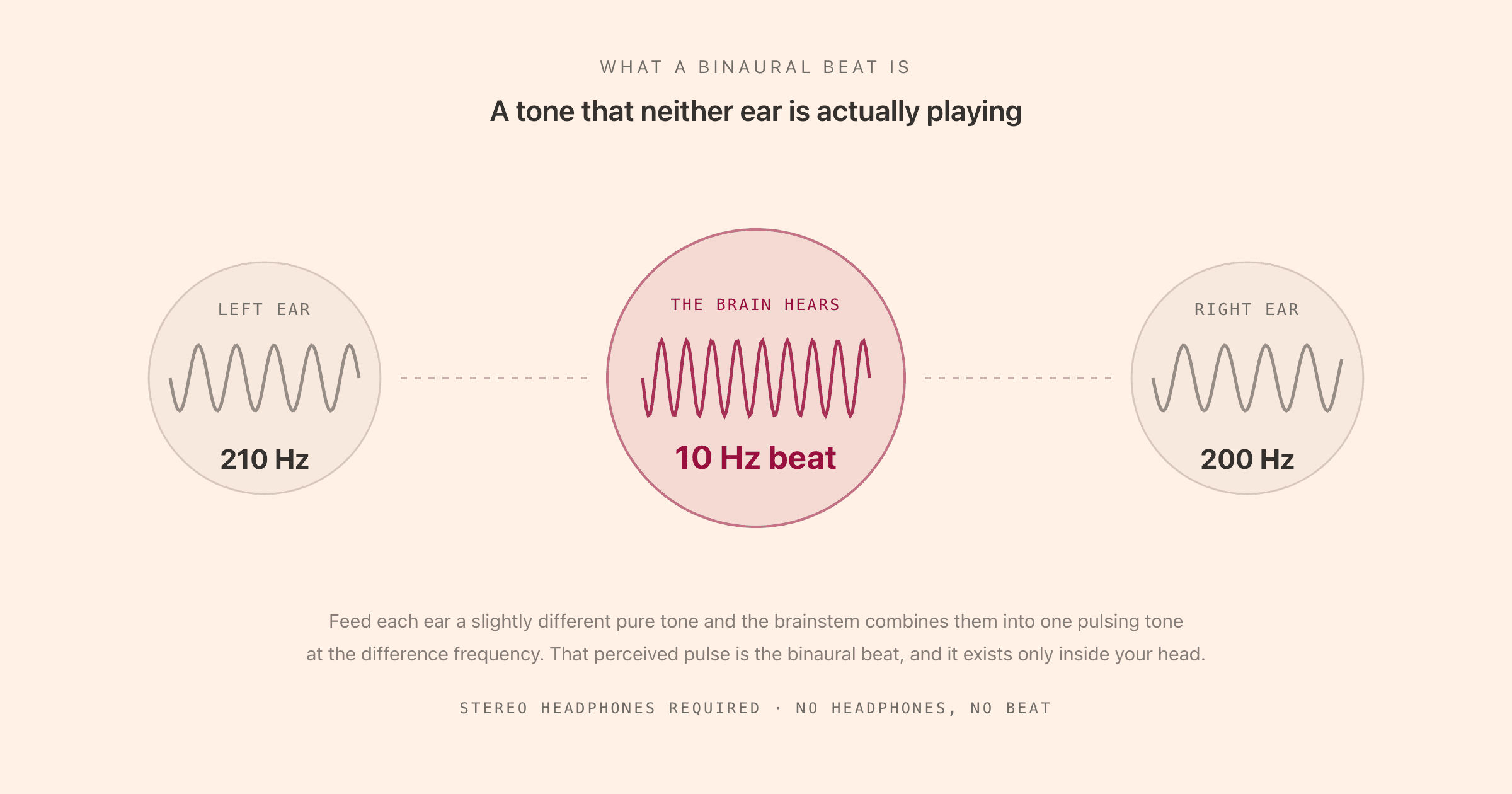
Binaural Beats: What They Are, How They Work, and What the Science Actually Shows
A clear, honest guide to binaural beats: what they are, how the difference-tone illusion and frequency-following response work, the brainwave frequency map, whether they actually work for focus and sleep, and how to use them.
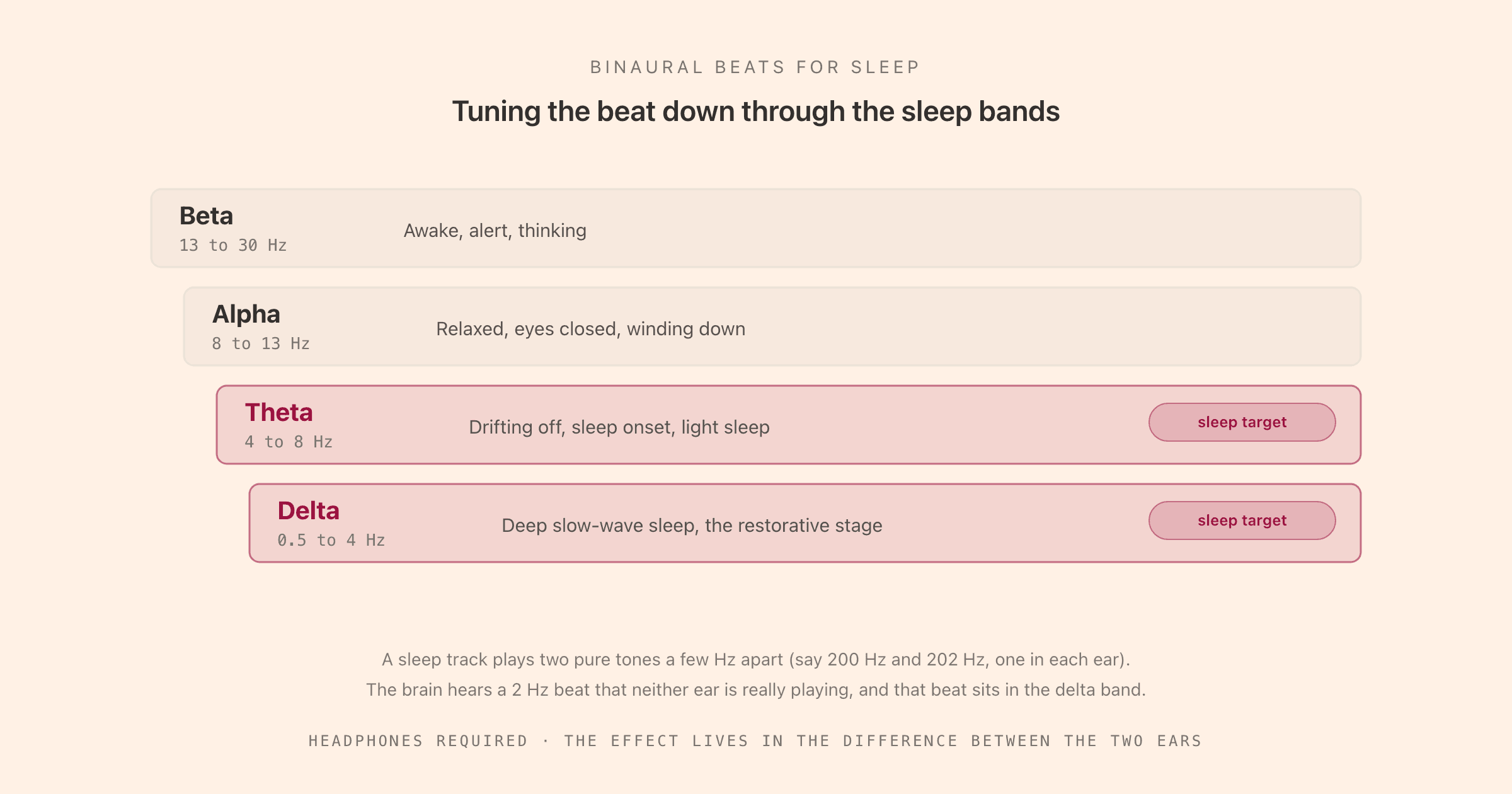
Binaural Beats for Sleep: What the Science Actually Says (and How to Use Them Properly)
Binaural beats for sleep, examined honestly: the delta-frequency target, how the difference-tone illusion works, what the sleep and anxiety studies really found, the headphone rule, and how to use them without overselling the effect.

The Best Binaural Beats Apps for Focus in 2026 (and How Brain.fm, Endel, Noisli, myNoise, and Tomatoes Actually Differ)
A binaural beats app, a generative-music app, and a noise mixer are three different tools that get lumped together. A 2026 comparison of the best focus apps by sound mechanism, platform, evidence, and price.
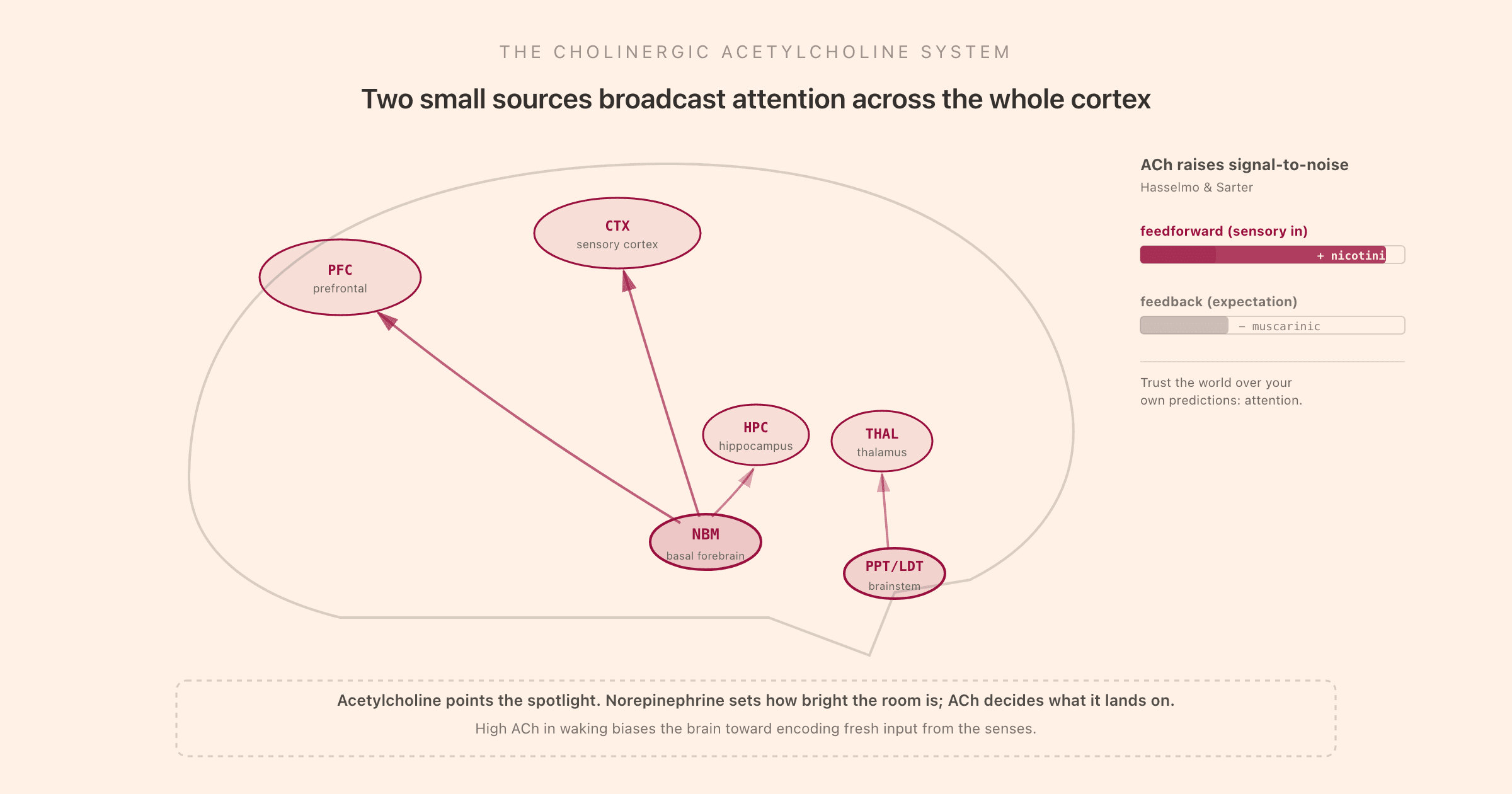
Acetylcholine: The Brain's Attention and Learning Signal (The Cholinergic System, Signal-to-Noise, Nicotinic vs Muscarinic Receptors, and Why High ACh Means Encode and Low ACh Means Consolidate)
Acetylcholine explained for focus: what acetylcholine is and does, the cholinergic system that broadcasts it, how it raises attention's signal-to-noise ratio, nicotinic vs muscarinic receptors, the encode-vs-consolidate memory switch, and how to support it.
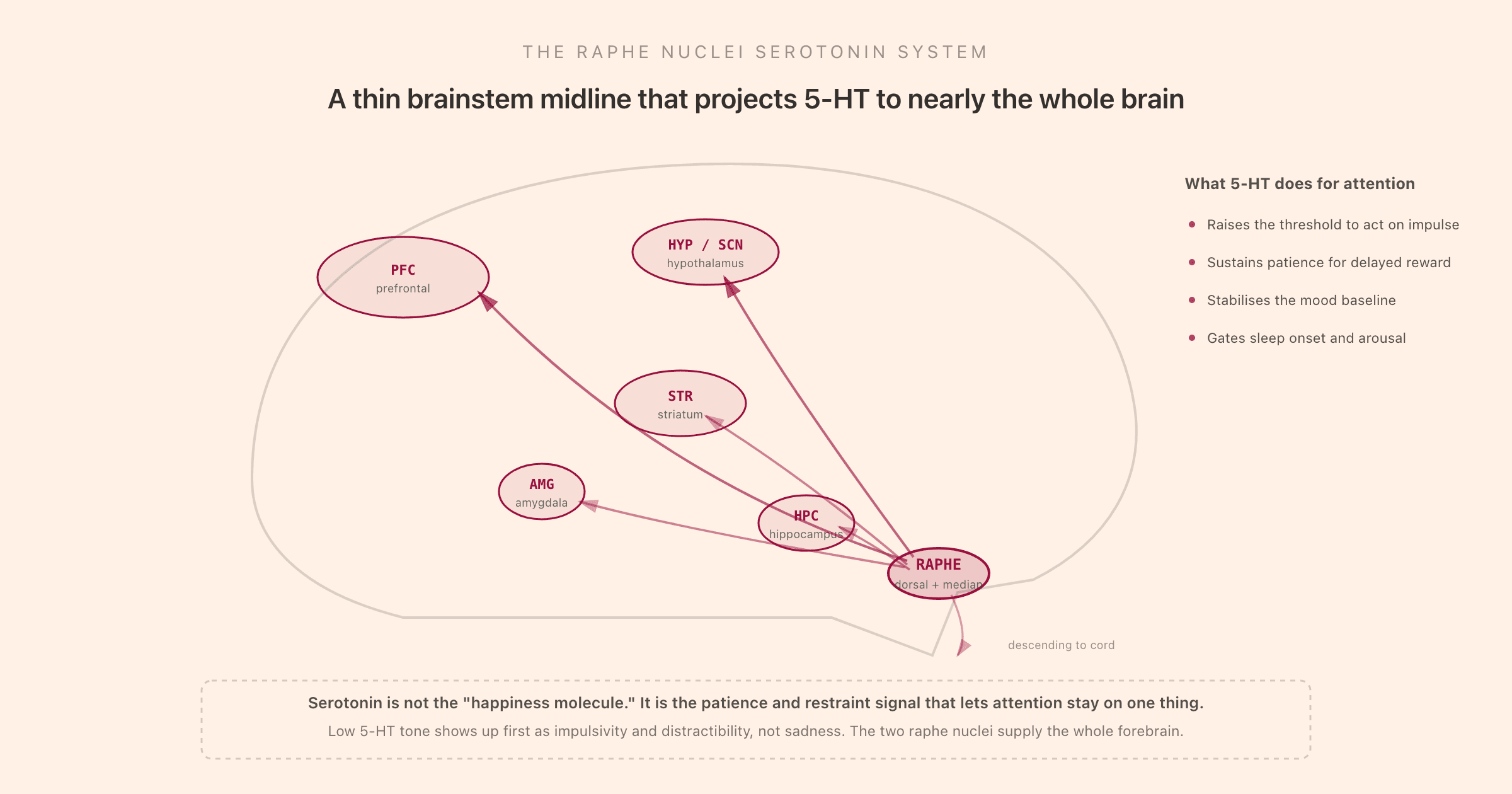
Serotonin: The Patience and Impulse-Control Signal Your Focus Actually Runs On (The Raphe Nuclei, the Dopamine Balance, What Low Serotonin Looks Like, and What Genuinely Raises It)
Serotonin explained for focus: what serotonin is and does, the raphe nuclei that supply the whole brain, the serotonin-dopamine opponent balance, why low serotonin shows up as distractibility before sadness, and what actually raises it.

Cortisol: The Stress Hormone That Sets the Arousal Level Your Focus Runs On (The HPA Axis, the Daily Rhythm, the Inverted-U, and What Actually Lowers It)
Cortisol explained from the HPA axis outward: what cortisol is and does, the daily rhythm and the cortisol awakening response, glucocorticoid receptors, the inverted-U where acute cortisol sharpens focus and chronic cortisol impairs the prefrontal cortex, and what genuinely lowers it.
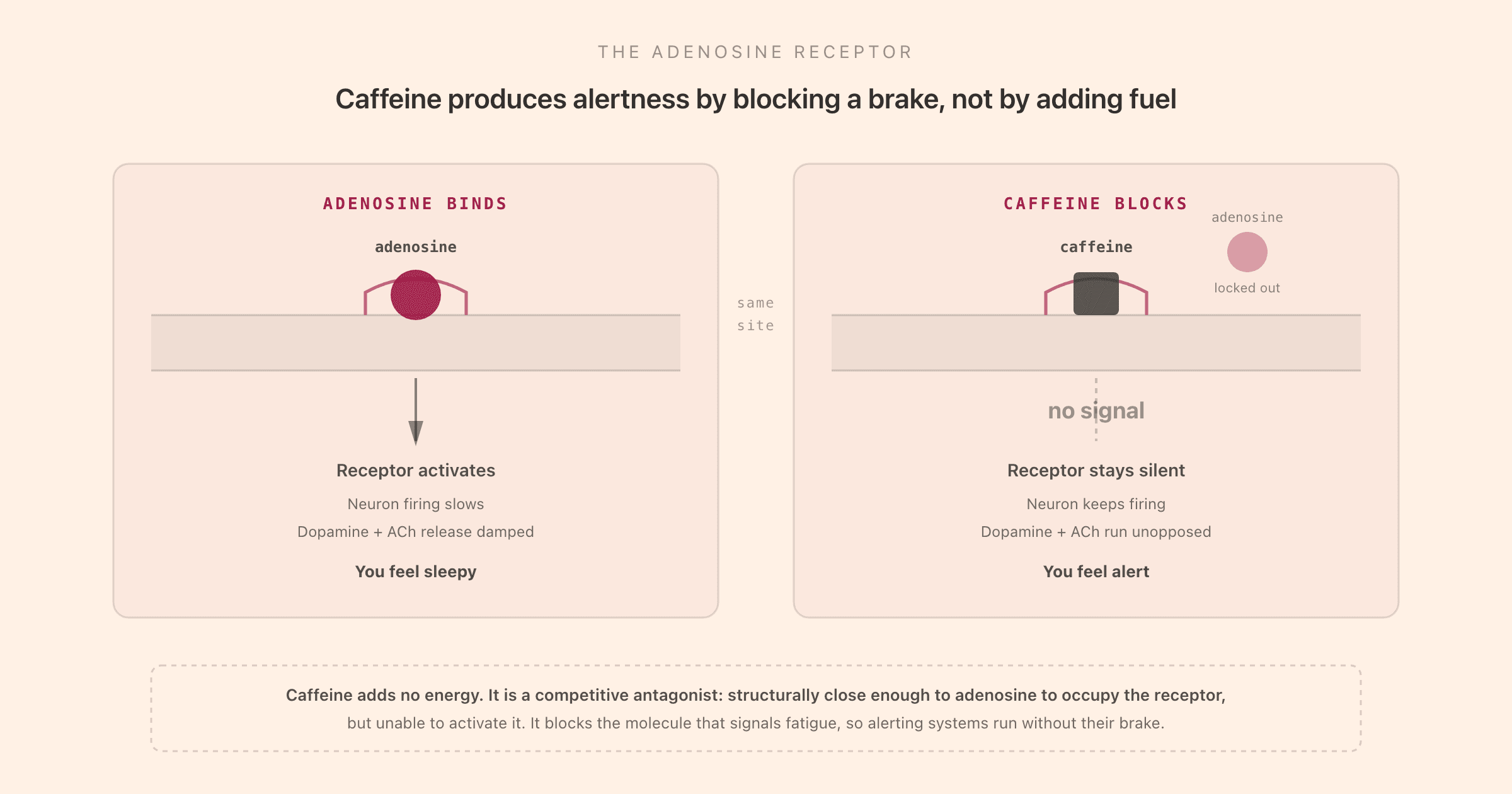
Caffeine: How the World's Most-Used Drug Actually Produces Focus (Adenosine, the Five-Hour Half-Life, the Crash, Tolerance, and the Best Time to Drink Coffee)
Caffeine explained from the receptor outward: how it blocks adenosine instead of adding energy, why the five-hour half-life means the afternoon cup is still in you at midnight, what the crash and tolerance actually are, whether it improves focus, and how to time it.
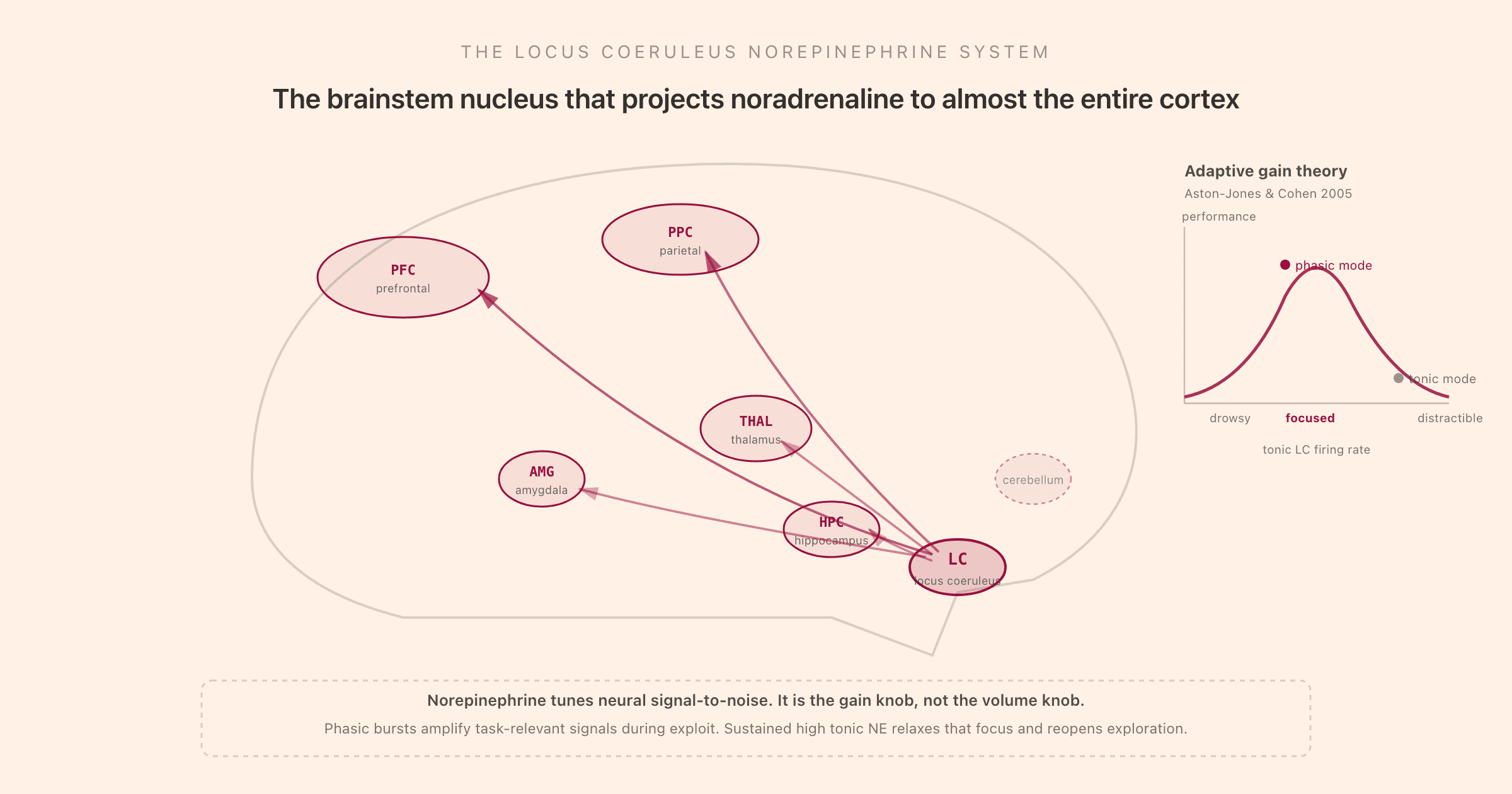
Norepinephrine: The Brainstem Neurotransmitter That Runs Attention (Locus Coeruleus, Phasic vs Tonic Firing, the Adaptive Gain Theory, and the Yerkes-Dodson Curve Explained)
Norepinephrine explained from the brainstem outward: the locus coeruleus, the ascending noradrenergic projections that reach almost the entire cortex, phasic vs tonic firing modes, the Aston-Jones and Cohen adaptive gain theory, why the Yerkes-Dodson inverted-U is really a graph of tonic NE, and how stimulants, atomoxetine, and stress tune the system.
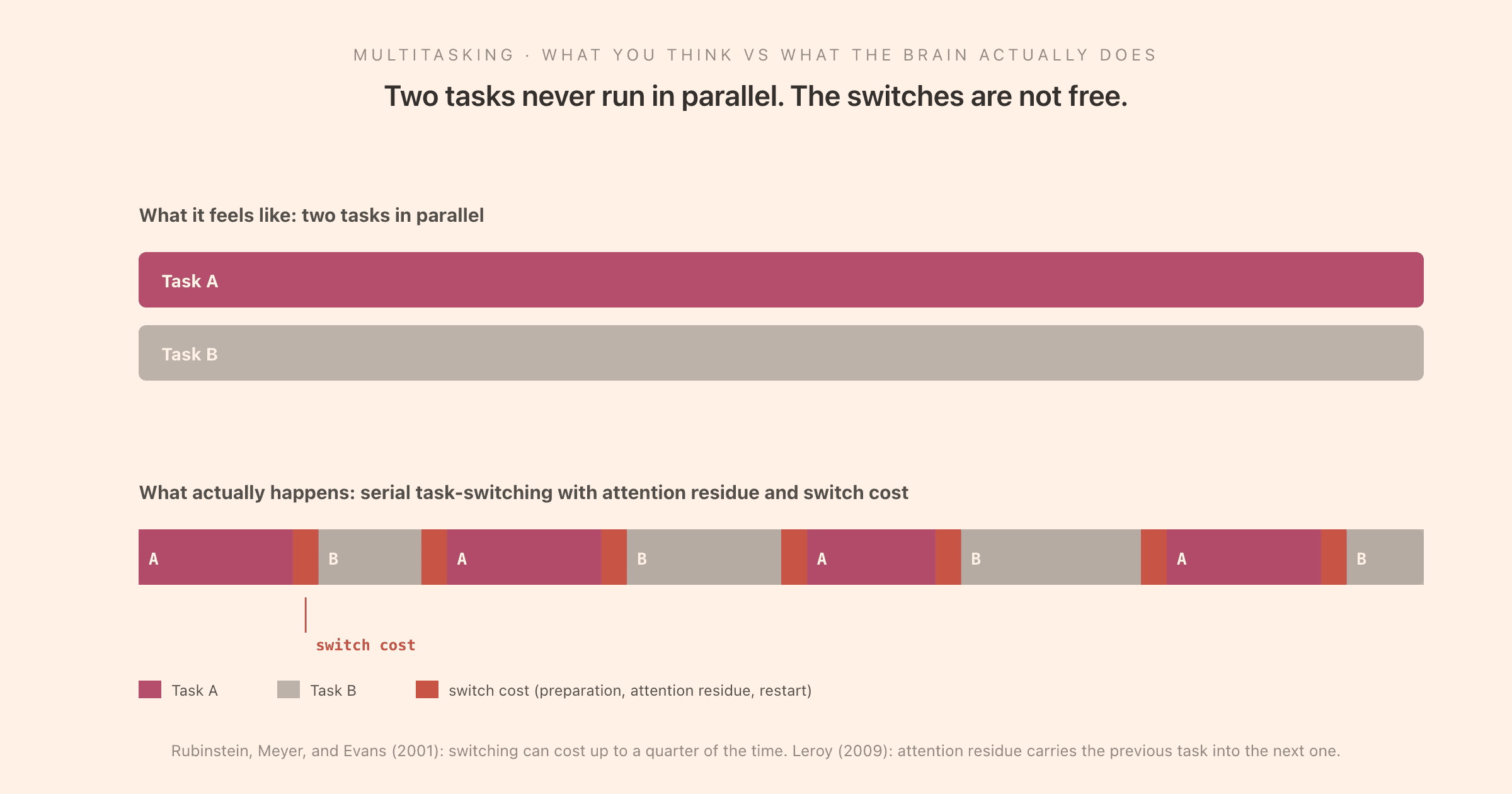
Multitasking: Why the Brain Cannot Actually Do Two Things at Once (Switch Cost, Attention Residue, and the Heavy-Media-Multitasker Paradox)
Multitasking explained from the cognitive science up: the central bottleneck and why true parallel processing of two attention-demanding tasks is impossible, the switch-cost evidence from Rubinstein, Leroy's attention-residue work, and the Ophir 2009 finding that heavy media multitaskers score worse on every cognitive control measure, plus the narrow exceptions where automatic tasks really do run in parallel.
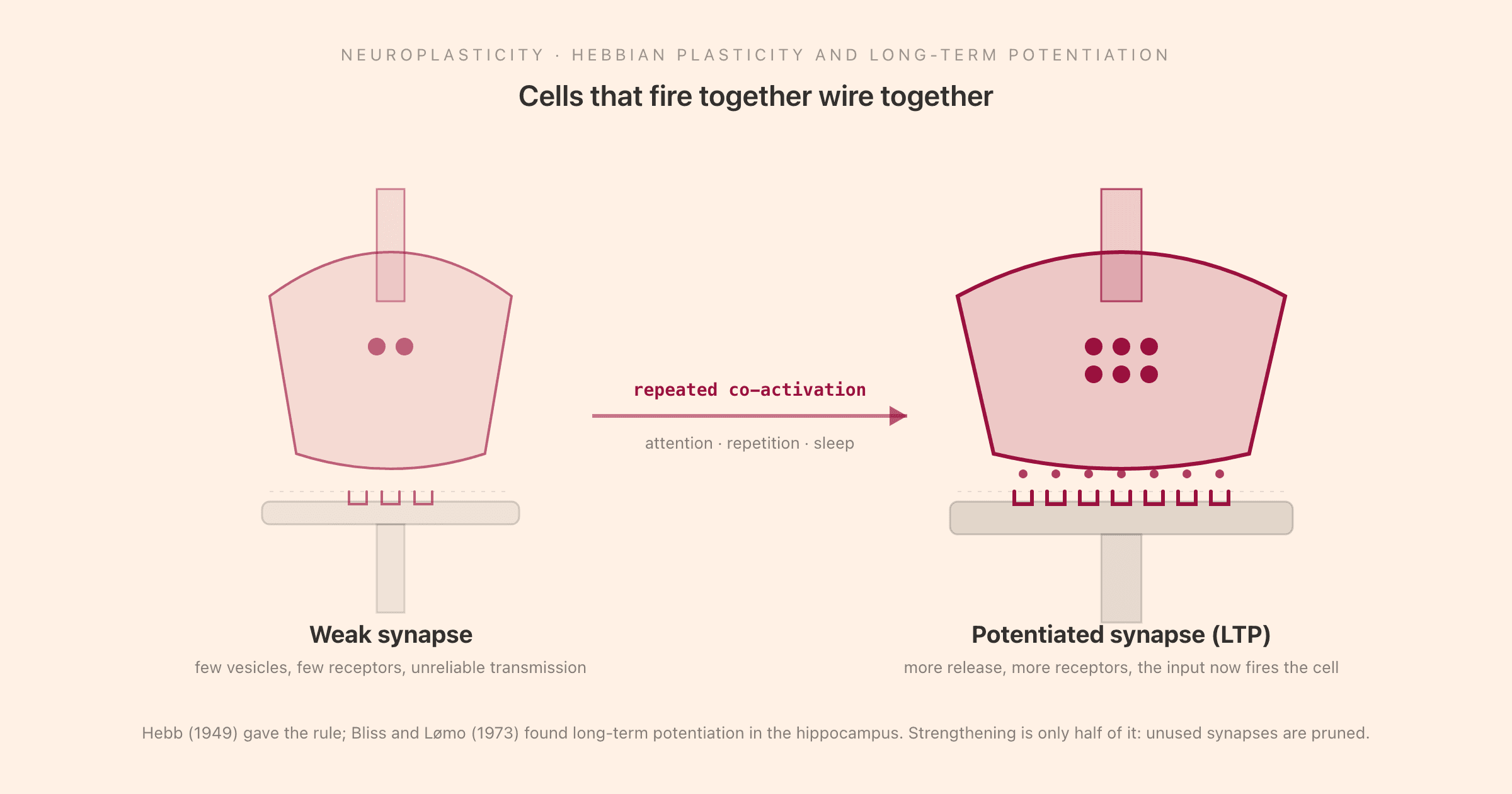
Neuroplasticity: How the Brain Rewires Itself (Hebbian Plasticity, LTP, Critical Periods, and What Actually Drives Lasting Change)
Neuroplasticity explained from the cellular level up: Hebbian plasticity and the fire-together-wire-together rule, long-term potentiation, synaptic pruning, critical periods versus adult plasticity, the neurogenesis debate, the Kleim and Jones principles that govern real rewiring, and the myths to ignore.
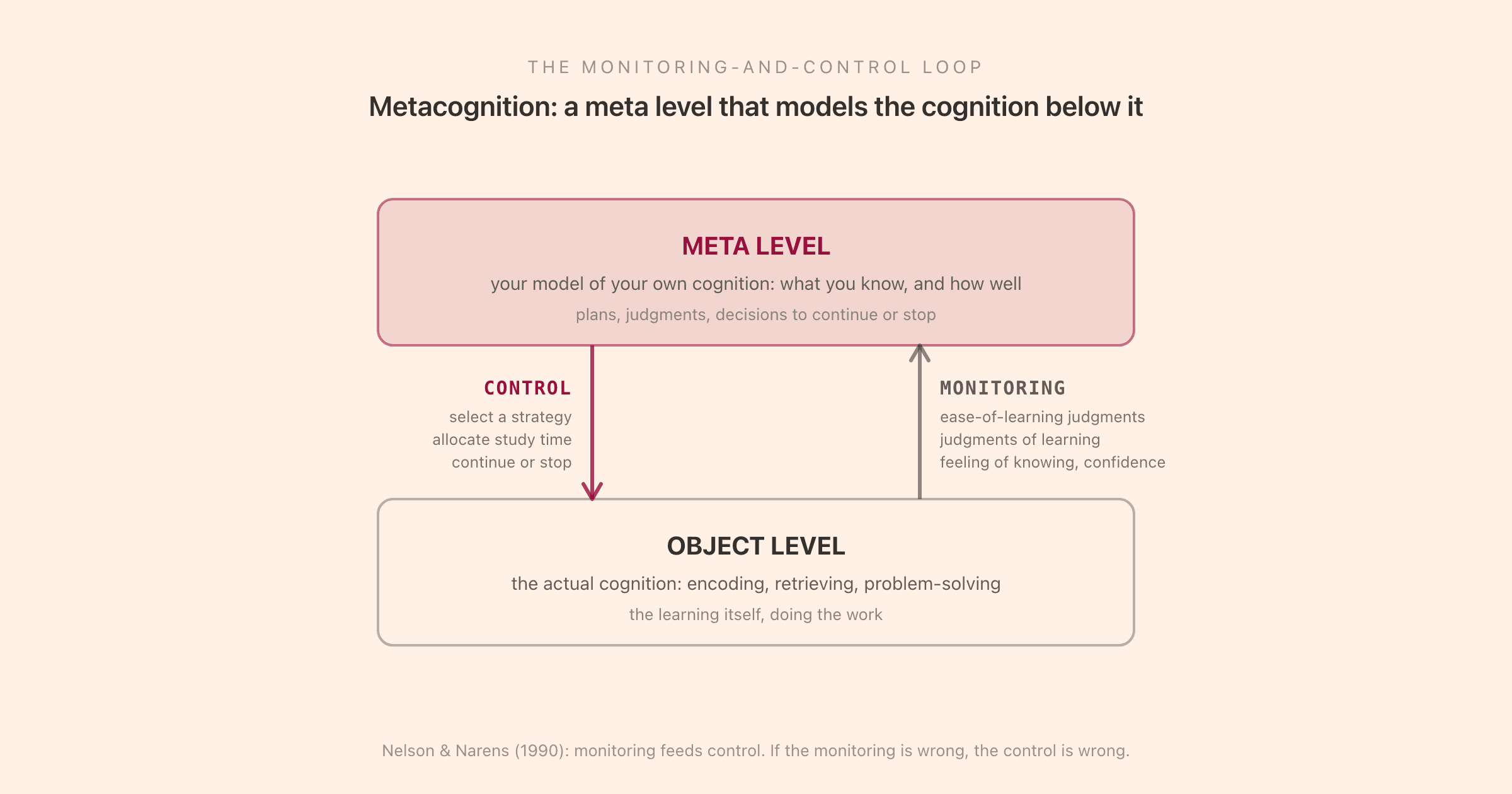
Metacognition: The Monitoring-and-Control Layer That Governs Learning (Flavell's Two Components, the Nelson-Narens Loop, Judgments of Learning, and the Fluency Illusion That Wrecks Your Calibration)
Metacognition explained from the cognitive science up: Flavell's knowledge-and-regulation split, the Nelson and Narens monitoring-and-control framework, judgments of learning and calibration, the fluency illusion that makes rereading feel like mastery, and the metacognitive strategies that actually work.
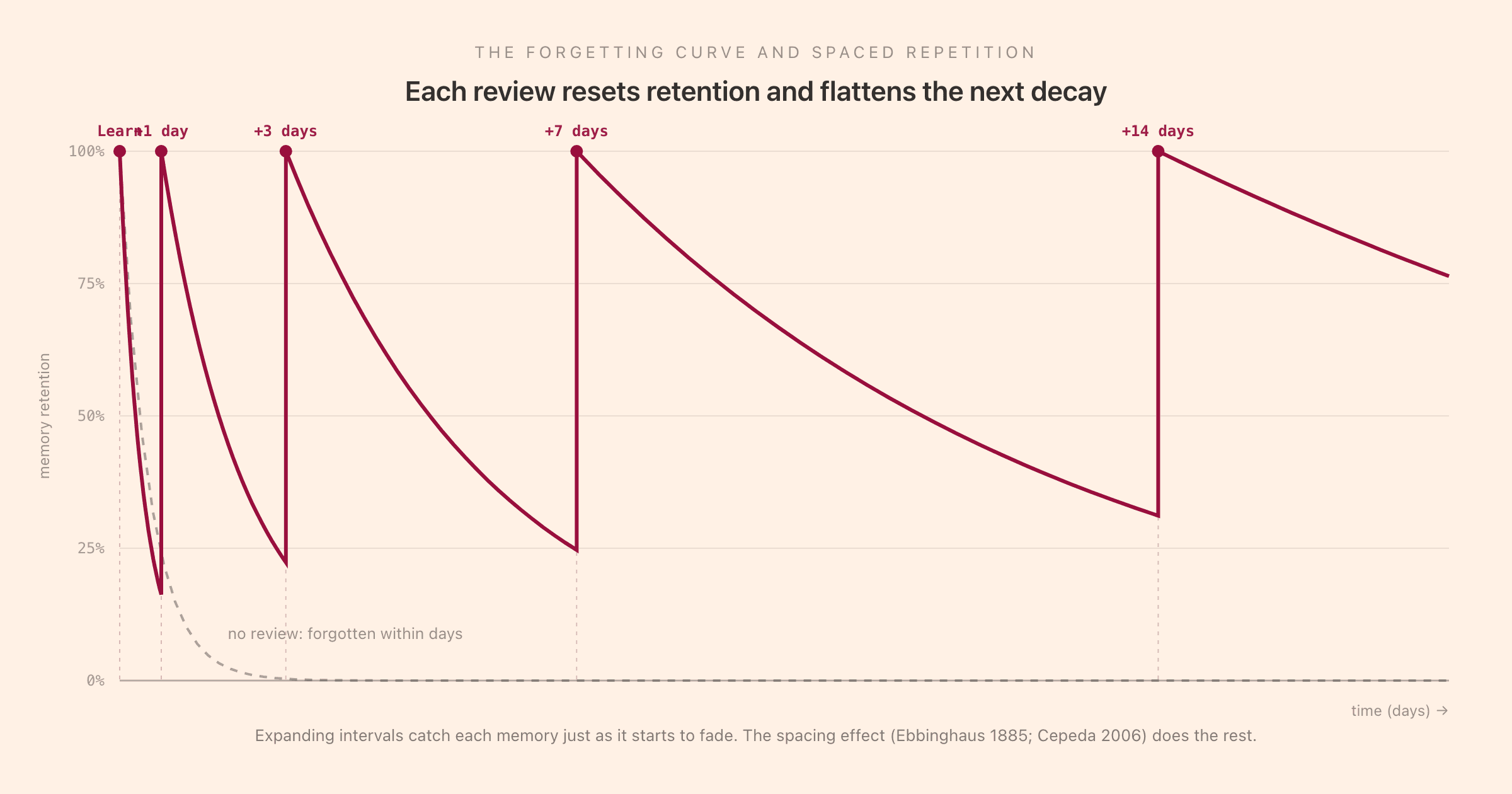
Spaced Repetition: The Forgetting Curve, the Spacing Effect, and the Algorithms That Schedule Memory (Ebbinghaus, Leitner, SM-2, and Why Expanding Intervals Beat Cramming)
Spaced repetition explained from the cognitive science up: the Ebbinghaus forgetting curve, the spacing effect (Cepeda 2006), the optimal-interval question, the Leitner box and SM-2 algorithm that power Anki, and why spaced retrieval beats massed cramming for durable memory.
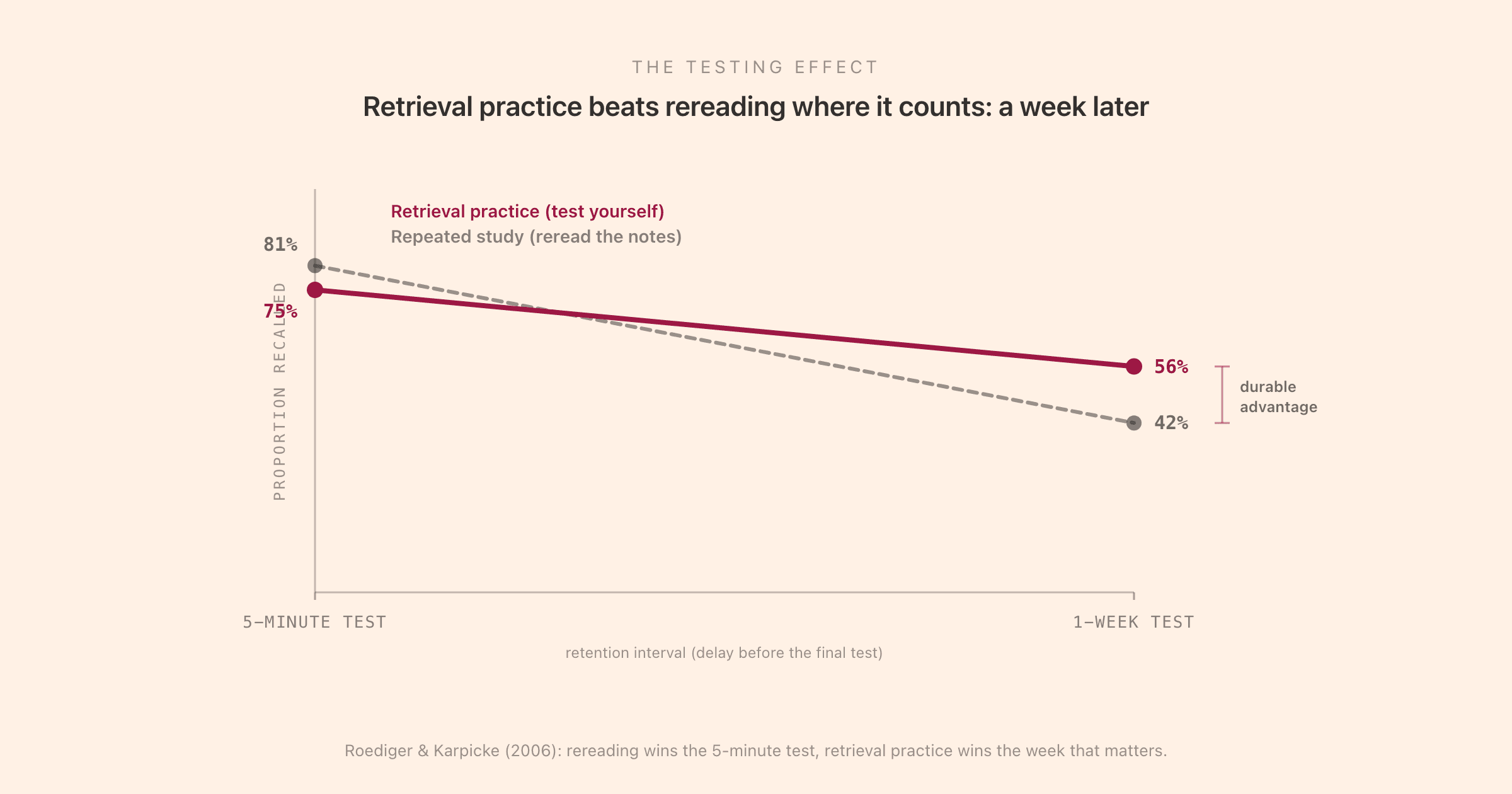
Active Recall: The Retrieval-Practice Method That Beats Rereading (the Testing Effect, the Desirable-Difficulty Mechanism, Spaced Repetition, and the Fluency Illusion That Fools Everyone)
Active recall explained from the cognitive science up: the testing effect (Roediger & Karpicke 2006), why effortful retrieval strengthens memory more than rereading, how it pairs with spaced repetition and memory consolidation, and the fluency illusion that makes highlighting feel like learning.

The Sleep Stages: The Four-Stage 90-Minute Architecture the Brain Runs Every Night (N1, N2, N3, REM), the Hypnogram, the Within-Night Progression, and What Each Stage Actually Does
Sleep stages explained from the EEG up: N1, N2, N3 (slow-wave), and REM; the 90-minute ultradian cycle; why slow-wave dominates the first half and REM the second; memory consolidation, glymphatic clearance, and how fragmented sleep tanks next-day focus.
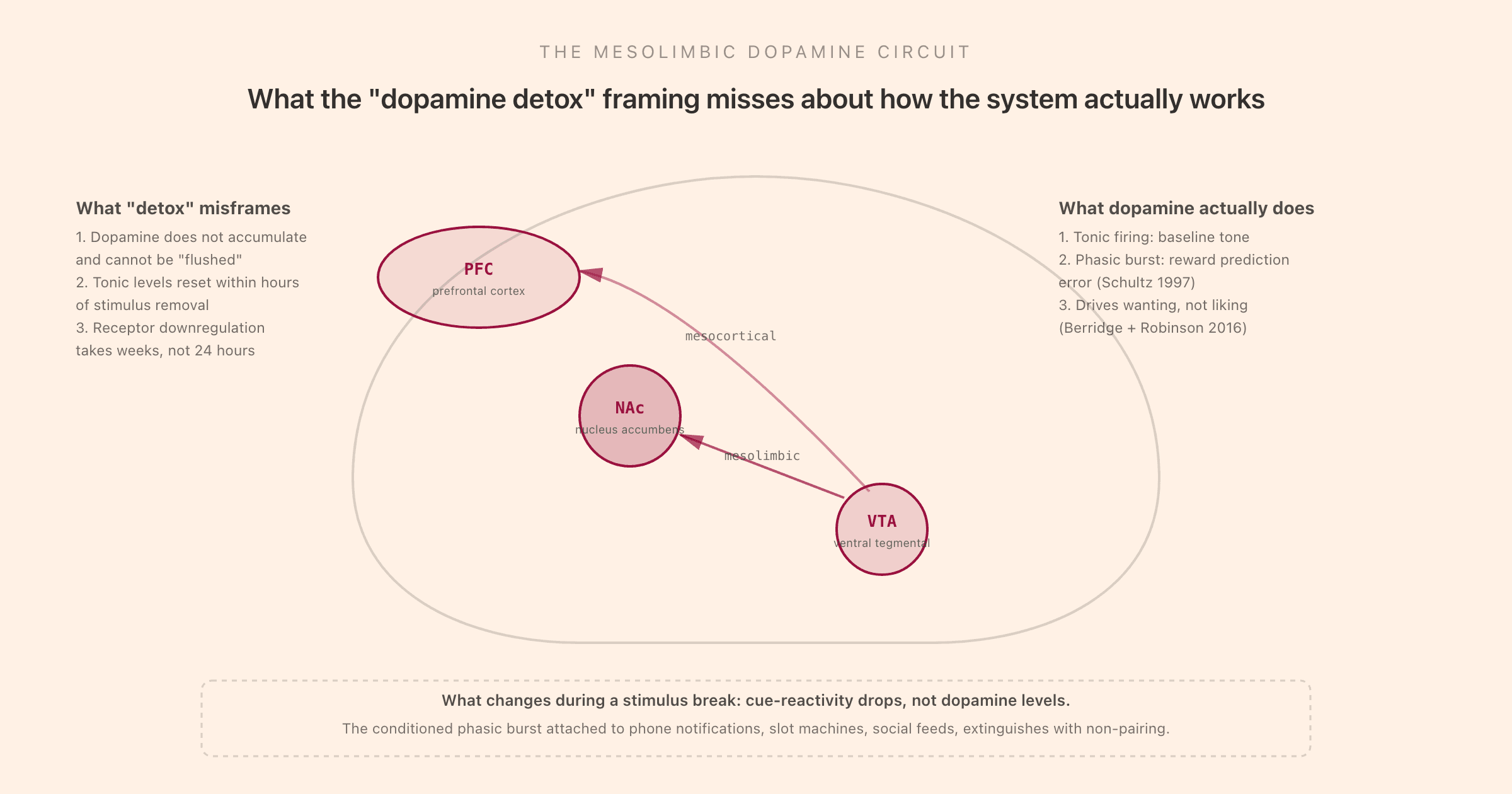
Dopamine Detox: What the Neuroscience Actually Says About the TikTok Productivity Hack (Reward Prediction Error, Anna Lembke's Dopamine Nation, and the Five Levers That Actually Reduce Compulsive Reward-Seeking)
Dopamine detox is the wrong framing for a real problem. What the mesolimbic circuit actually does, why a 24-hour fast does not reset receptors, what Anna Lembke's Dopamine Nation actually argues, and the five behavioural levers that genuinely reduce compulsive reward-seeking.
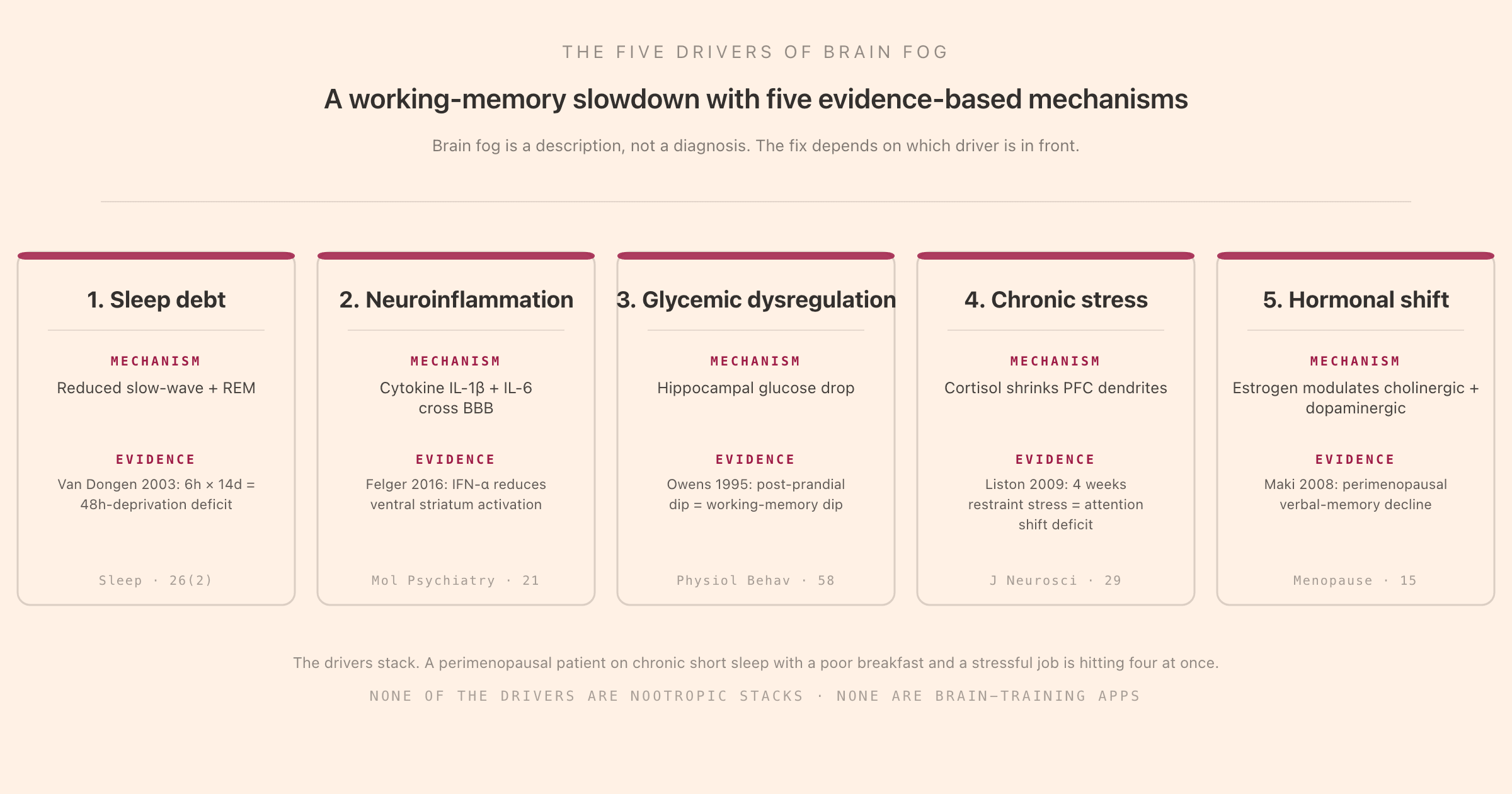
Brain Fog: The Working-Memory Slowdown the Five Drivers Cause (Sleep, Inflammation, Glycemic, Stress, Hormonal) and the Interventions With Actual RCT Evidence
Brain fog explained as a working-memory and executive-function slowdown rather than a diagnosis: the five evidence-based drivers, the canonical research, the interventions with real RCT support, and the three false promises to ignore.
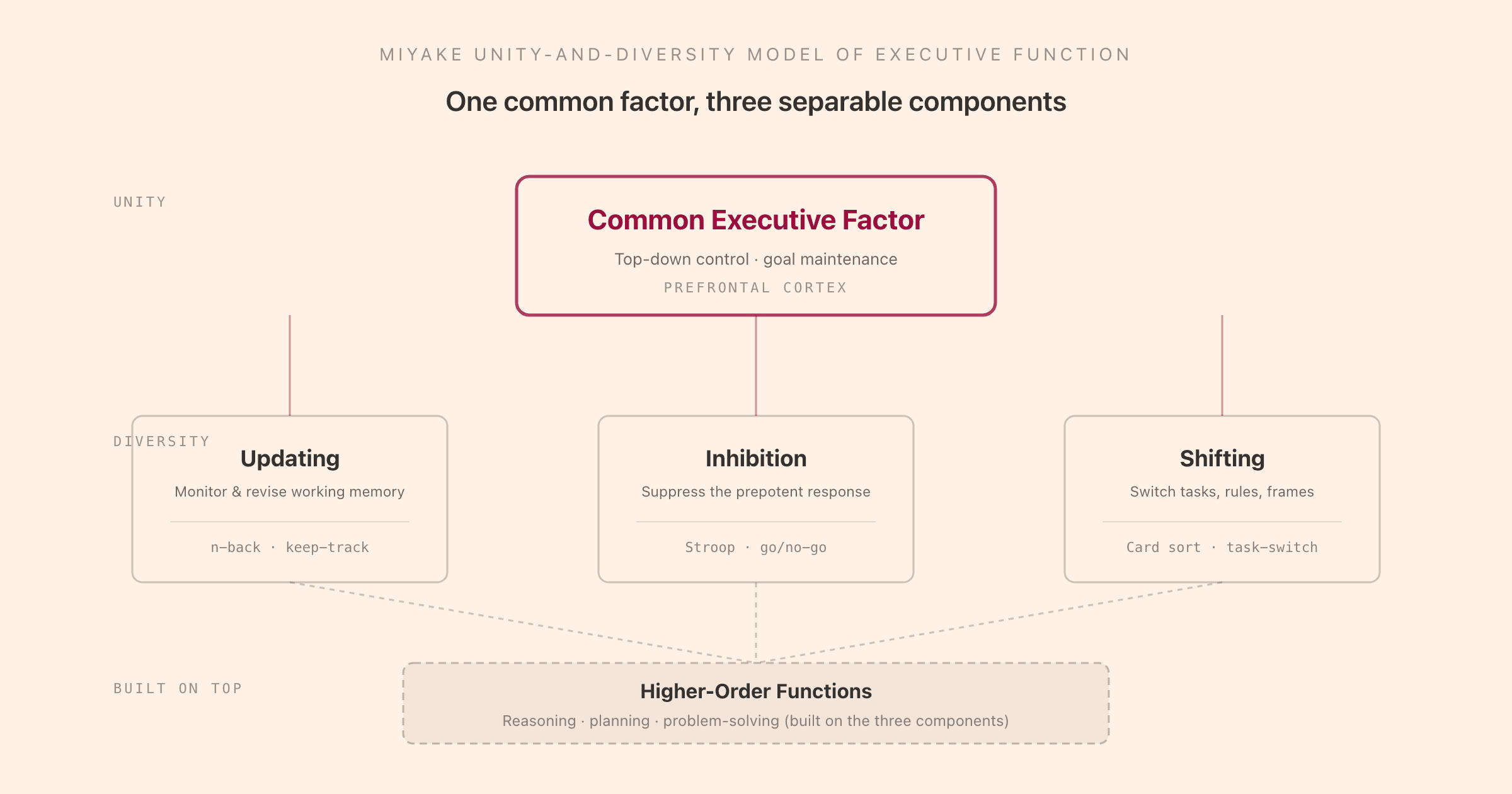
Executive Function: The Prefrontal Control System That Decides Whether You Focus (Miyake's Three-Factor Model, the Development Curve, and What Actually Trains It)
Executive function is the brain's top-down control system. The Miyake unity-and-diversity model, the three core components, the prefrontal-cortex seat, executive dysfunction and ADHD, and what the literature says actually trains it.
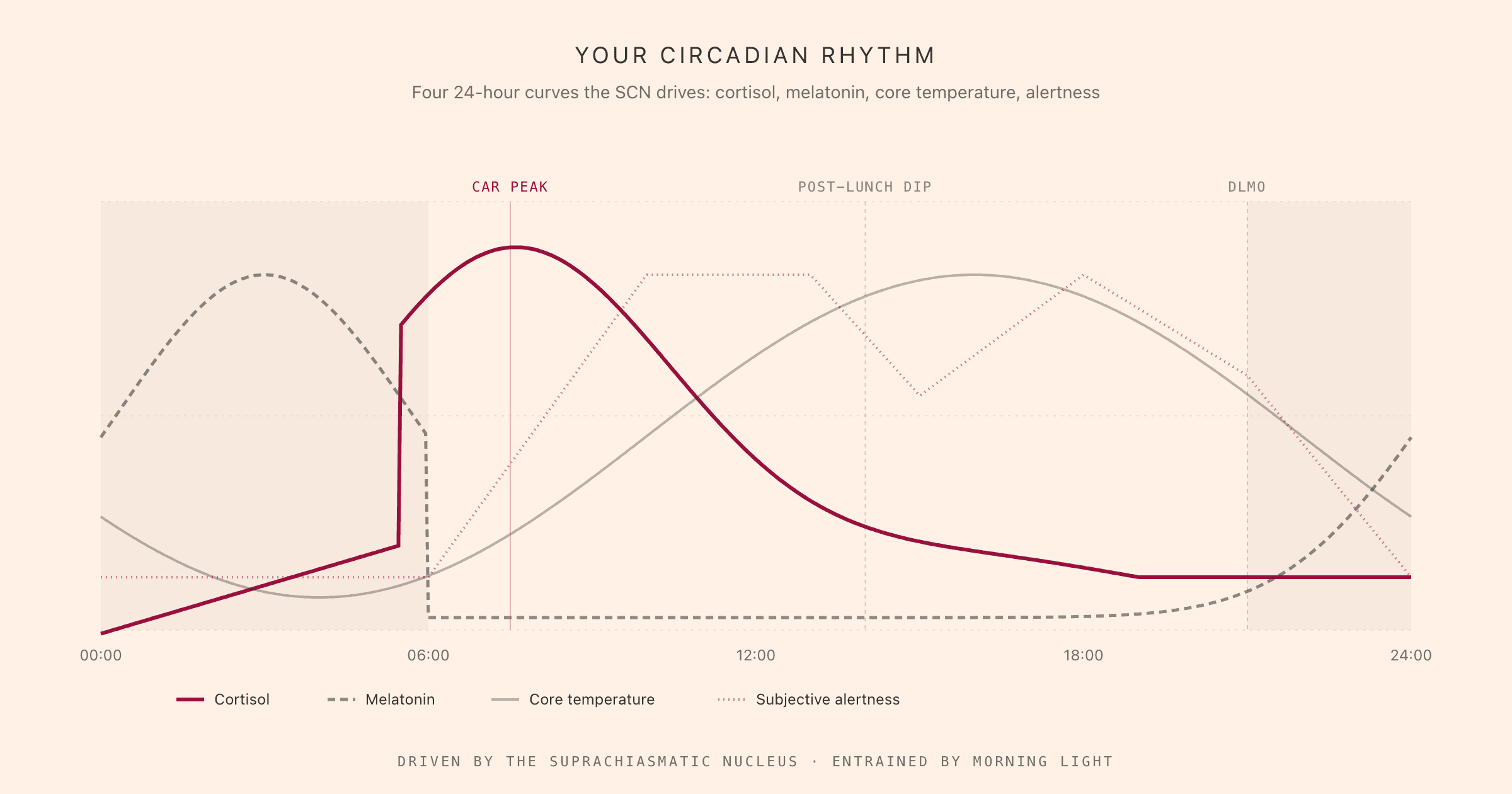
Circadian Rhythm: The 24-Hour Body Clock the SCN Runs, and How to Align Focus With Its Peaks
Circadian rhythm explained: the suprachiasmatic nucleus, the cortisol awakening response, chronotype distribution, the post-lunch dip, and how to align deep work with the body clock's two daily alertness peaks.
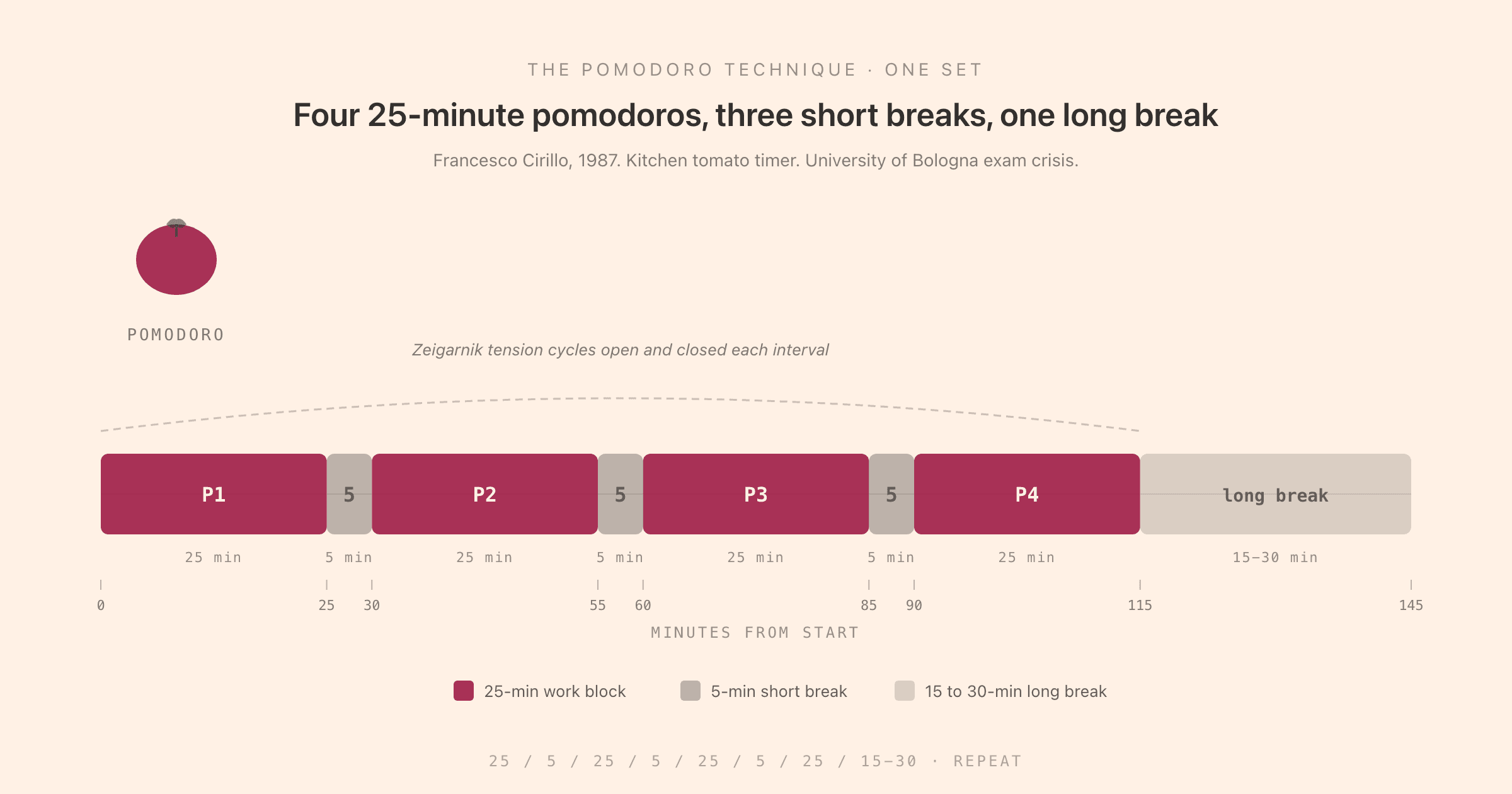
The Pomodoro Technique: The 1987 Tomato-Timer Protocol That Built a Focus Religion (and the Science of Why 25 Minutes Holds)
The Pomodoro Technique explained from Francesco Cirillo's 1987 origin to the cognitive science of attention restoration, task-switching cost, and the Zeigarnik tension that makes 25 minutes the right number.
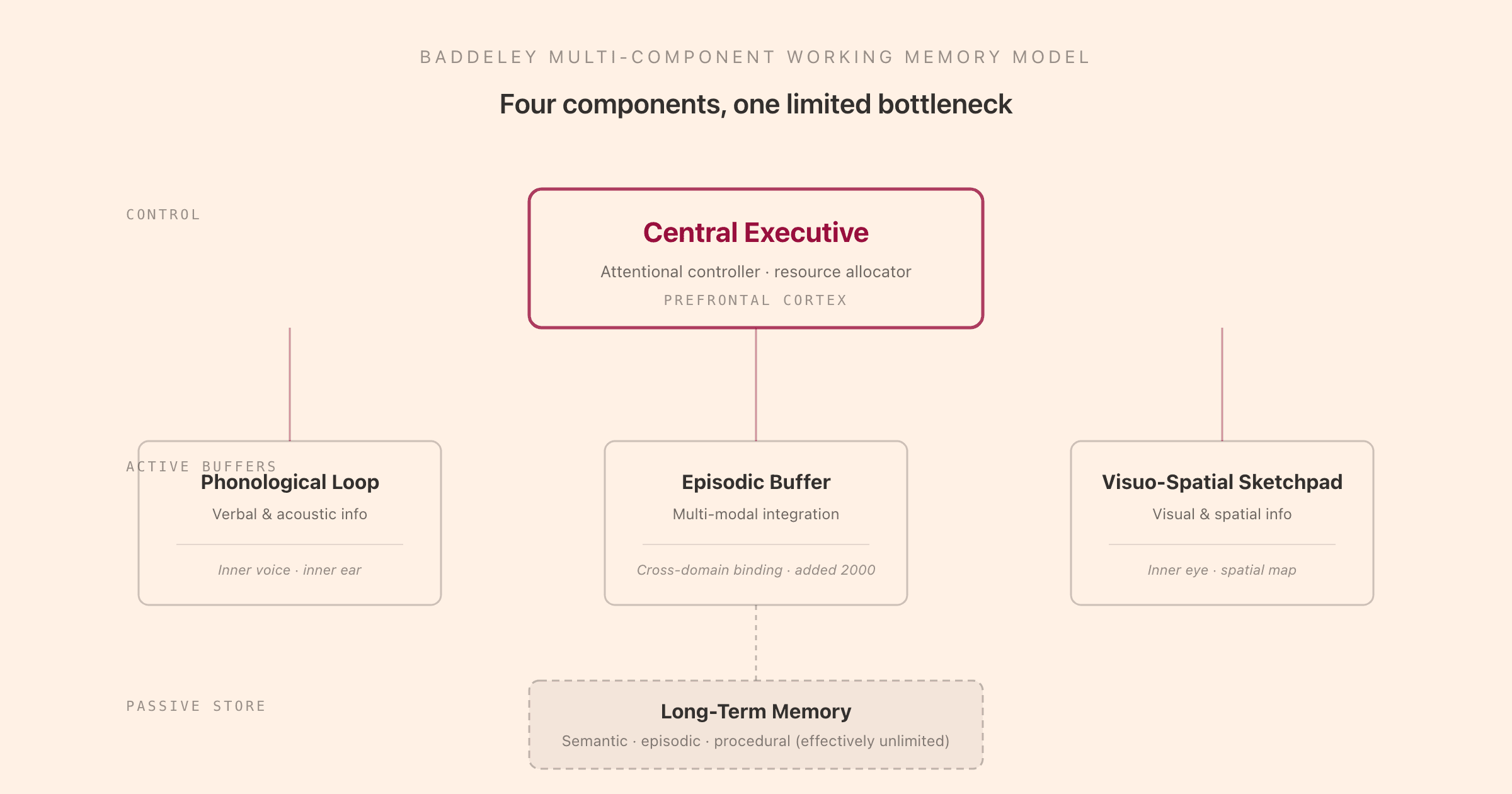
Working Memory: The Four-Slot Bottleneck the Brain Runs Every Focus Task Through (Baddeley's Model, Capacity Limits, and What Actually Trains It)
Working memory is the cognitive bottleneck behind every focus task. The Baddeley model, the Miller 7 vs Cowan 4 capacity argument, the ADHD link, and what the literature says actually trains it (vs what does not).
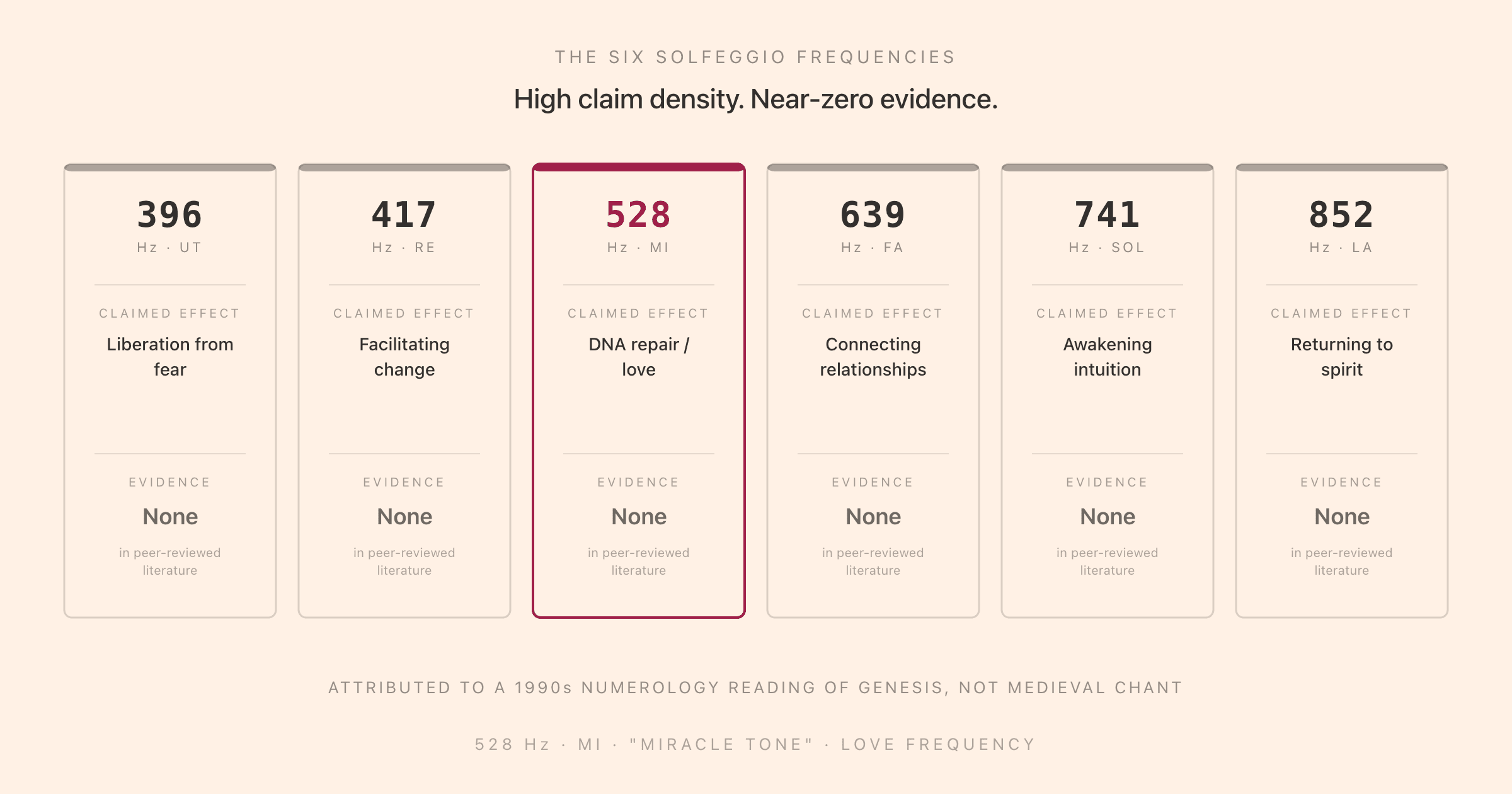
528 Hz: The Solfeggio Frequency the Internet Calls a Miracle (and What the Research Actually Says)
What 528 Hz is, where the DNA-repair and miracle-tone claims come from, why the cited 2010 paper does not show what it is claimed to show, and what the literature on tonal stimulation actually supports.
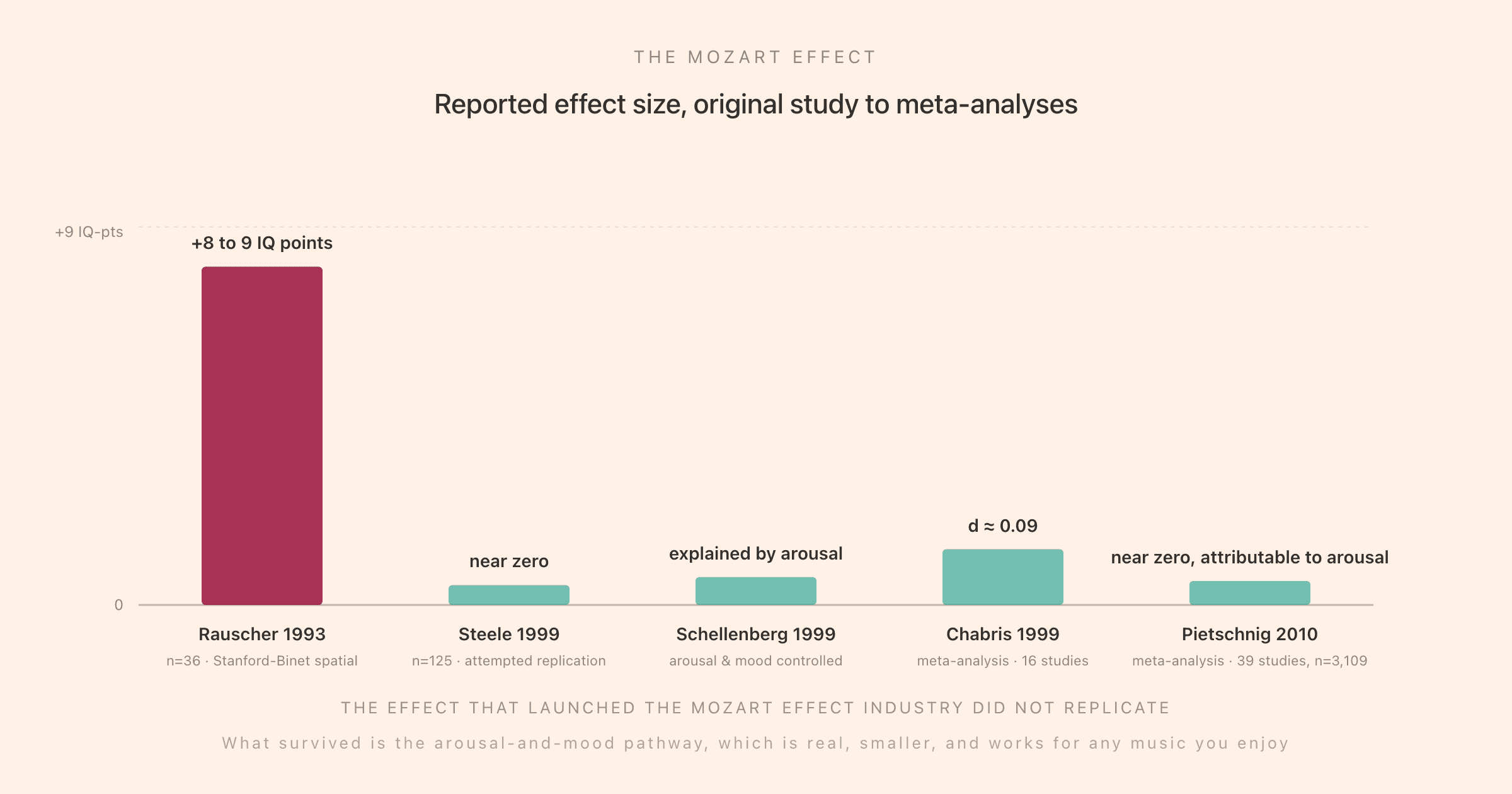
Classical Music for Studying: What the Science Actually Says (After the Mozart Effect Was Debunked)
What the peer-reviewed evidence says about classical music for studying: the Mozart effect was largely debunked, but the arousal-and-mood pathway is real, smaller, and tells you exactly what to play.
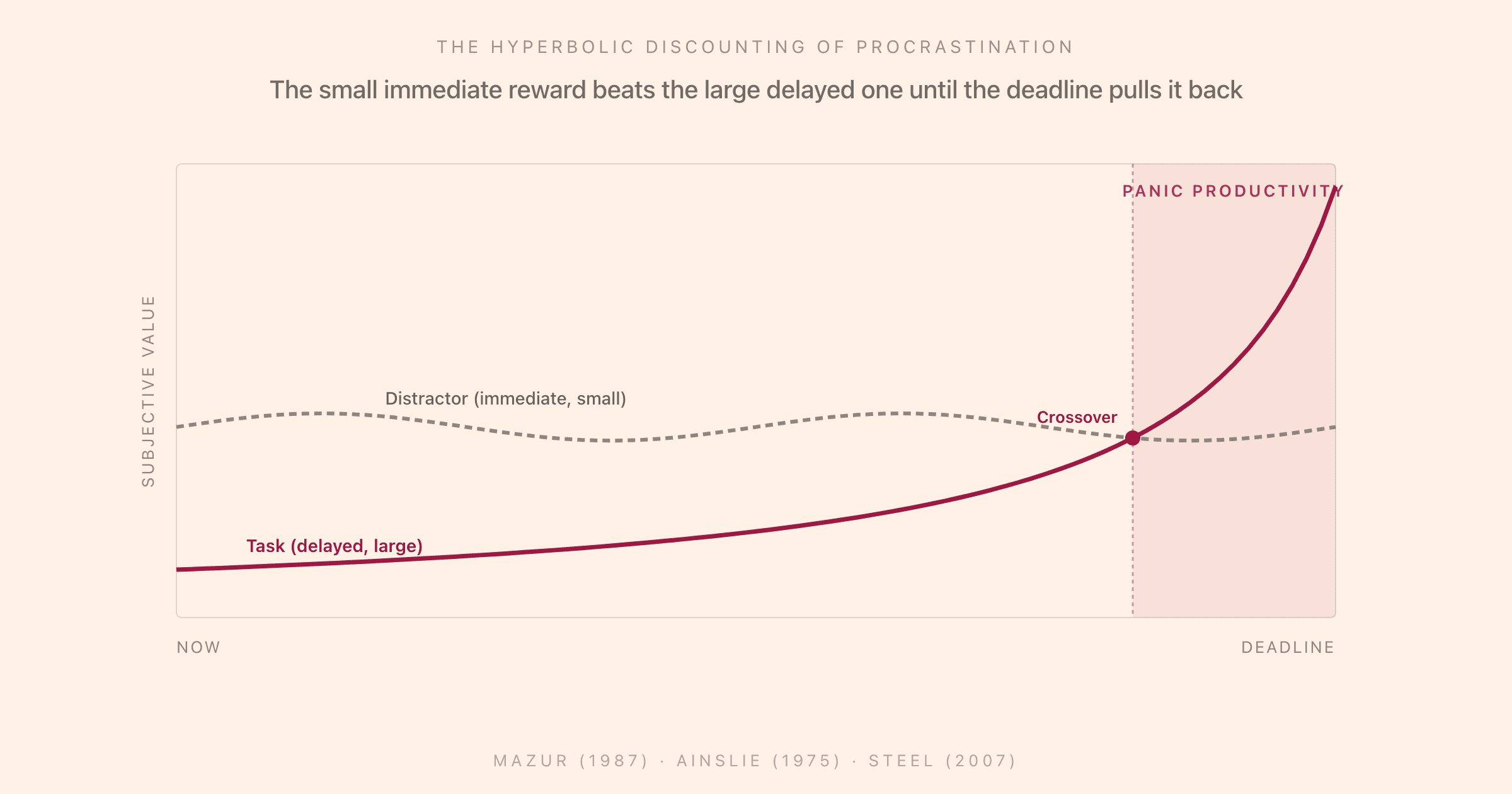
Procrastination: The Hyperbolic-Discounting Brain Trap (and the Five Levers That Re-Tilt It)
Procrastination is not a character flaw. It is a measurable consequence of how the brain discounts delayed rewards, and the five interventions that move the needle in the literature target the equation, not the willpower.
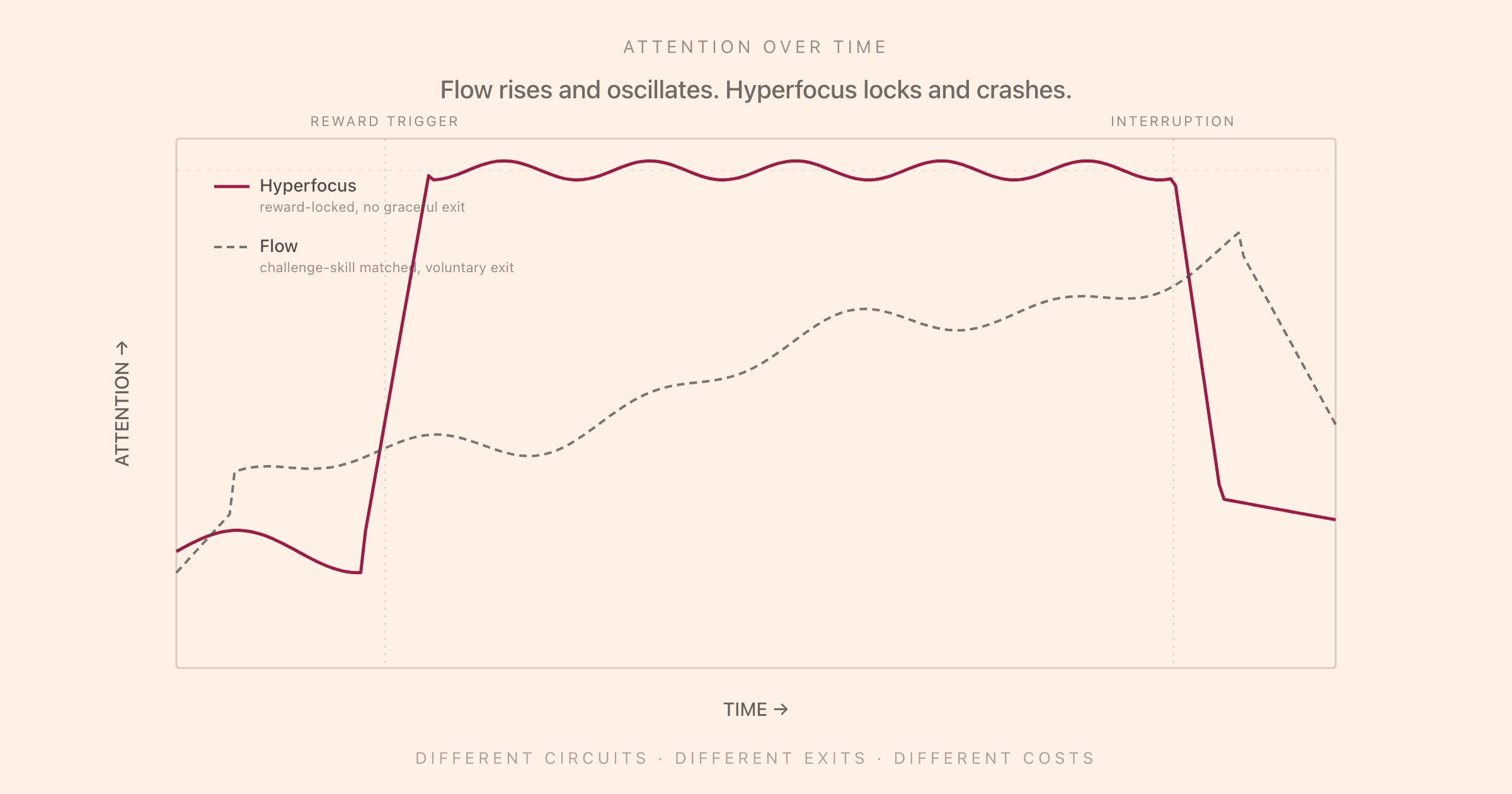
Hyperfocus: The Reward-Locked Attention State That Looks Like Flow and Is Not
Hyperfocus is not the same as flow. The neuroscience differs: hyperfocus is a reward-locked, dopamine-driven attention state with no graceful exit, common in ADHD. Here is how to recognise it, why it costs more than it produces, and the audio and protocol moves that pull attention back into voluntary focus.
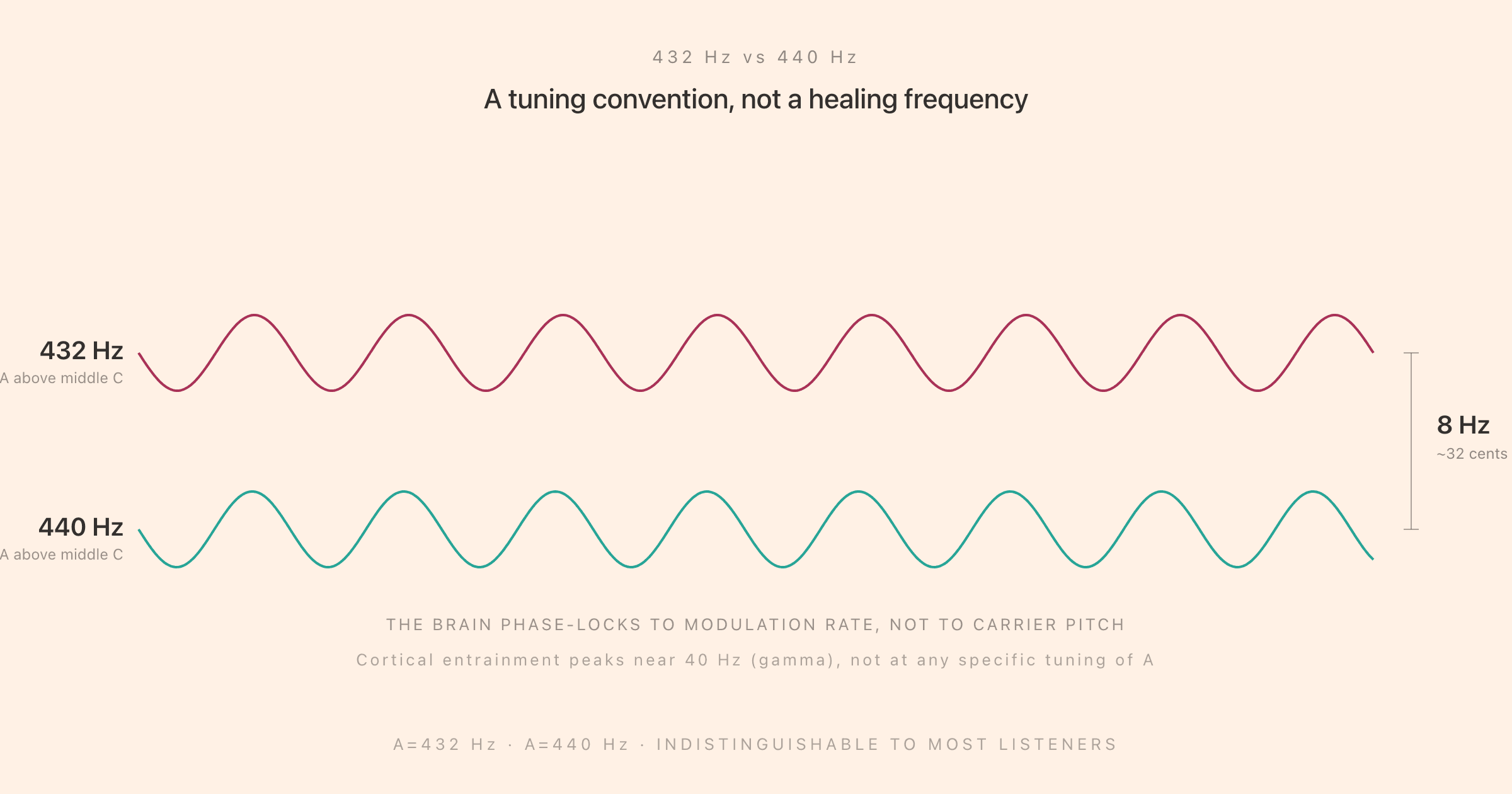
432 Hz: What the Research Actually Says About the Tuning Frequency the Internet Calls Magic
What 432 Hz is, where the claim that it heals comes from, and what the few peer-reviewed studies on 432 Hz vs 440 Hz actually found. The honest answer is more interesting than the marketing.
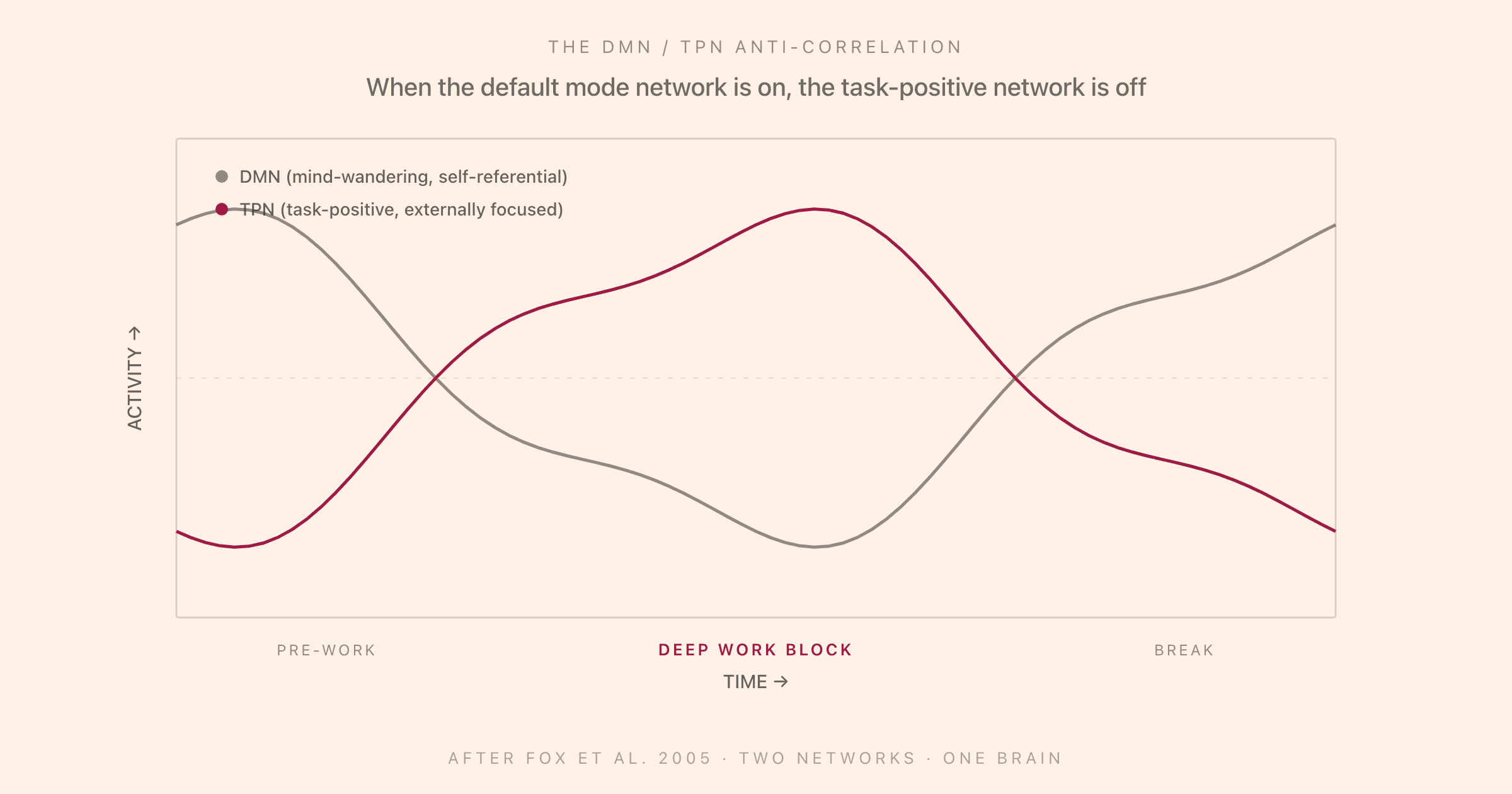
The Default Mode Network: The Brain Circuit That Decides Whether You Focus or Drift
The default mode network explained: what it is, why it dominates when you mind-wander, how the task-positive network competes with it, and the audio and protocol moves that suppress DMN activity to extend focus.
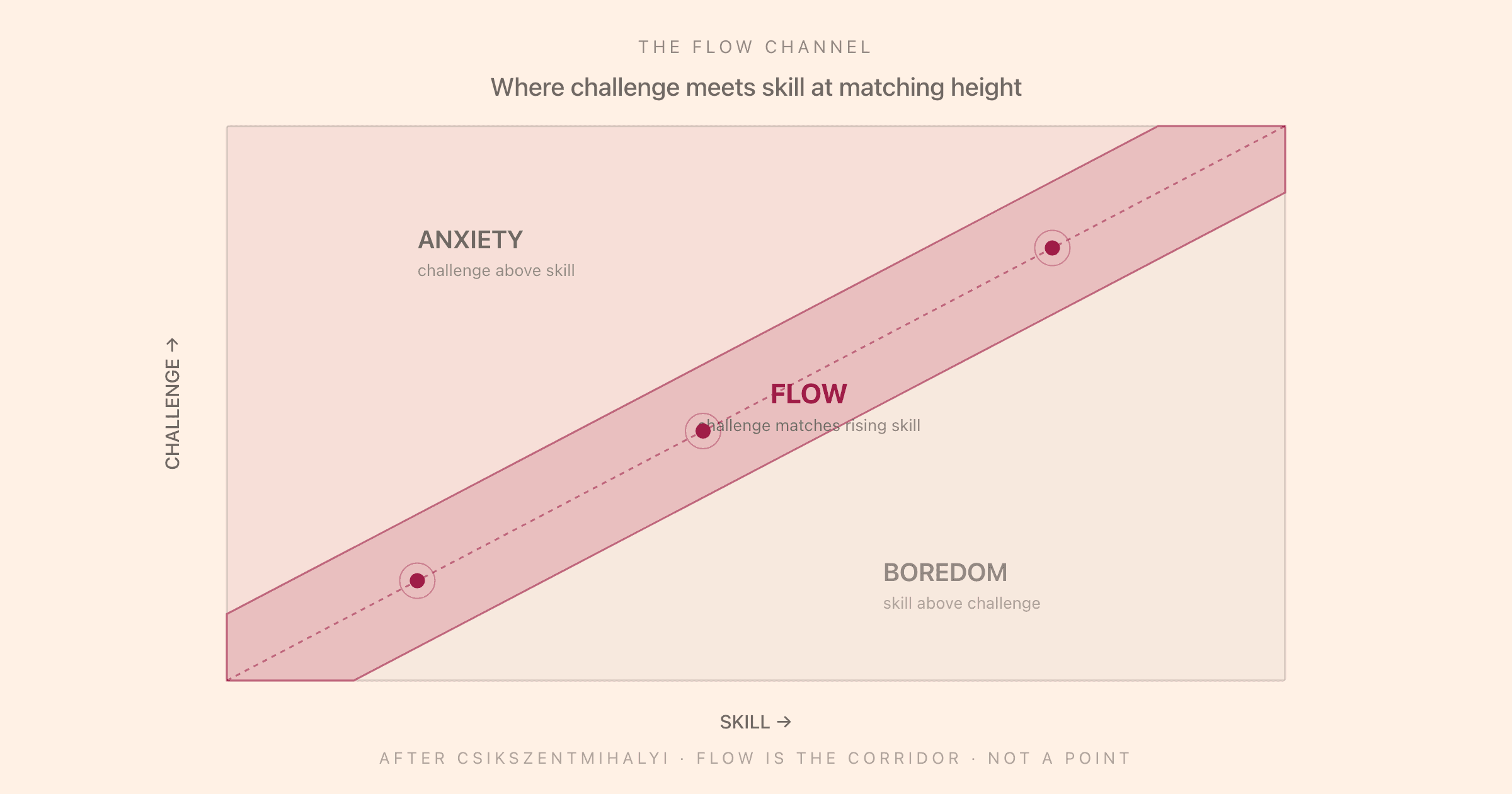
Flow State: The Science of the Optimal Focus Channel (And How to Engineer Re-Entry)
Flow state explained: Csikszentmihalyi's challenge-skill corridor, the eight characteristics, the neurochemistry behind it, and the audio and timing protocols that reliably trigger re-entry.
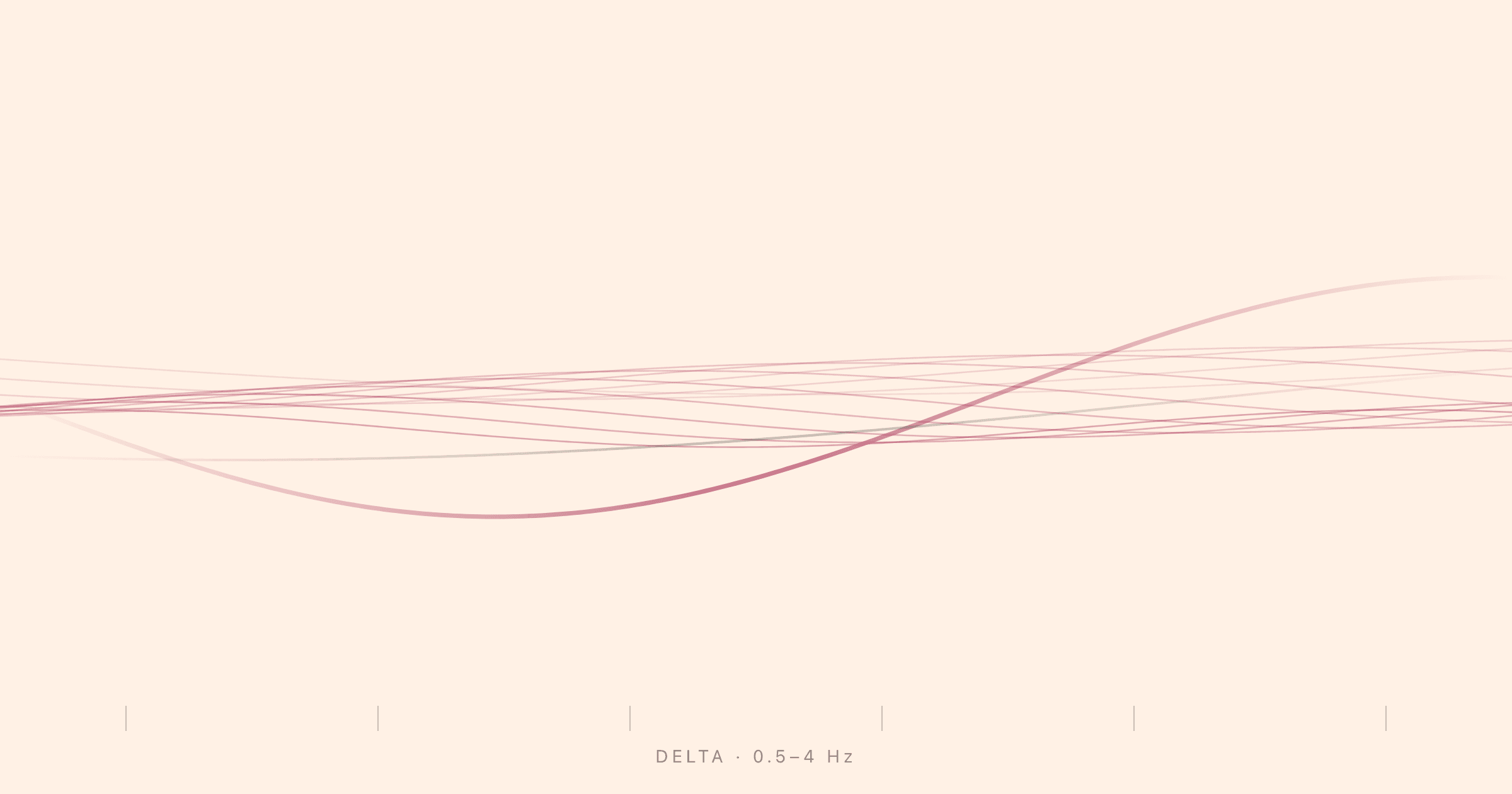
Delta Waves: The 0.5–4 Hz Brainwave That Runs Sleep, Memory, and Why You Cannot Use Them For Focus
Delta waves explained: the 0.5 to 4 Hz band that dominates slow-wave sleep, drives memory consolidation and glymphatic clearance, and why entrainment research keeps it firmly out of focus protocols.
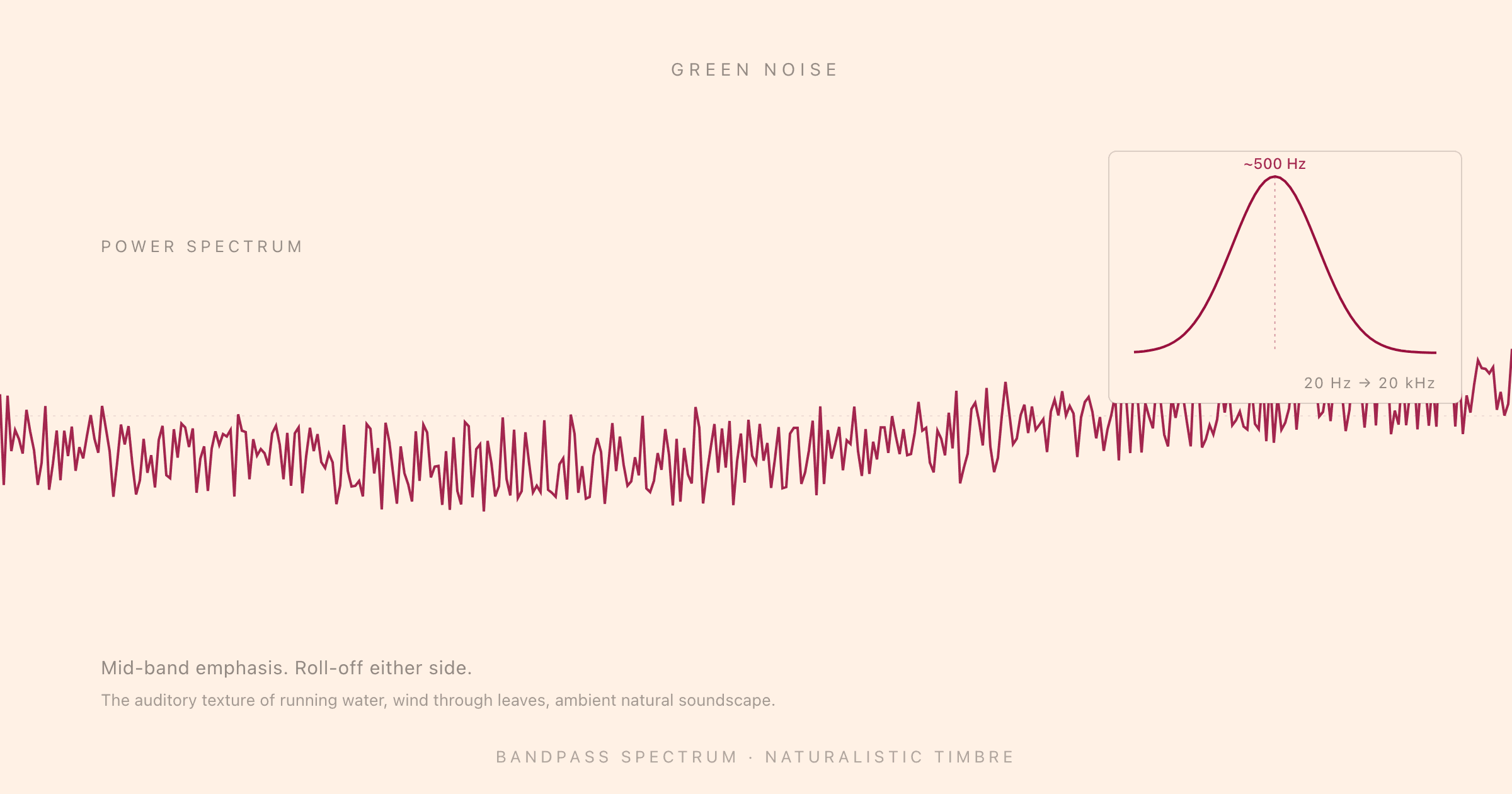
Green Noise: What the Mid-Band Sound Color Actually Is (and Whether It Helps You Focus)
Green noise explained by spectrum, perception, and evidence. Why the 500 Hz peak matters, what the marketing skips, and when pink, brown, or white beats it for focus.
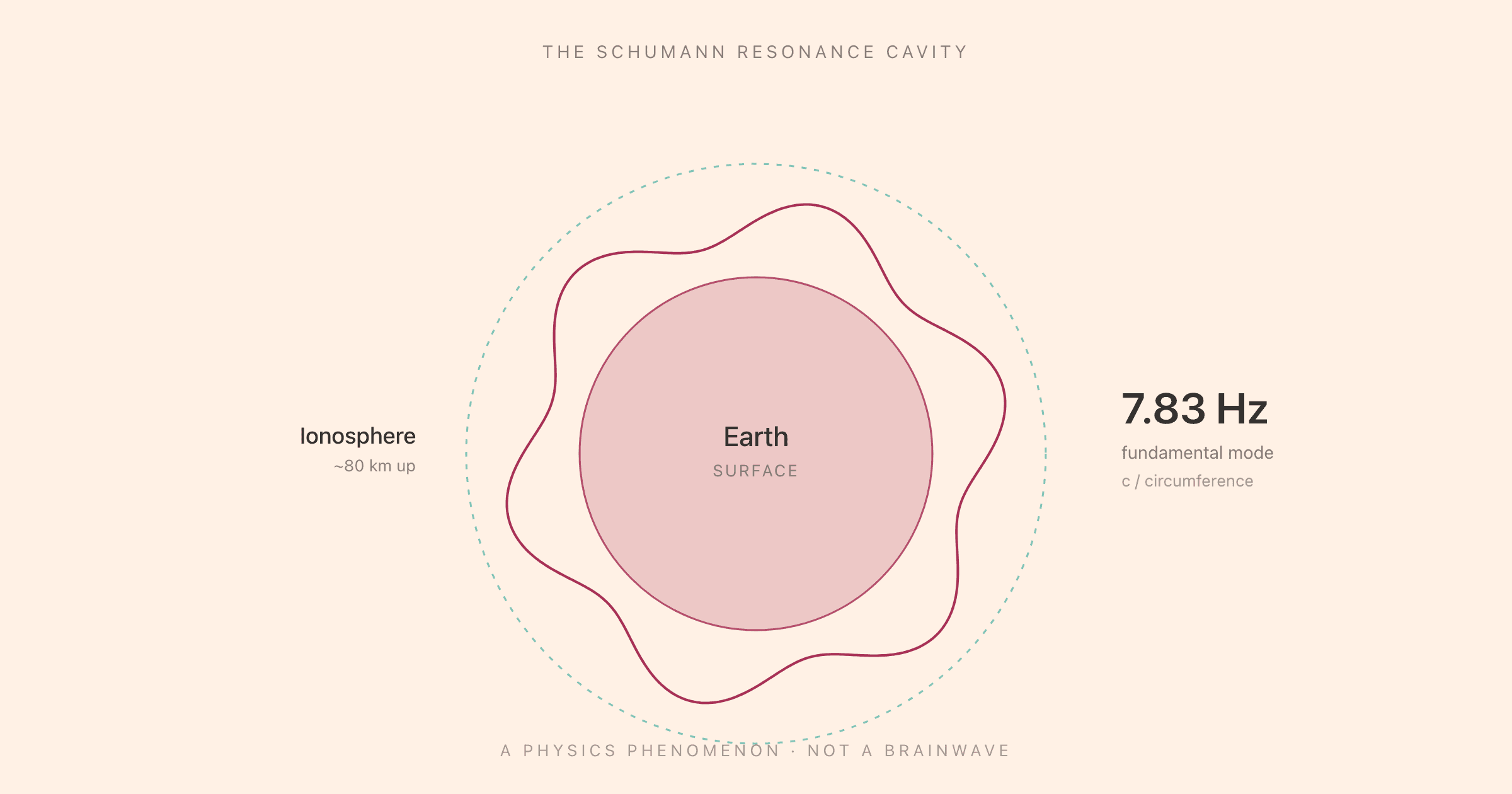
Schumann Resonance: The 7.83 Hz Earth Frequency and What It Has To Do With Your Brain
What the Schumann resonance actually is, why 7.83 Hz keeps getting linked to alpha brainwaves, and what the peer-reviewed evidence does and doesn't show about listening to it.
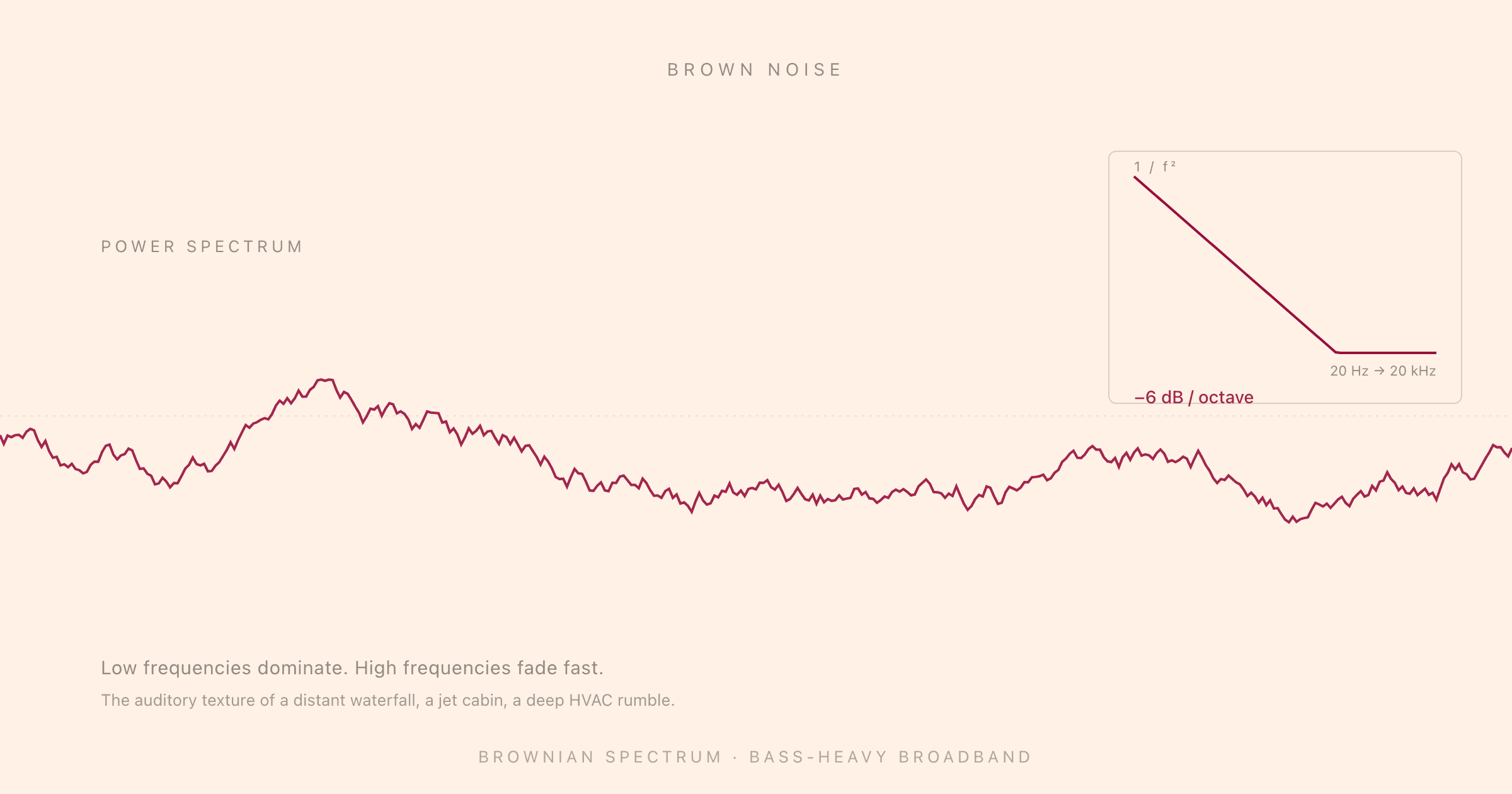
Brown Noise: What the Research Actually Says About the TikTok Focus Sound
Brown noise explained by spectrum, mechanism, and evidence. Why the 1/f² shape matters, what the ADHD research actually shows, and when pink or white beats it.
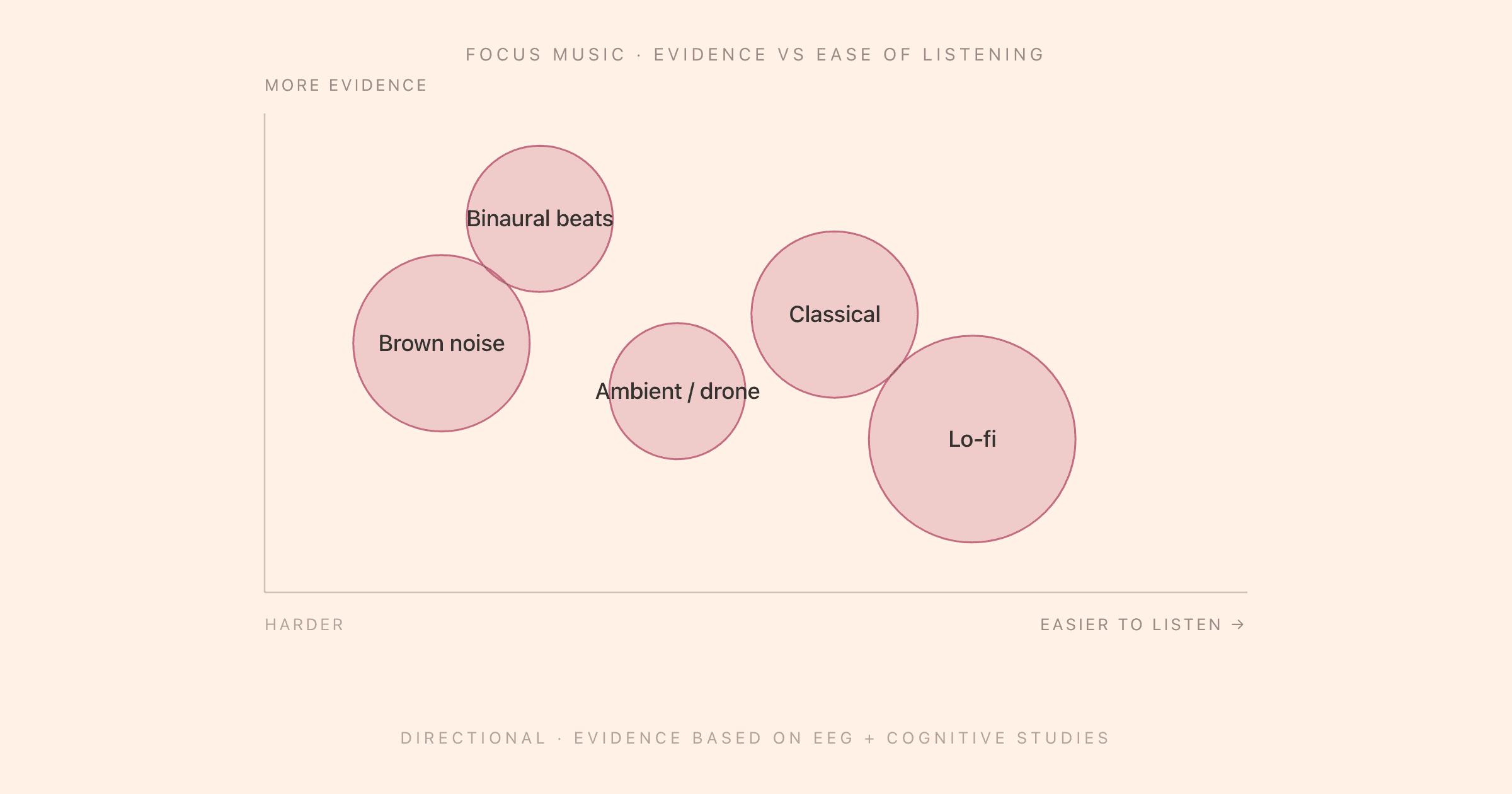
Focus Music: What Actually Works for Concentration (A Scientific Taxonomy of Five Types)
Focus music is not one thing. A scientific taxonomy of the five families (binaural beats, brown noise, classical, lo-fi, ambient) with what the EEG and cognitive research actually supports.
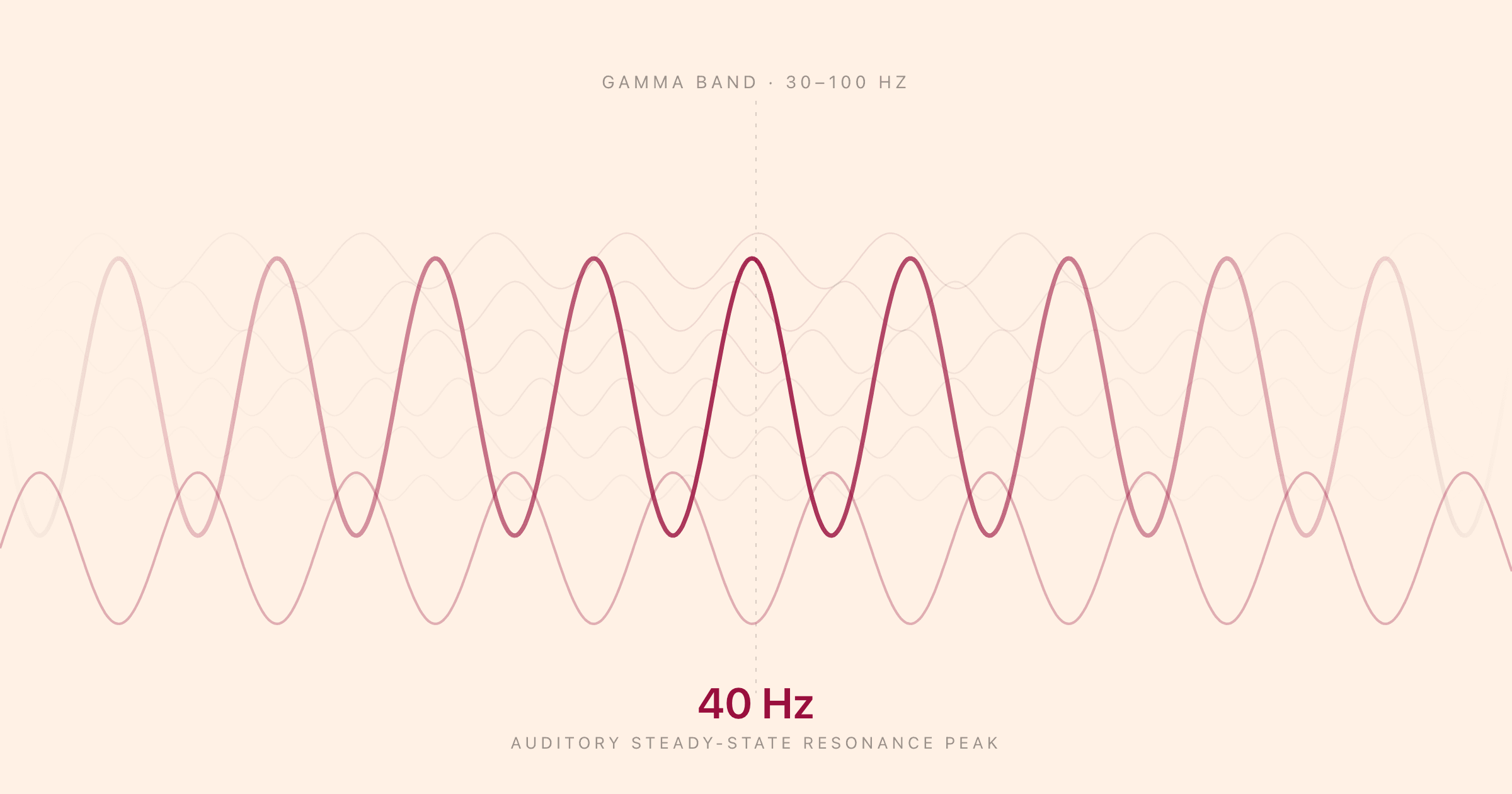
40 Hz Gamma Waves: The Resonance Frequency the Brain Locks Onto
Why 40 Hz sits at the peak of the auditory steady-state response, what cognitive binding actually is, and the safest way to use 40 Hz gamma waves for focus.
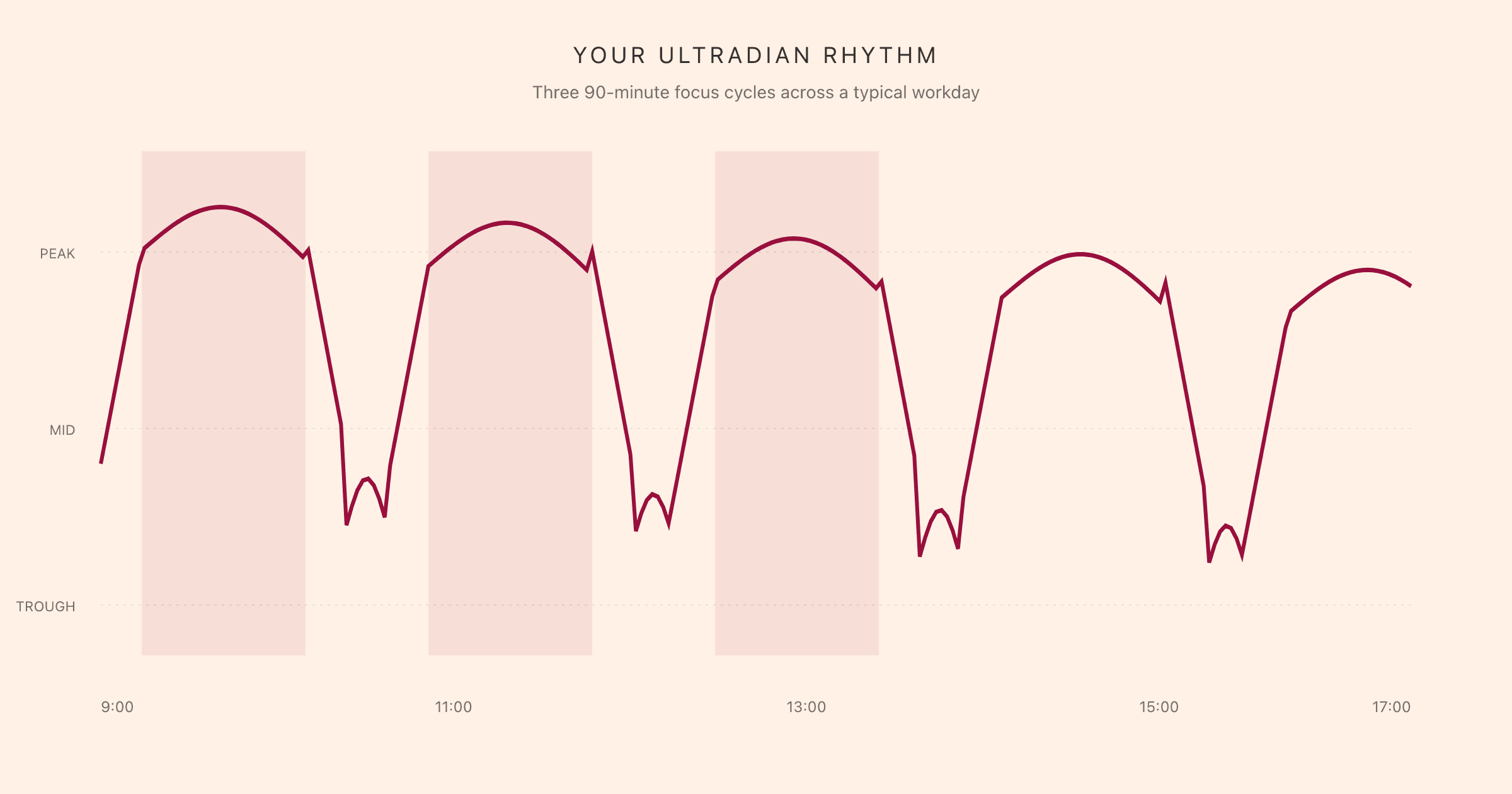
Ultradian Rhythm: The 90-Minute Cycle That Actually Runs Your Focus
A practical neuroscience guide to your ultradian rhythm: the 90-120 minute focus-fatigue cycle, how to align deep work with it, and what Pomodoro gets right and wrong.
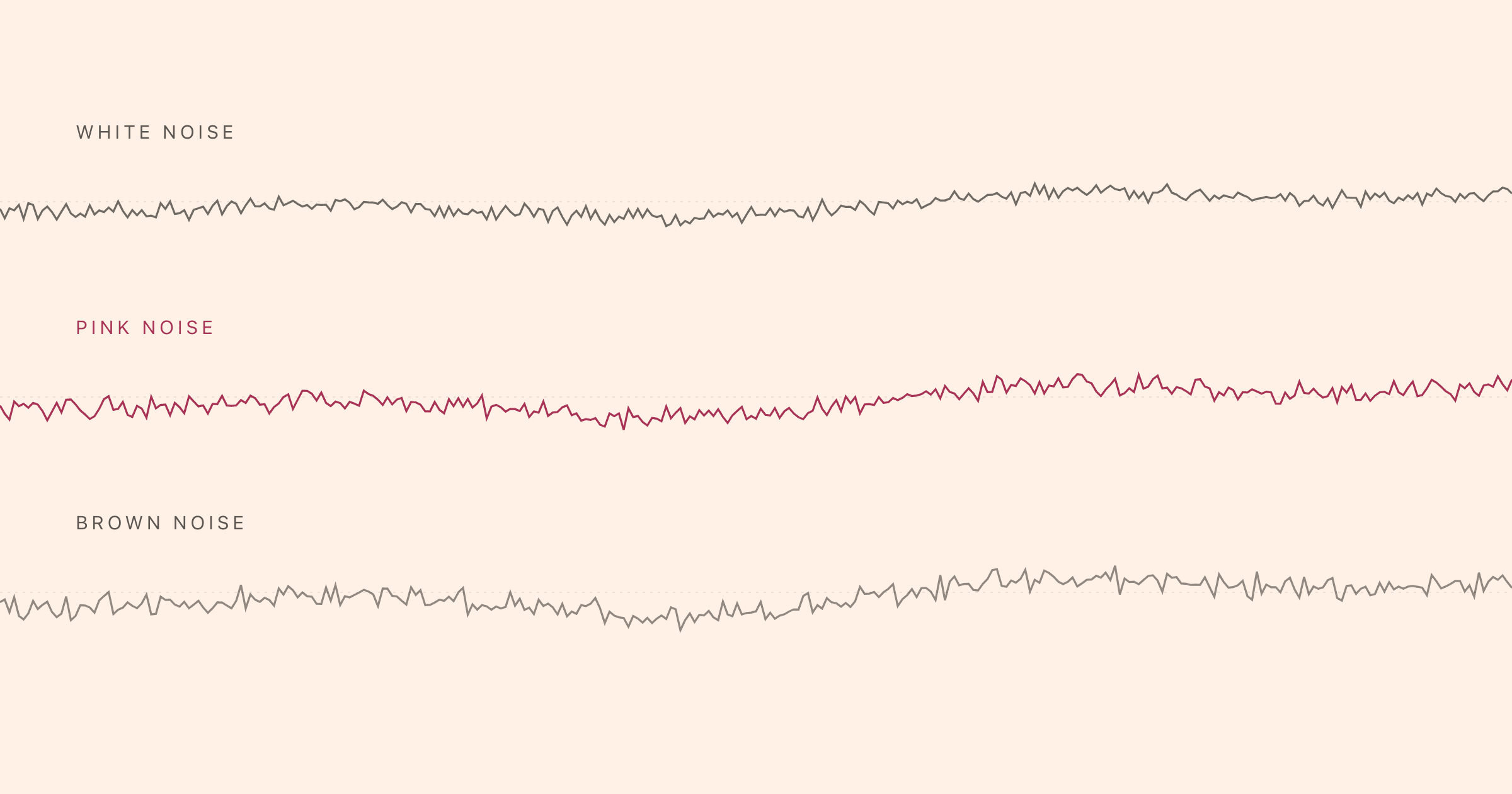
White vs Pink Noise (vs Brown): Which Focus Sound Actually Works
A neuroscience-backed comparison of white, pink, and brown noise for focus and sleep: spectral differences, what the research shows, and how to pick the right color.
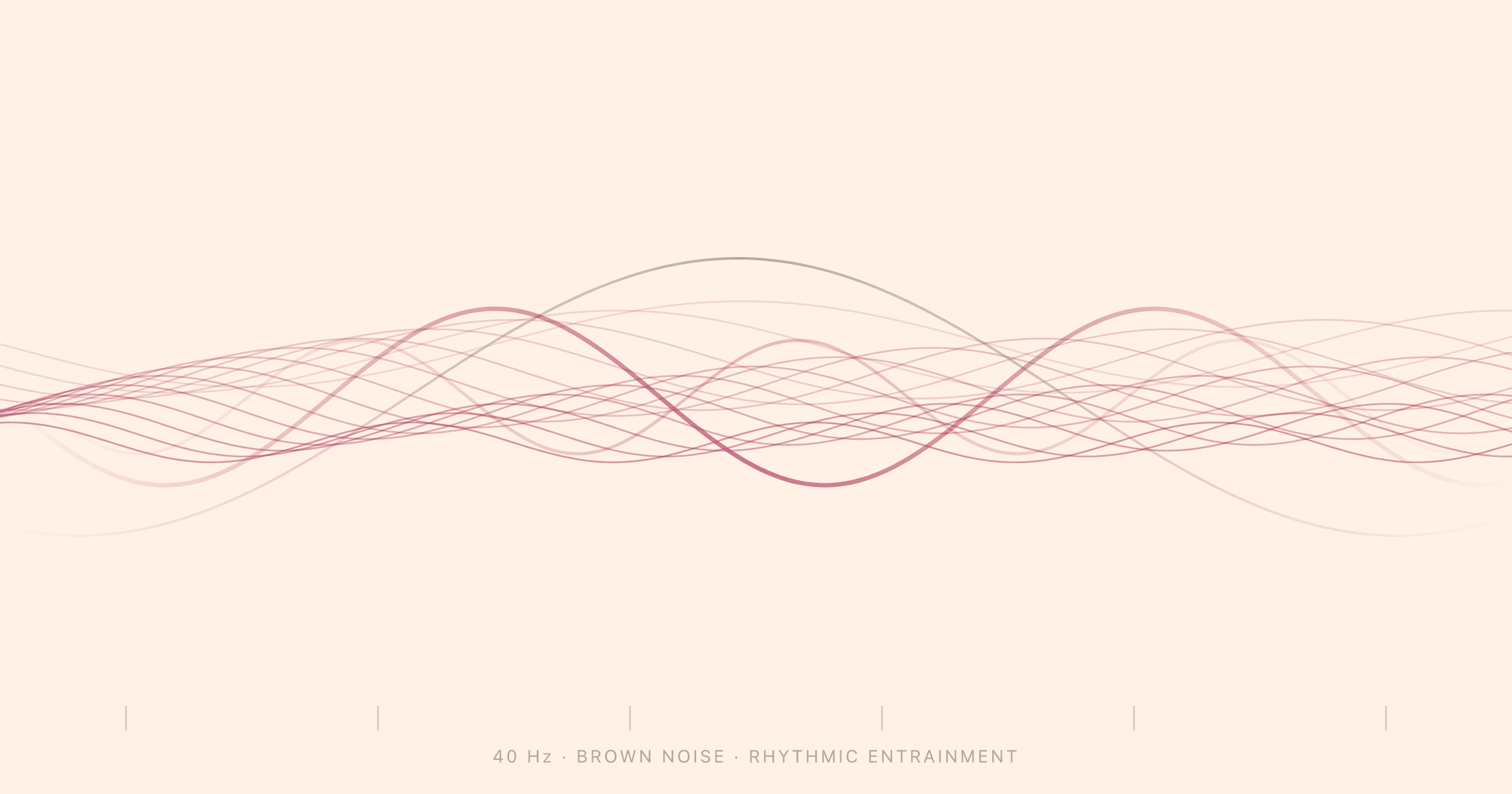
ADHD Focus Music: What the Science Actually Says
A neuroscience-backed guide to ADHD focus music: why it works (dopamine, sensory gating, entrainment), what the research supports, and how to pick the right kind for your task.
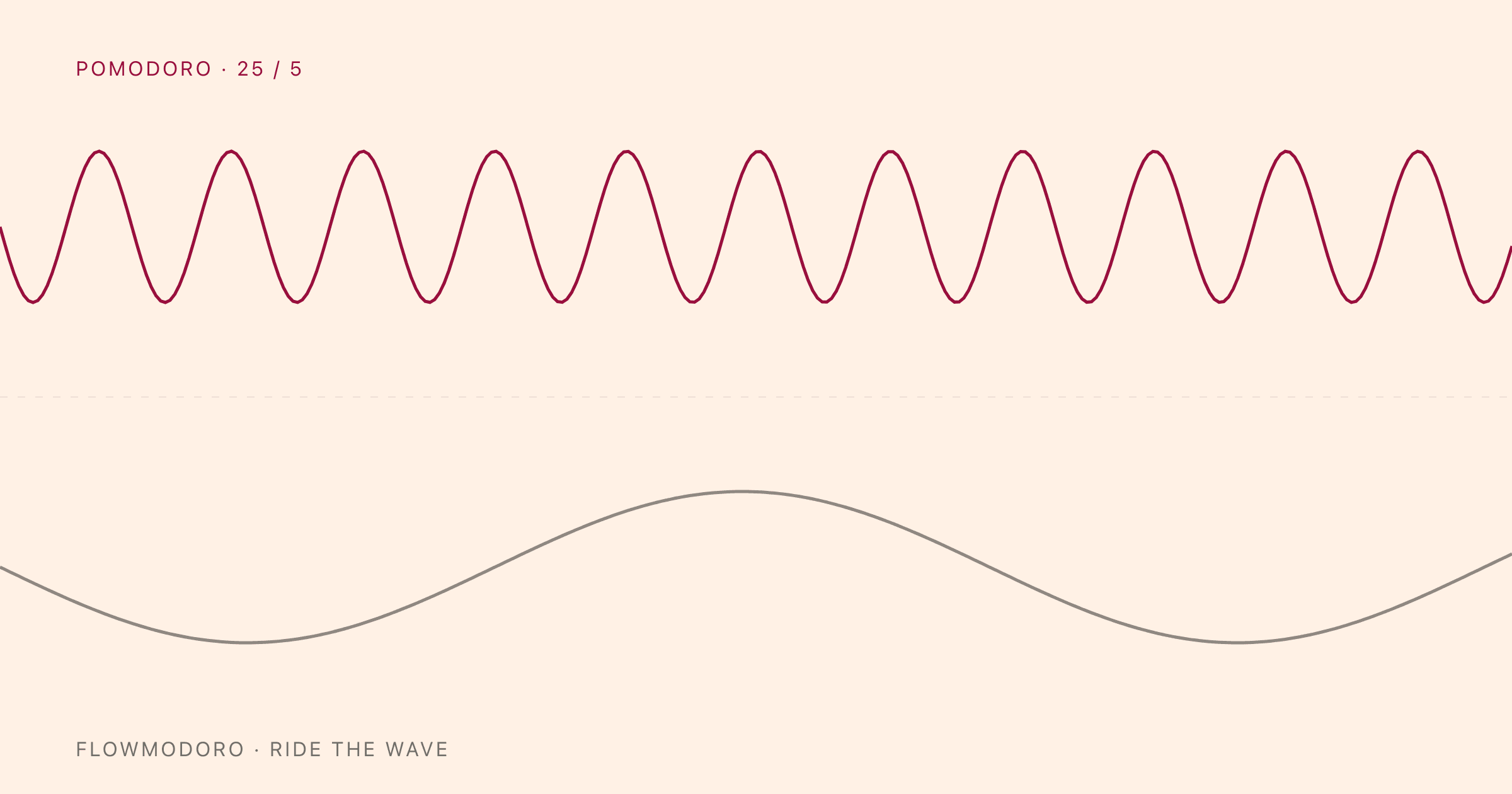
Pomodoro vs. Flowmodoro
Compare the Pomodoro Technique and Flowmodoro to find your ideal productivity method. Learn when to use structured time blocks vs. natural work flow.
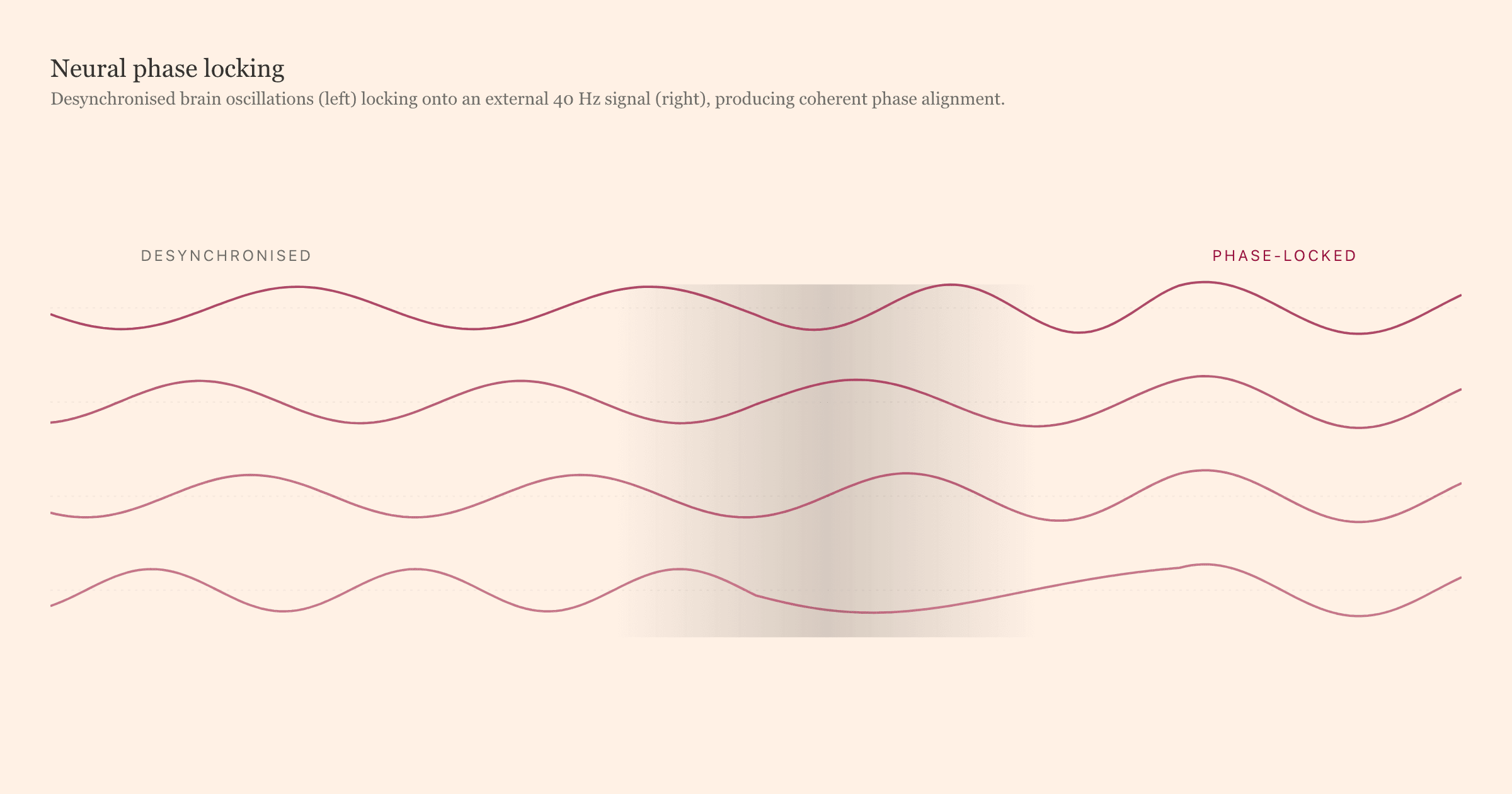
Neural Phase Locking: Brain Synchronization
Discover neural phase locking - the brain's synchronization mechanism that enhances focus, memory, and cognitive performance through coordinated neural activity.
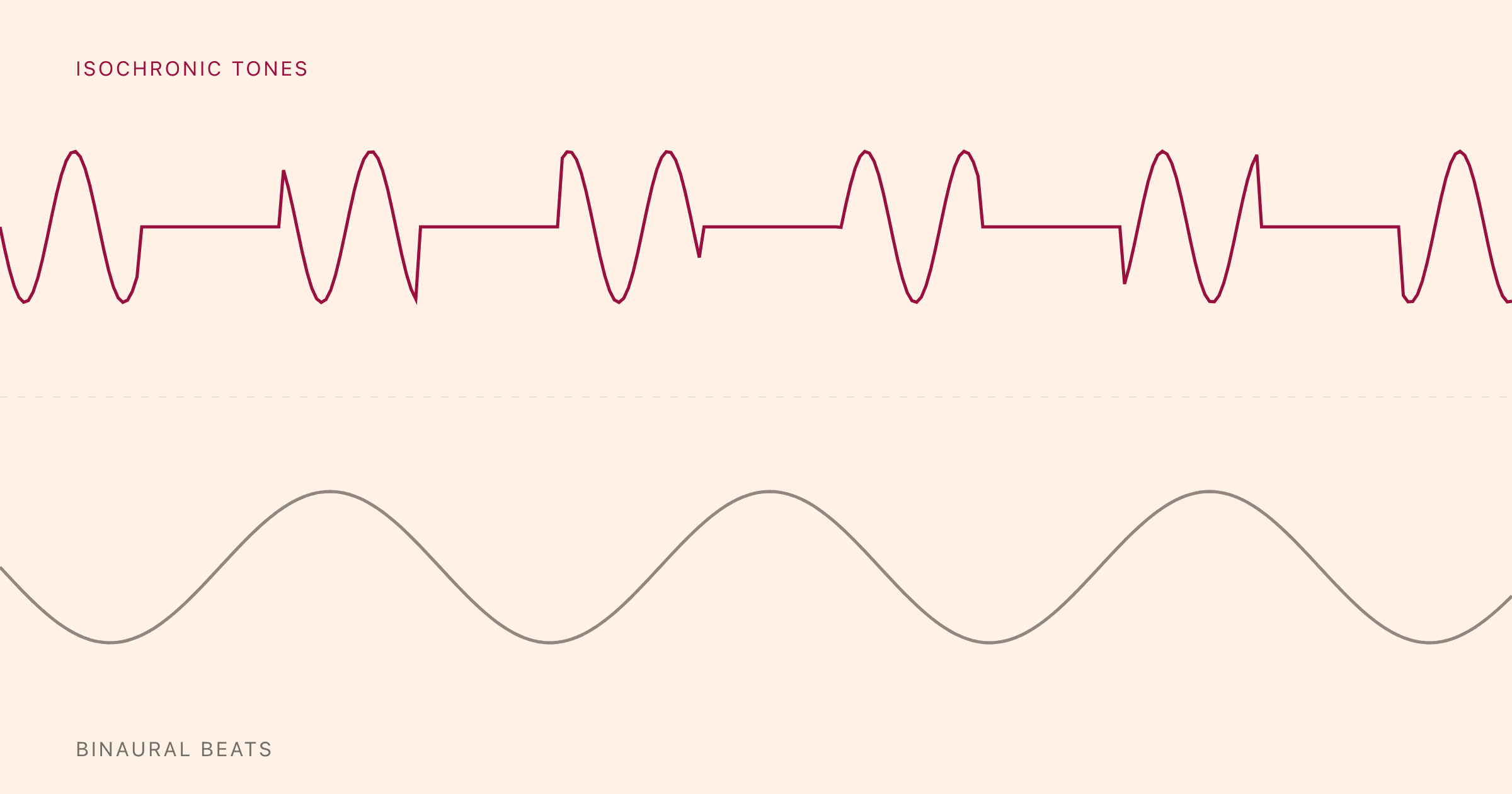
Isochronic Tones vs Binaural Beats Compared
Discover the key differences between isochronic tones and binaural beats to determine which brainwave entrainment method works best for focus, relaxation, and cognitive enhancement.
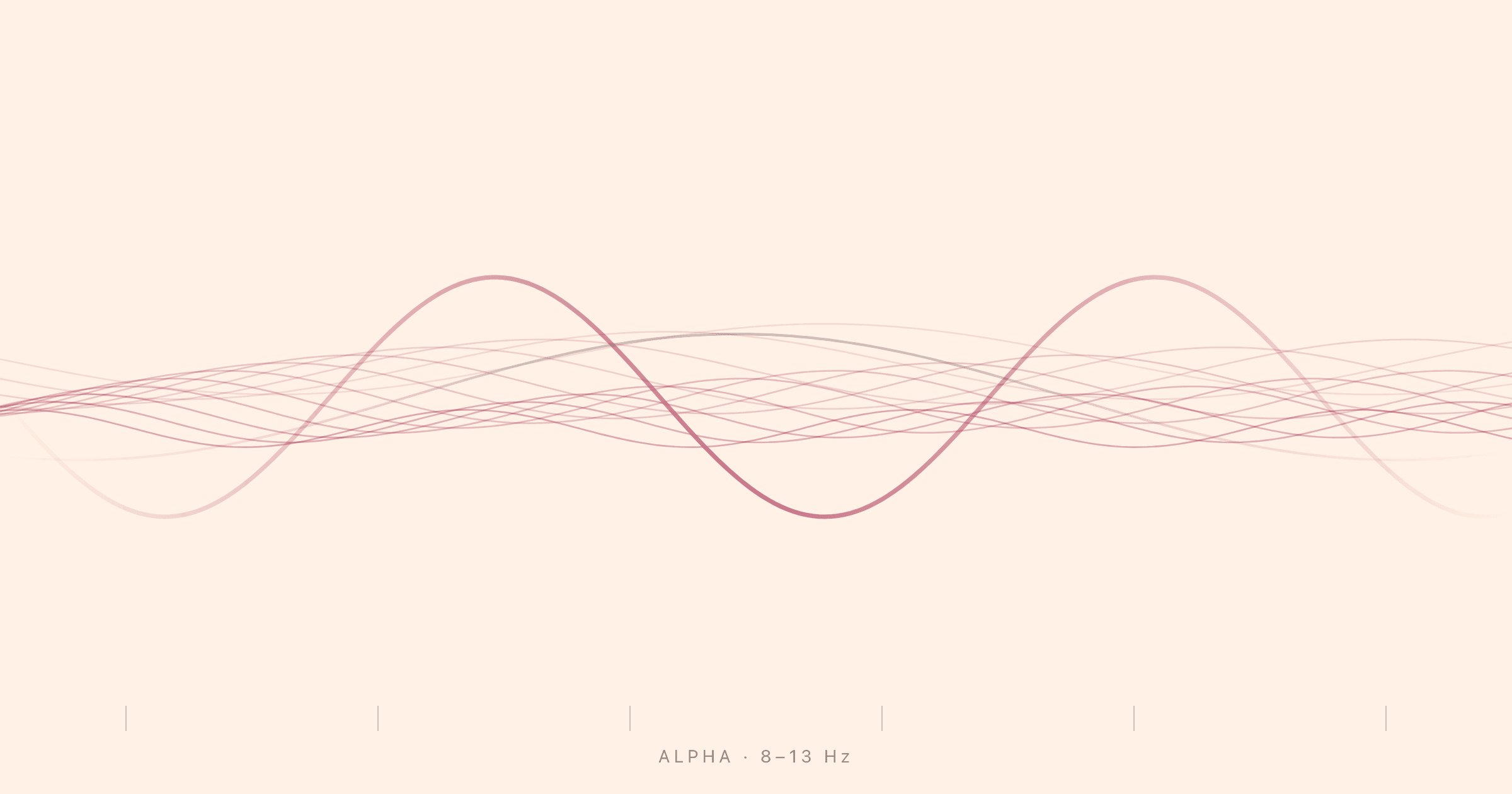
How Alpha Waves Improve Focus
Discover how alpha brain waves (8-12 Hz) enhance focus, concentration, and mental clarity. Learn natural techniques and technology to boost alpha wave production.
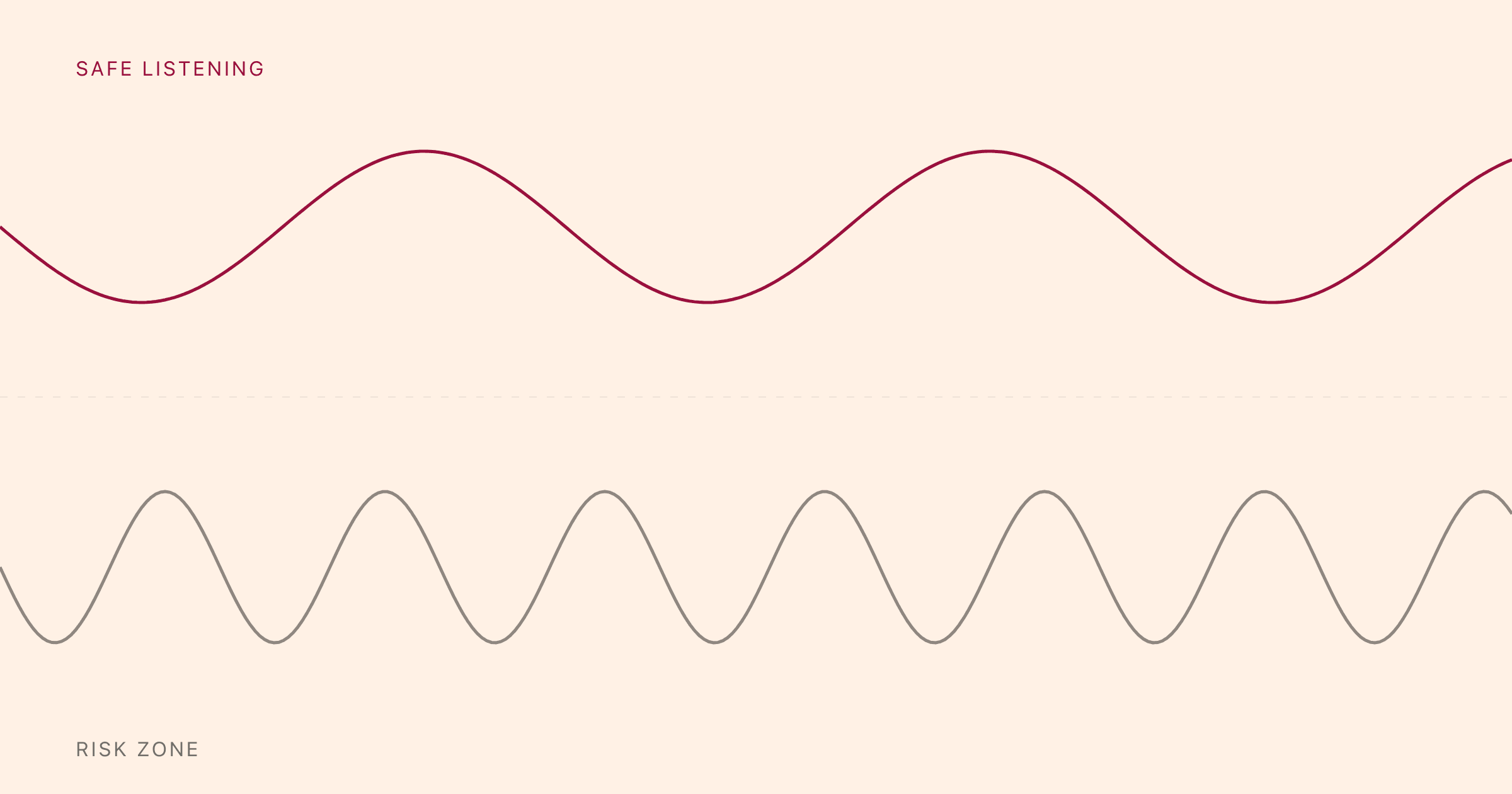
Can Binaural Beats Damage Your Brain?
Discover the truth about binaural beats safety and potential brain damage. Learn the science, risks, and safety guidelines for using brainwave entrainment.
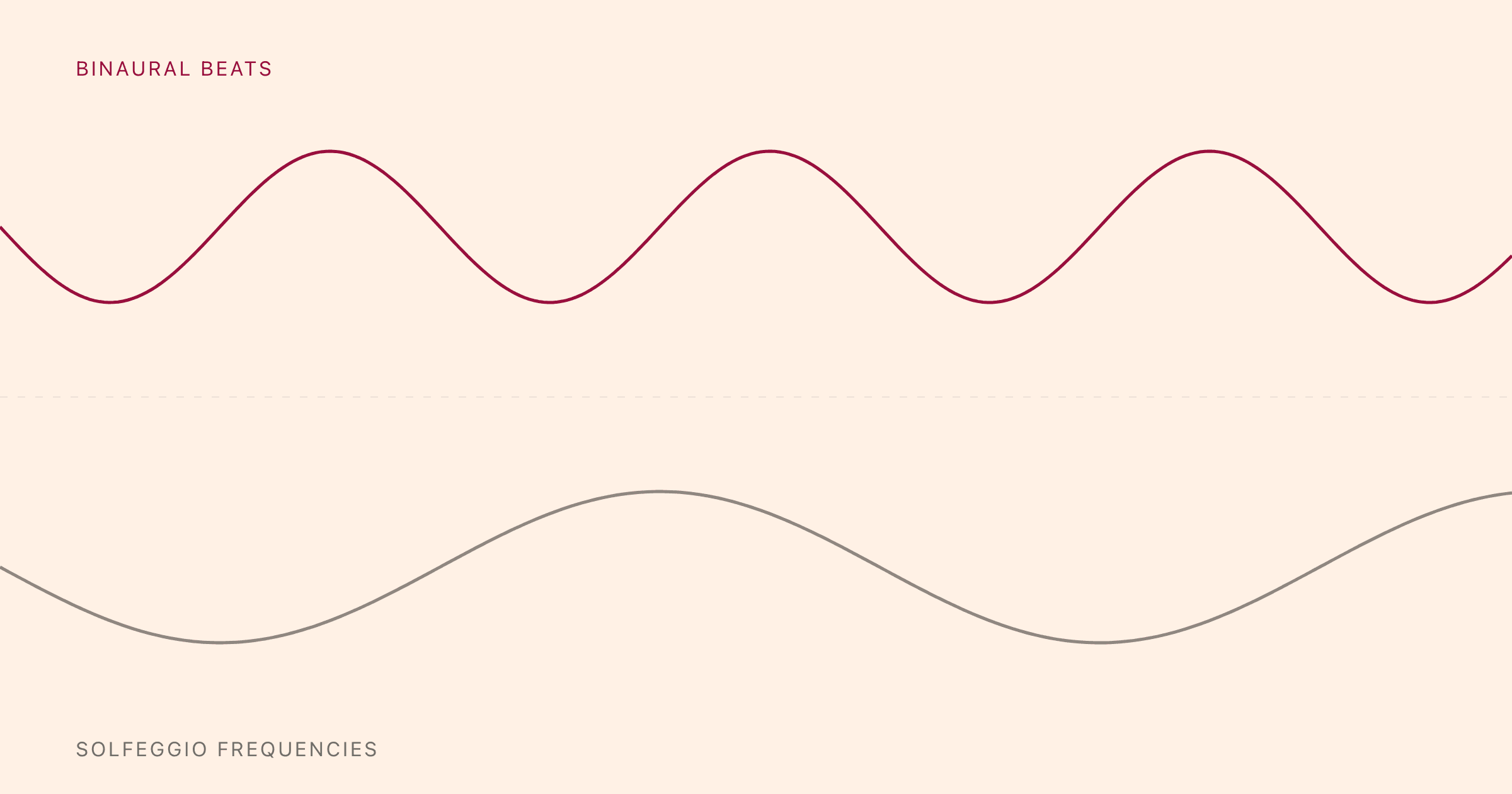
Binaural Beats vs Solfeggio Frequencies
Compare binaural beats and solfeggio frequencies to discover which audio therapy method works best for your focus, relaxation, and wellness goals.
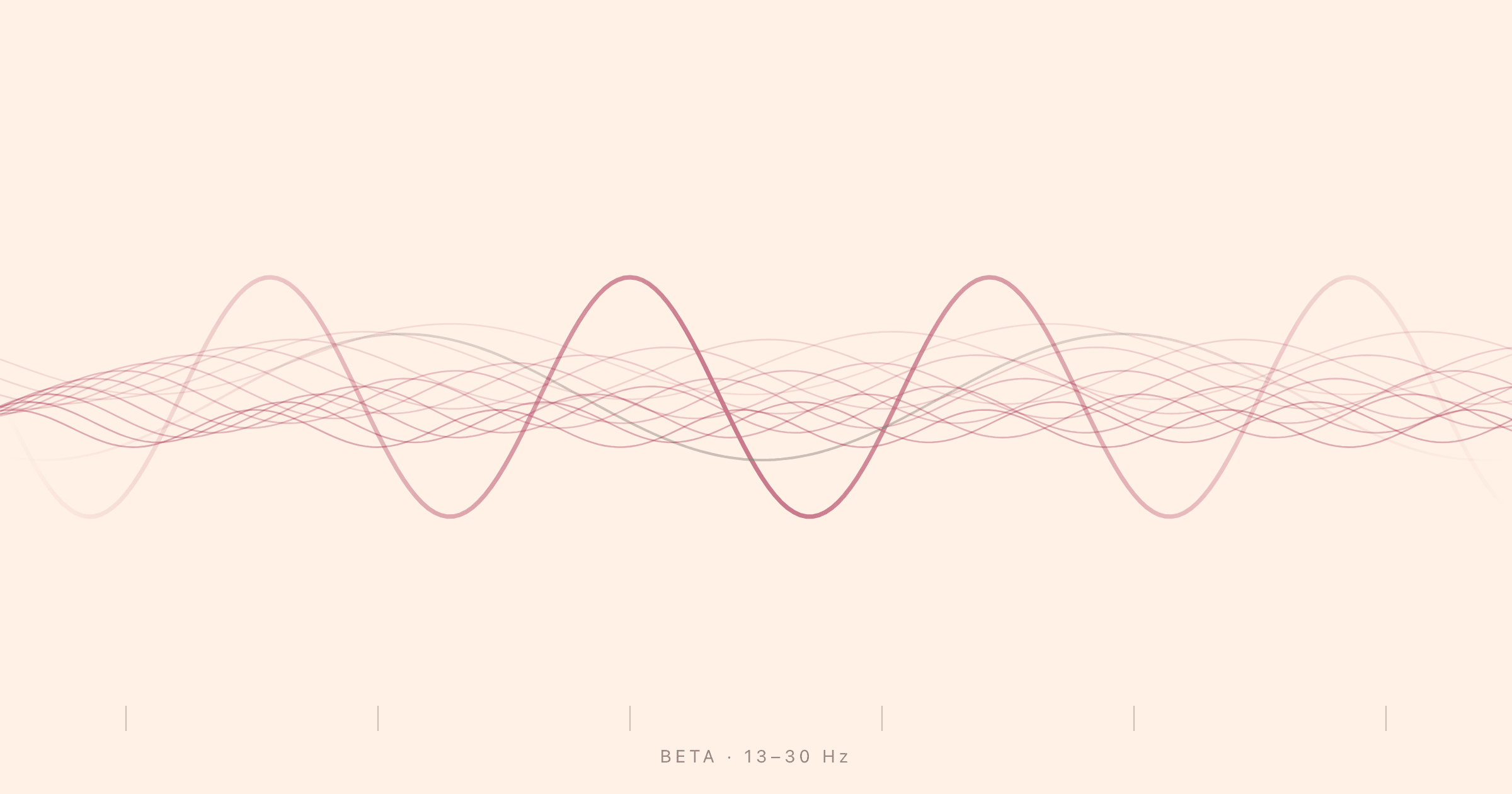
Beta Brainwaves: The Key to Laser Focus
Discover how beta brainwaves boost focus and concentration. Learn science-backed techniques to harness beta waves for cognitive enhancement and peak mental performance.
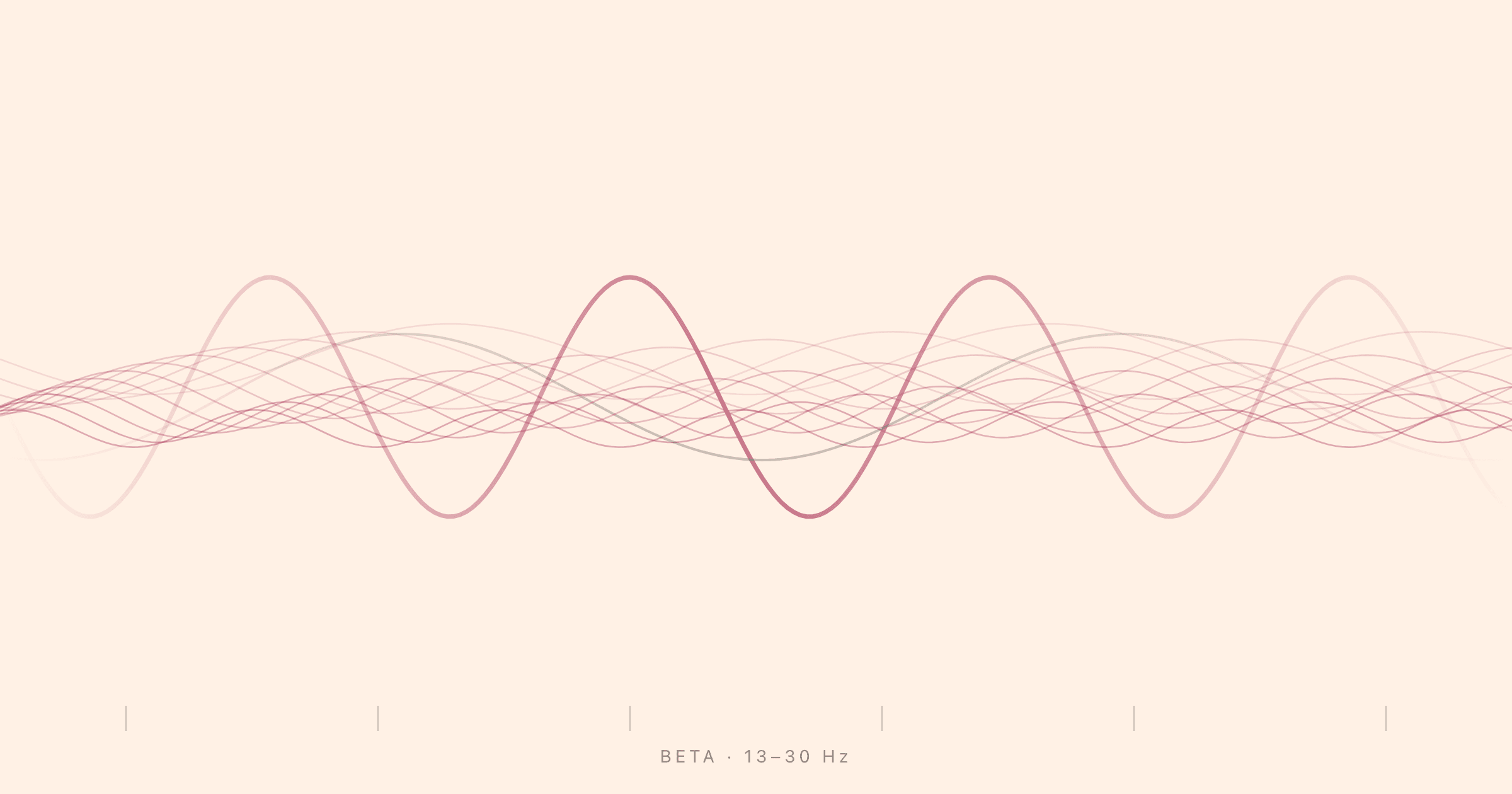
Beta Waves & Active Focus
Learn about beta brain waves (13-30 Hz) and how they power concentration, alertness, and problem-solving. Discover how to optimize your beta wave activity.
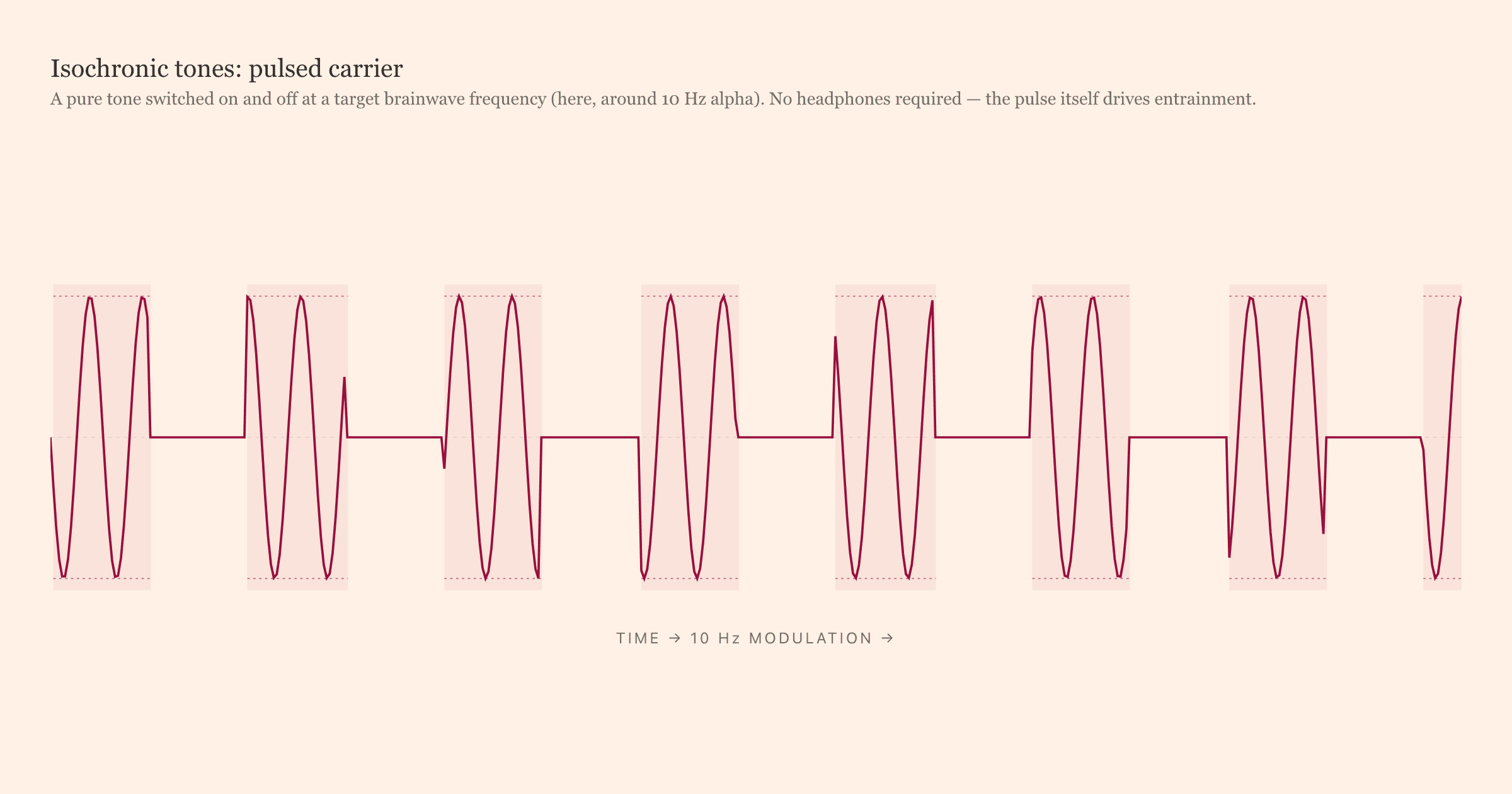
What Are Isochronic Tones?
Learn about isochronic tones, how they differ from binaural beats, and whether they can improve focus and concentration. No headphones required.
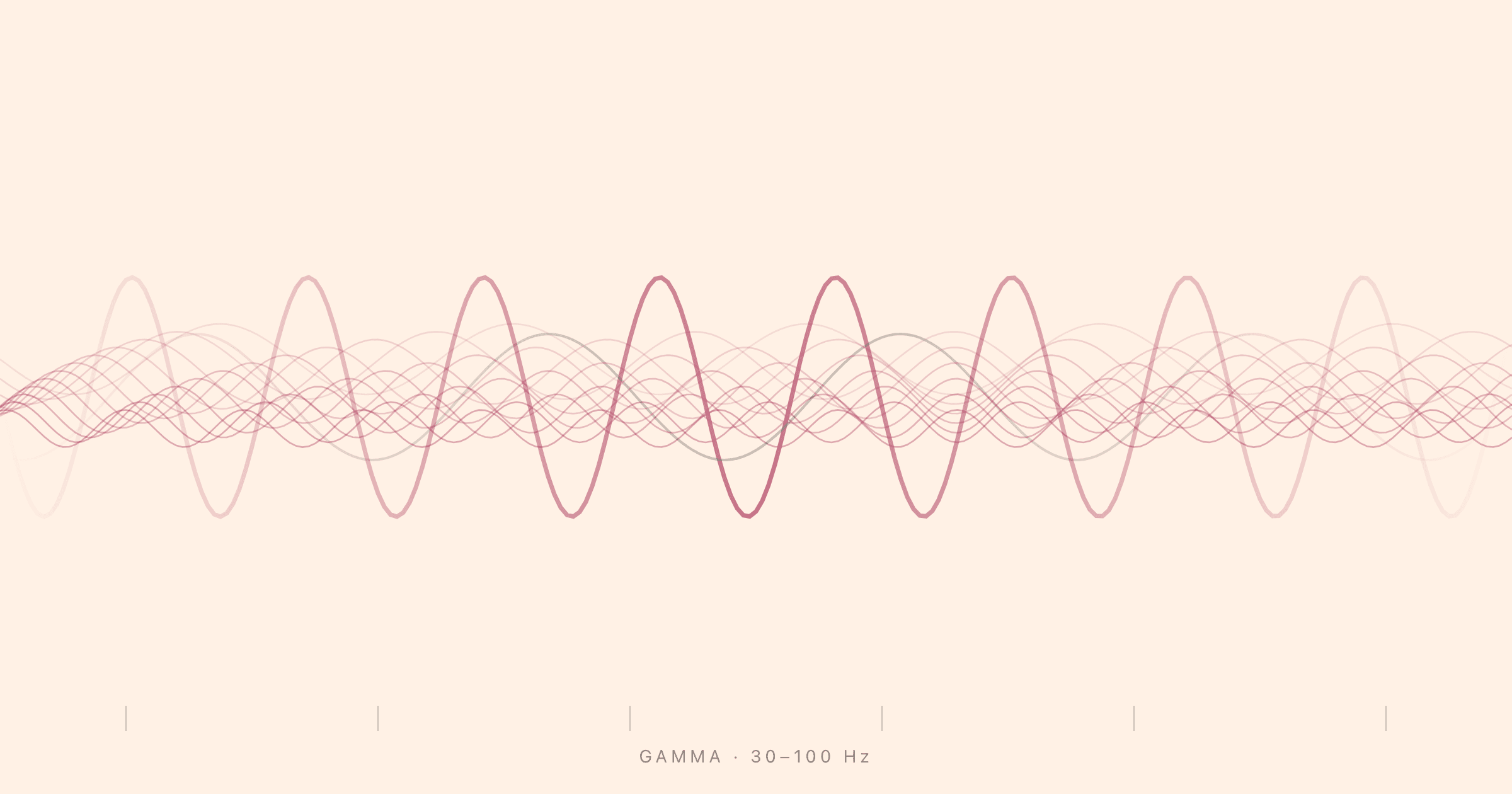
Gamma Waves & Peak Performance
Learn how gamma brain waves (30-100 Hz) enhance focus, memory, and cognitive performance. Discover how to increase gamma activity for peak concentration.
Theta Waves Benefits
Discover the benefits of theta brain waves for creativity, meditation, and learning. Learn how 4-8 Hz frequencies can enhance relaxation and insight.
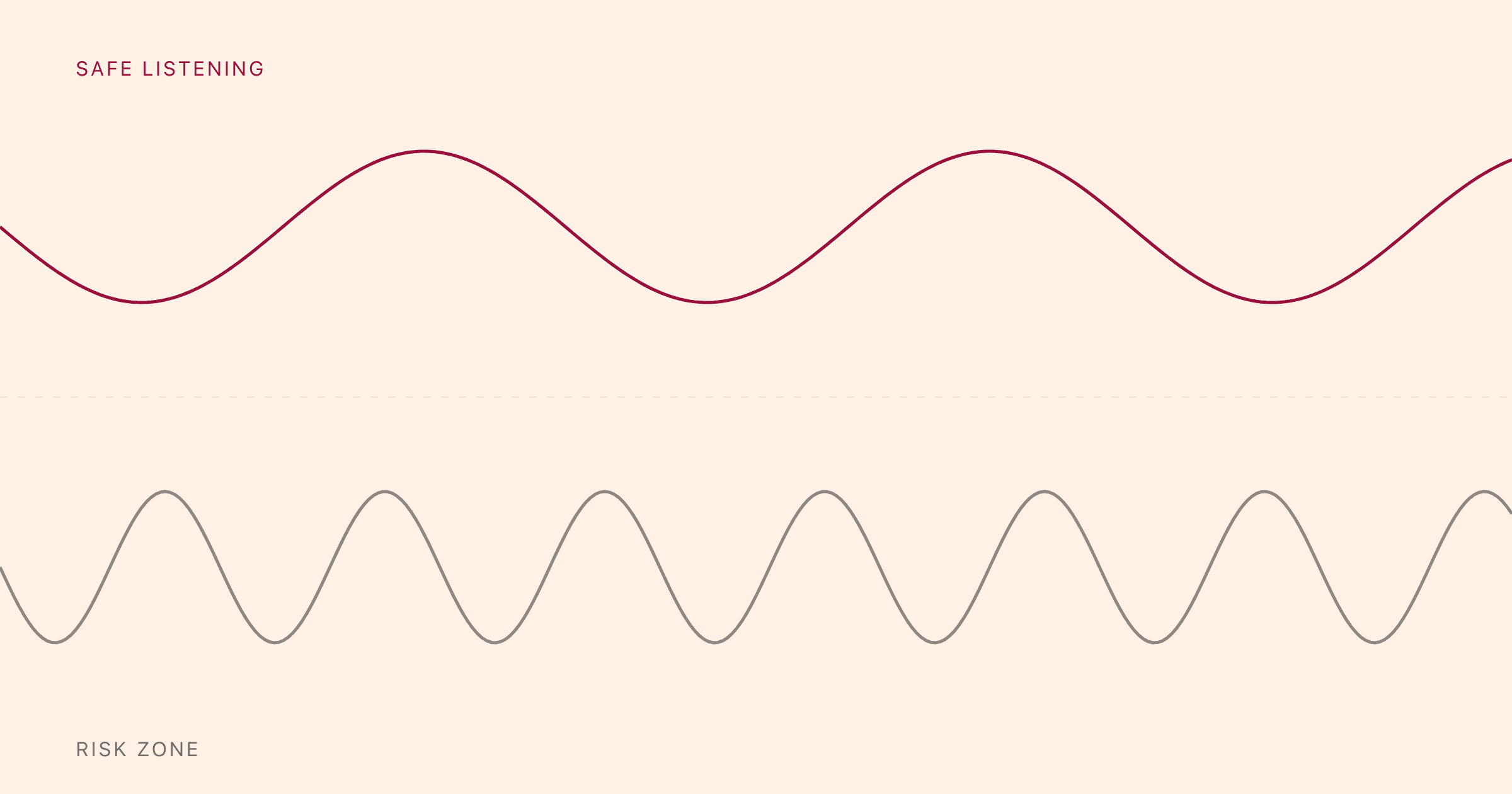
Are Binaural Beats Safe?
Can binaural beats damage your brain? Learn about the safety, potential side effects, and who should avoid binaural beats for focus and relaxation.
Ready to Focus?
Tomatoes combines Pomodoro timing with curated ambient music for deep work. Try free for 3 days, cancel anytime.
Try For Free