What is Neural Phase Locking?
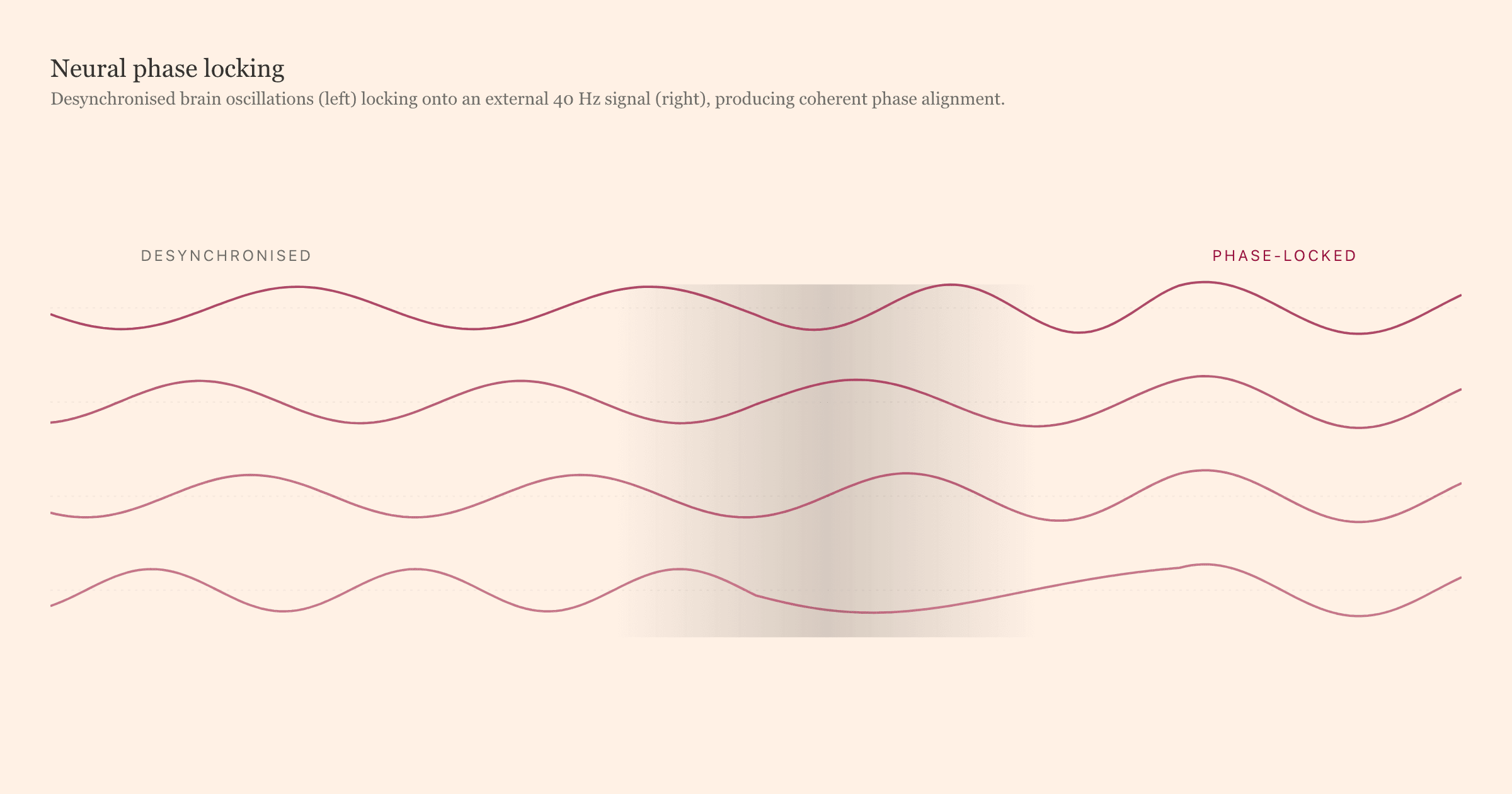
Neural phase locking is one of the most fascinating mechanisms in neuroscience - it's how your brain coordinates billions of neurons to work together in perfect harmony. Think of it as your brain's internal orchestra, where different sections must play in sync to create beautiful music. When neurons "phase lock," they synchronize their electrical activity, creating coherent brainwave patterns that enhance cognitive function.
This synchronization occurs when groups of neurons fire at the same frequency and maintain consistent timing relationships. Unlike random neural activity, phase-locked neurons create powerful, coordinated signals that can be measured as distinct brainwave patterns on an EEG.
The discovery of neural phase locking has revolutionized our understanding of how consciousness, attention, and memory formation actually work at the neural level.
The Science Behind Neural Synchronization
How Phase Locking Works
Neural phase locking operates through several key mechanisms:
- Frequency matching: Neurons adjust their firing rates to match a dominant rhythm
- Temporal coordination: Neural groups maintain precise timing relationships
- Cross-frequency coupling: Different brain regions synchronize across frequency bands
- Plasticity-driven changes: Repeated synchronization strengthens neural connections
When your brain needs to perform complex tasks, it recruits multiple neural networks and synchronizes them through phase locking. This creates a temporary "coalition" of brain regions working toward a common goal.
Types of Neural Phase Locking
Local Phase Locking: Occurs within small brain regions, typically involving neurons in close proximity synchronizing their activity for local processing tasks.
Long-range Phase Locking: Happens between distant brain regions, enabling communication across the entire brain for complex cognitive functions.
Cross-frequency Phase Locking: Different frequency bands synchronize, such as gamma waves (30-100 Hz) coupling with theta rhythms (4-8 Hz) during memory formation.
Neural Phase Locking and Cognitive Performance
Enhanced Attention and Focus
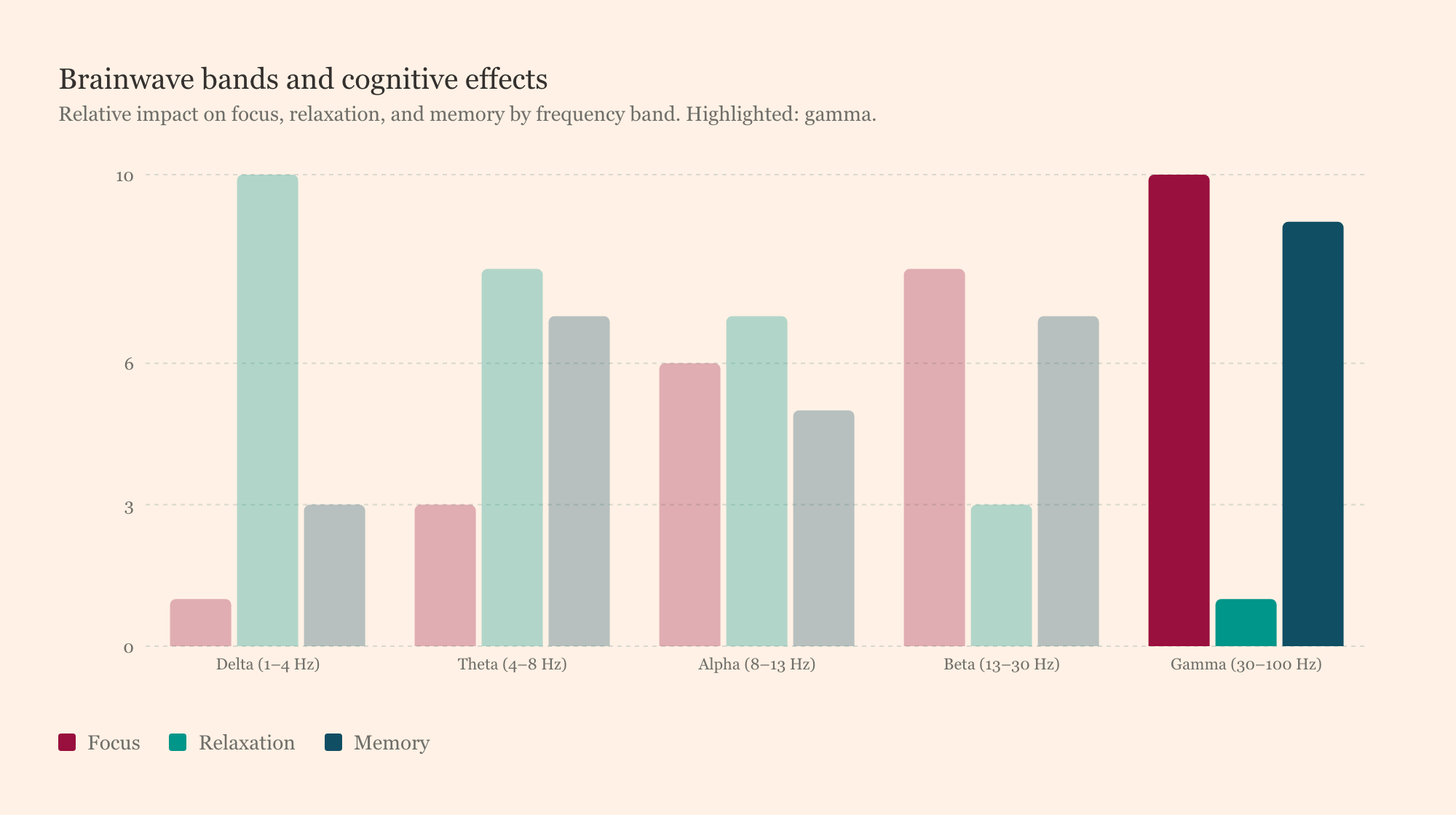
Research shows that phase-locked neural activity significantly improves attention and concentration. When your brain achieves strong phase locking in the gamma frequency range (30-100 Hz), you experience:
- Heightened focus and concentration
- Improved selective attention
- Reduced distractibility
- Enhanced cognitive control
Studies using EEG measurements demonstrate that individuals with stronger phase locking show superior performance on attention-demanding tasks.
Memory Formation and Retrieval
Neural phase locking plays a crucial role in memory processes. During learning, theta-gamma coupling creates optimal conditions for:
- Encoding new information: Phase-locked theta rhythms coordinate the timing of memory formation
- Memory consolidation: Synchronized activity during sleep strengthens memory traces
- Retrieval accuracy: Phase locking helps access stored memories more effectively
Research indicates that disrupted phase locking correlates with memory impairments in various neurological conditions.
Creative Problem-Solving
When your brain needs to make novel connections, phase locking enables communication between typically unconnected regions. This cross-regional synchronization facilitates:
- Insight moments and "aha!" experiences
- Creative thinking and innovation
- Abstract reasoning
- Pattern recognition across domains
Factors That Influence Neural Phase Locking
Natural Biological Factors
Several internal factors affect your brain's ability to achieve and maintain phase locking:
- Circadian rhythms: Phase locking varies throughout the day, typically strongest during peak alertness hours
- Age: Younger brains generally show stronger phase locking, which may decline with aging
- Sleep quality: Well-rested brains demonstrate more coherent neural synchronization
- Stress levels: Chronic stress can disrupt normal phase locking patterns
Environmental and Lifestyle Factors
Your environment and habits significantly impact neural synchronization:
- Meditation and mindfulness: Regular practice strengthens phase locking across multiple frequency bands
- Physical exercise: Aerobic activity enhances neural synchronization and connectivity
- Nutrition: Adequate omega-3 fatty acids and antioxidants support healthy neural oscillations
- Caffeine: Moderate amounts can enhance gamma-band phase locking for improved focus
Enhancing Neural Phase Locking Naturally
Meditation and Mindfulness Practices
Regular meditation is one of the most effective ways to strengthen neural phase locking. Different types of meditation enhance synchronization in various ways:
- Focused attention meditation: Strengthens gamma-band synchronization in attention networks
- Open monitoring meditation: Enhances cross-frequency coupling across brain regions
- Loving-kindness meditation: Increases alpha-band coherence associated with positive emotions
Even 10-15 minutes of daily meditation can produce measurable improvements in neural synchronization within weeks.
Breathing Techniques
Controlled breathing exercises naturally enhance phase locking by:
- Synchronizing neural oscillations with respiratory rhythms
- Activating the parasympathetic nervous system
- Improving heart rate variability
- Enhancing prefrontal cortex connectivity
Try rhythmic breathing patterns like 4-7-8 breathing or box breathing to strengthen neural coherence.
Cognitive Training
Specific mental exercises can improve phase locking:
- Working memory training: Strengthens gamma synchronization in frontal regions
- Attention training: Enhances alpha-band phase locking
- Dual n-back training: Improves cross-regional synchronization
- Musical training: Develops strong phase locking across multiple frequency bands
Brainwave Entrainment and Phase Locking
How Audio Entrainment Works
Binaural beats and other forms of brainwave entrainment can influence neural phase locking by:
- Providing external rhythmic stimuli for neurons to synchronize with
- Encouraging cross-hemispheric coherence
- Facilitating specific frequency band entrainment
- Supporting sustained attention states
Research suggests that regular use of properly designed entrainment audio can strengthen the brain's natural ability to achieve phase locking.
Optimal Frequencies for Enhancement
Different frequencies target various aspects of neural synchronization:
- 8-12 Hz (Alpha): Relaxed focus and creative states
- 13-30 Hz (Beta): Active concentration and problem-solving
- 30-100 Hz (Gamma): Peak cognitive performance and awareness
- 4-8 Hz (Theta): Deep meditation and memory consolidation
Future Implications and Research
Therapeutic Applications
Understanding neural phase locking opens new possibilities for treating:
- ADHD and attention disorders
- Depression and anxiety
- Age-related cognitive decline
- Autism spectrum disorders
- Schizophrenia and other psychiatric conditions
Researchers are developing targeted interventions to restore healthy phase locking patterns in these conditions.
Technology and Enhancement
Emerging technologies are leveraging phase locking research:
- Real-time neurofeedback systems
- Transcranial stimulation devices
- Advanced meditation apps
- Cognitive enhancement protocols
Conclusion
Neural phase locking represents a fundamental mechanism by which your brain achieves peak performance. By understanding and optimizing this natural synchronization process, you can enhance focus, memory, creativity, and overall cognitive function.
Whether through meditation, proper sleep, targeted breathing exercises, or brainwave entrainment, supporting your brain's ability to achieve coherent neural synchronization is one of the most powerful ways to unlock your mental potential. The science of neural phase locking continues to reveal new insights into the remarkable coordination underlying human consciousness and performance.