What Are Isochronic Tones and Binaural Beats?
Both isochronic tones and binaural beats are forms of brainwave entrainment – audio technologies designed to influence your brain's electrical activity and guide it toward specific mental states. While they share similar goals, these two methods work through completely different mechanisms.
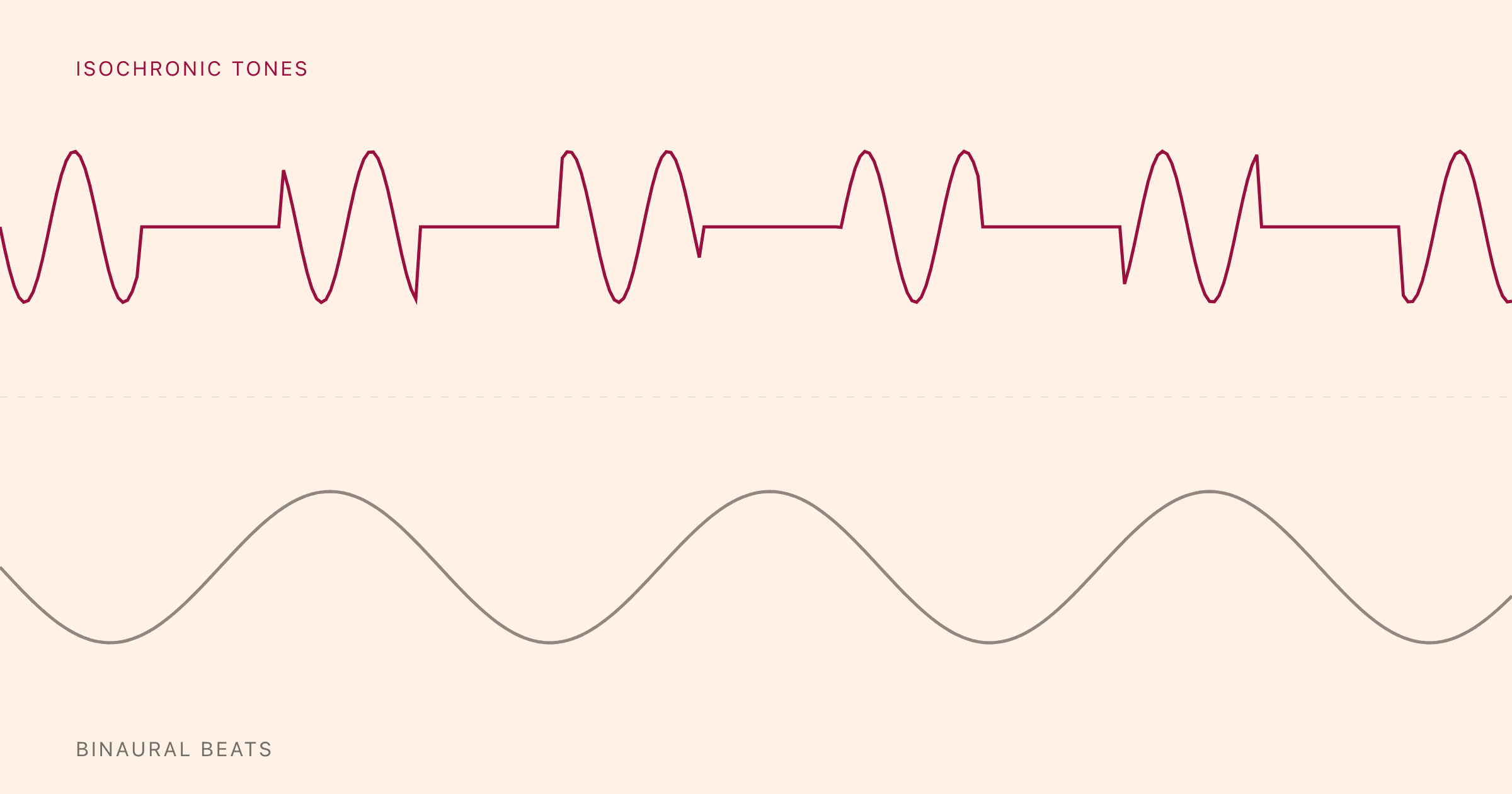
Binaural beats occur when two slightly different frequencies are played in each ear simultaneously. Your brain perceives the mathematical difference between these frequencies as a rhythmic "beat." For example, if 440 Hz plays in your left ear and 444 Hz plays in your right ear, your brain processes a 4 Hz binaural beat.
Isochronic tones, on the other hand, are single tones that turn on and off at regular intervals, creating distinct pulses of sound. These rhythmic pulses directly stimulate your auditory system without requiring two separate frequencies.

How Each Method Works in Your Brain
Binaural Beats Mechanism
When you listen to binaural beats through headphones, your brain's superior olivary complex processes the frequency difference between your ears. This creates a phenomenon called frequency following response, where your brainwaves gradually synchronize to match the beat frequency.
The process requires:
- Stereo headphones (essential for proper function)
- Quiet listening environment
- Sustained attention for 15-30 minutes
- Healthy hearing in both ears
Isochronic Tones Mechanism
Isochronic tones work through direct auditory stimulation. The rhythmic on-off pulses create clear, sharp beats that your brain can easily detect and follow. This method doesn't rely on your brain's ability to calculate frequency differences – instead, it presents the target rhythm directly.
Key advantages include:
- No headphones required (though they can enhance the experience)
- Works with speakers or single-ear listening
- More accessible for people with hearing differences
- Typically faster entrainment response
Effectiveness Comparison: What Science Says
Research on Binaural Beats
Studies on binaural beats show mixed but promising results:
- Focus and attention: Some research indicates 40 Hz gamma binaural beats may enhance focus and working memory
- Relaxation: Alpha frequency beats (8-12 Hz) can promote relaxation states
- Sleep: Theta and delta beats may improve sleep quality
- Limitations: Effects are often subtle and vary significantly between individuals
Research on Isochronic Tones
Isochronic tones have received less scientific attention, but available research suggests:
- Stronger entrainment: Some studies indicate isochronic tones produce more robust brainwave changes
- Faster response: Users often report quicker onset of desired mental states
- Consistency: Less individual variation in effectiveness
- Accessibility: Work effectively without specialized equipment
Practical Benefits and Use Cases
When to Choose Binaural Beats
Binaural beats excel in these scenarios:
- Deep meditation sessions where you can commit to headphone use
- Sleep enhancement when listening in bed with comfortable headphones
- Stress reduction during dedicated relaxation time
- Personal preference if you enjoy the subtle, smooth quality of binaural beats
When to Choose Isochronic Tones
Isochronic tones are ideal for:
- Work or study sessions where headphones aren't practical
- Quick mental state changes when you need faster results
- Hearing accessibility if you have hearing differences between ears
- Multitasking scenarios where you need background entrainment
- Group settings where multiple people can benefit simultaneously
Potential Limitations and Considerations
Binaural Beats Limitations
- Require quality headphones for effectiveness
- May not work for people with significant hearing loss
- Can cause headaches in sensitive individuals
- Effects often subtle and may take time to notice
- Not suitable for listening while driving or operating machinery
Isochronic Tones Limitations
- Some people find the pulsing rhythm distracting initially
- May be more noticeable in quiet environments
- Can interfere with certain activities requiring auditory attention
- Limited availability compared to binaural beats content
Making the Right Choice for Your Goals
For Focus and Productivity
Winner: Isochronic Tones
The direct, clear pulses of isochronic tones typically provide faster and more noticeable effects for concentration. You can use speakers, making them practical for work environments.
For Deep Meditation and Relaxation
Winner: Binaural Beats
The smooth, subtle nature of binaural beats creates less distraction during meditation practices. The immersive headphone experience can enhance the meditative state.
For Sleep Enhancement
Winner: Tie (with caveats)
Both can be effective, but binaural beats might be more comfortable for sleep since they're gentler. However, sleeping with headphones isn't ideal for everyone.
For Beginners
Winner: Isochronic Tones
The accessibility and typically faster results make isochronic tones more beginner-friendly. You can experiment without investing in quality headphones.
Combining Both Methods
Many practitioners successfully use both isochronic tones and binaural beats at different times:
- Morning focus sessions: Isochronic tones with beta/gamma frequencies
- Evening relaxation: Binaural beats with alpha/theta frequencies
- Work periods: Isochronic tones through speakers
- Dedicated meditation: Binaural beats with headphones
The Bottom Line
Neither isochronic tones nor binaural beats is universally "better" – the optimal choice depends on your specific needs, lifestyle, and preferences. Isochronic tones offer greater accessibility and often faster results, making them excellent for daily productivity and quick state changes. Binaural beats provide a subtler, more immersive experience that many find ideal for deep relaxation and meditation.
Consider trying both methods to discover which resonates with your brain and lifestyle. Start with shorter 10-15 minute sessions and gradually increase duration as you become more comfortable with brainwave entrainment. Remember that consistency matters more than the specific method you choose – regular practice with either technology can help you achieve better focus, relaxation, and overall mental wellness.