Understanding Isochronic Tones
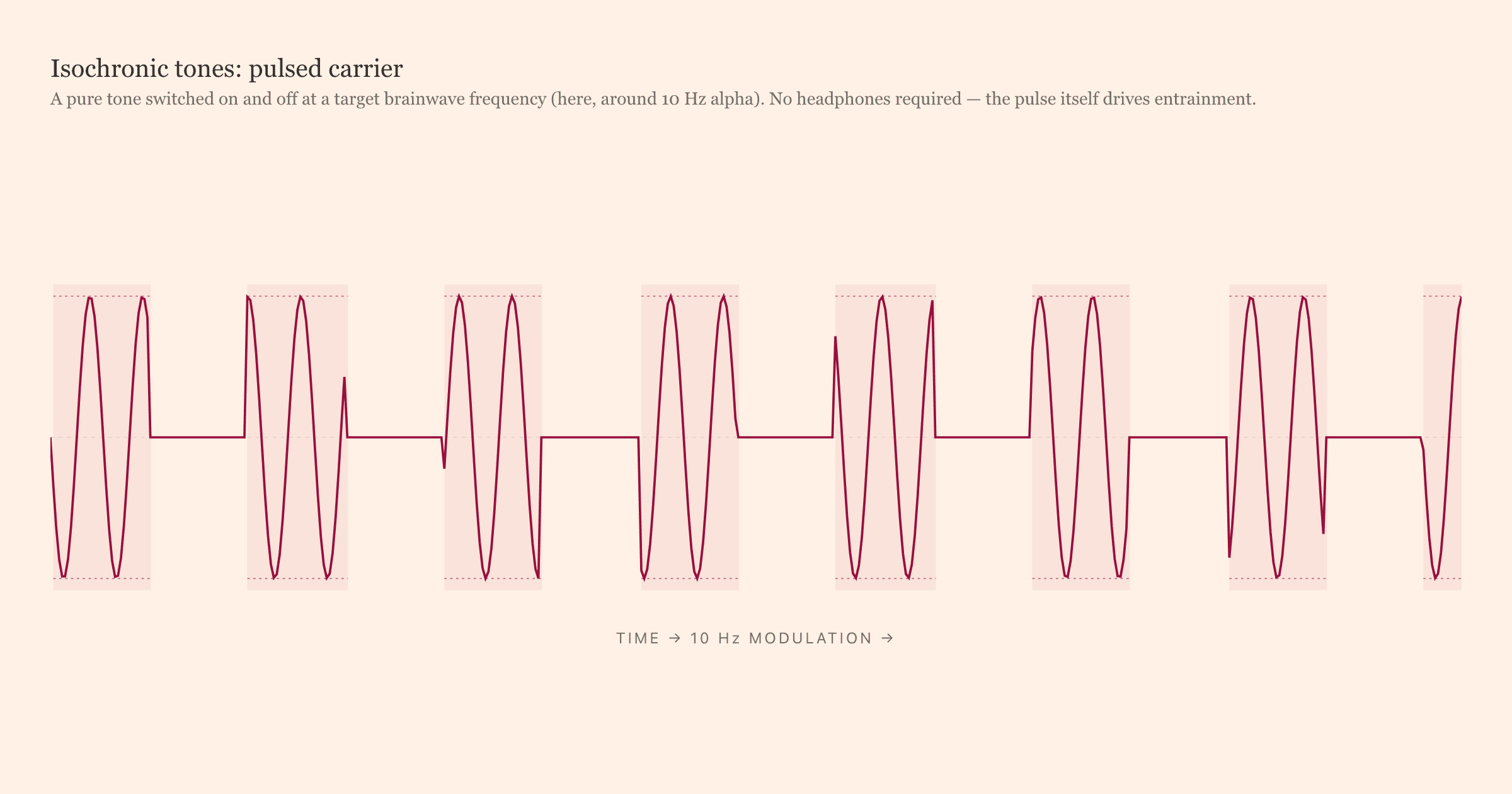
Isochronic tones are evenly spaced pulses of sound that turn on and off at a specific rhythm. Unlike binaural beats (which require two different frequencies in each ear), isochronic tones create a single, rhythmic beat that your brain can follow.
Think of it like a metronome for your brain—a steady pulse that encourages your neural activity to synchronize with its rhythm.
How Isochronic Tones Work
The theory behind isochronic tones is called "brainwave entrainment." When exposed to a rhythmic stimulus, your brain tends to match that rhythm. A 10 Hz isochronic tone, for example, may encourage alpha wave production associated with relaxed focus.
How it sounds: A single tone that pulses on and off rapidly—like a rapid clicking or pulsing sound at the target frequency.
Isochronic Tones vs. Binaural Beats
| Feature | Isochronic Tones | Binaural Beats |
|---|---|---|
| Headphones required | No | Yes |
| How it works | Pulsing single tone | Two frequencies, one per ear |
| Entrainment strength | Stronger (more distinct) | Subtler |
| Sound quality | More noticeable/rhythmic | Smoother, background hum |
| Research support | Limited but promising | More extensive |
Common Frequencies Used
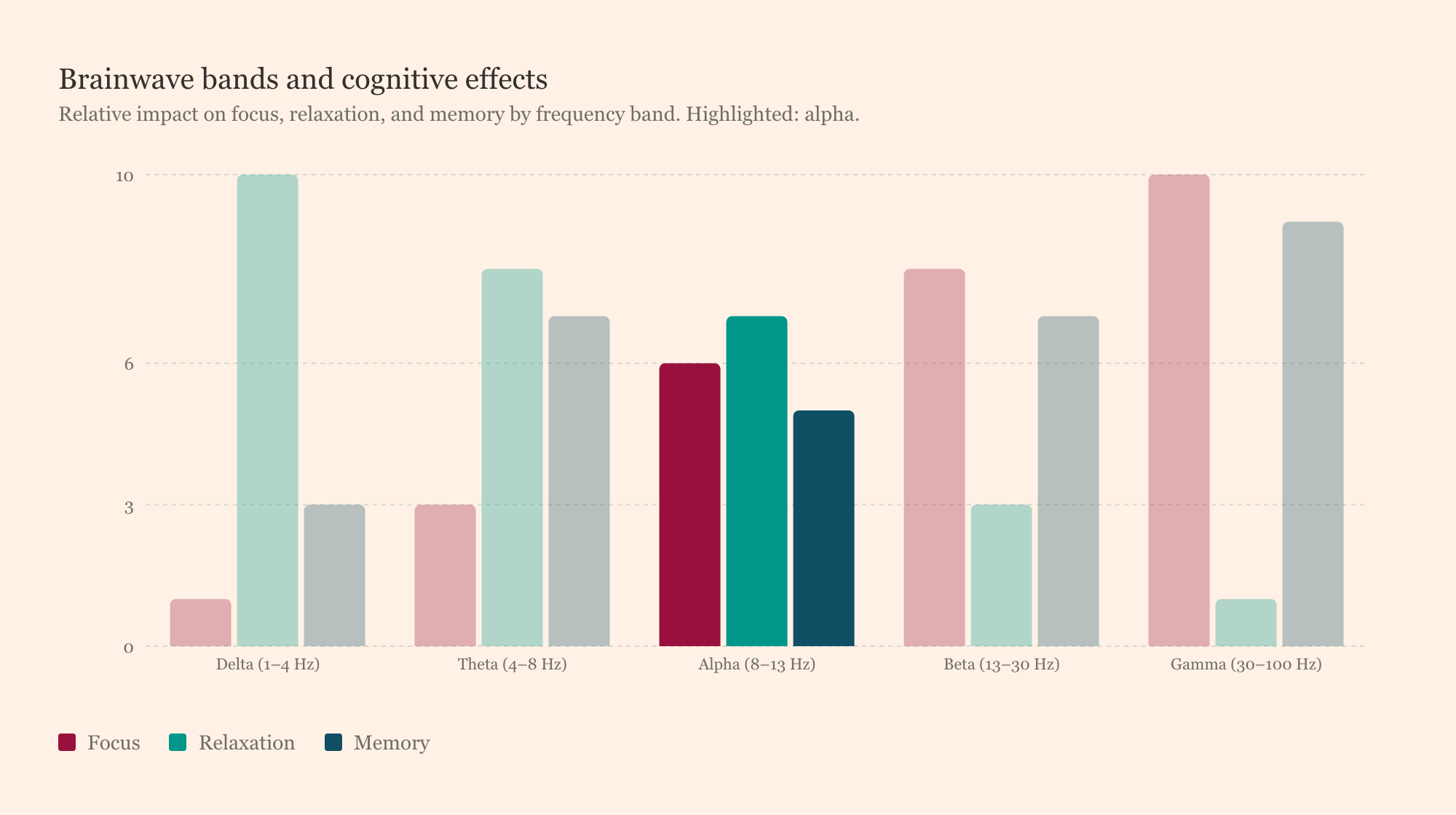
4-8 Hz (Theta)
Deep relaxation, meditation, creativity
10 Hz (Alpha) ★ Best for Focus
Relaxed focus, learning, calm alertness
14-18 Hz (Beta)
Active concentration, problem-solving
40 Hz (Gamma)
Peak focus, memory, cognitive processing
Potential Benefits
- No headphones needed — Can use speakers, more convenient
- Stronger entrainment — The distinct pulses may be more effective
- Flexible use — Easier to incorporate into daily routine
- Customizable — Can target specific frequency ranges
Drawbacks to Consider
- More noticeable sound — The pulsing can be distracting for some
- Less research — Fewer studies compared to binaural beats
- Can be harsh — Pure isochronic tones without music can feel clinical
- Individual variation — Not everyone responds to audio entrainment
How to Use Isochronic Tones
- Choose a frequency based on your goal (focus, relaxation, etc.)
- Set volume to a comfortable level—it should be present but not overwhelming
- Start with 15-20 minute sessions
- Use during focused work, meditation, or relaxation
- Give it time—entrainment effects may build over multiple sessions
A Simpler Approach to Focus
If isochronic tones feel too technical or harsh, ambient focus music offers similar concentration benefits without specific frequency targeting. Tomatoes includes curated ambient stations that naturally promote focus.
The Bottom Line
Isochronic tones are a form of audio entrainment that uses rhythmic pulses to influence brain wave activity. They may help with focus and relaxation, and they have the advantage of not requiring headphones. However, the research is still limited, and the pulsing sound isn't for everyone. For many people, simple ambient music works just as well for concentration.