Neurogenesis is the brain doing something it was long believed to be incapable of: growing brand-new neurons in adulthood. For most of the twentieth century, the textbooks said you were born with all the neurons you would ever have, and it was downhill from there. That turned out to be wrong. The adult brain, particularly the hippocampus, its memory hub, keeps producing new neurons throughout life, and those new cells appear to matter for learning, memory, and mood. Even better, neurogenesis is not fixed. It responds to how you live, which means the birth of new brain cells is one of the few aspects of your neurobiology you can genuinely influence.
This article explains what neurogenesis is, where and how it happens, why it matters for the things you actually care about like memory and resilience, and, most practically, the habits that boost it and the ones that suppress it. The story is a hopeful one, with a catch: the same effortful habits that grow new neurons are the ones that are easy to skip, and the modern defaults, chronic stress and too little sleep, are exactly the things that shut it down.
What Is Neurogenesis?
Neurogenesis is the process by which new neurons are formed from neural stem cells. It happens intensively before birth, when the entire brain is being built, but the surprising and important part is that it continues, at a much smaller scale, into adulthood. This adult neurogenesis is concentrated in a specific region: the dentate gyrus of the hippocampus, the structure most associated with forming new memories.
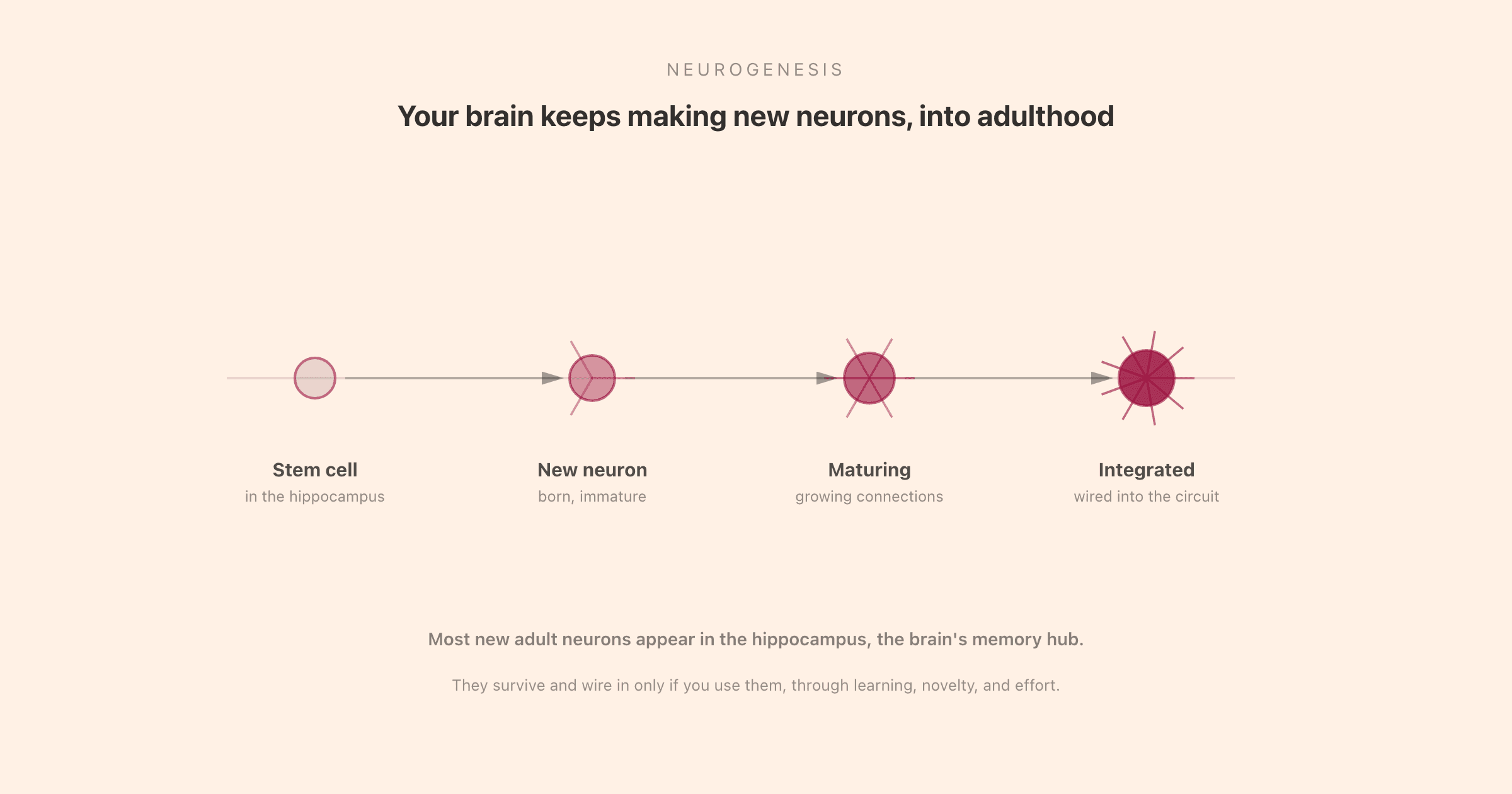
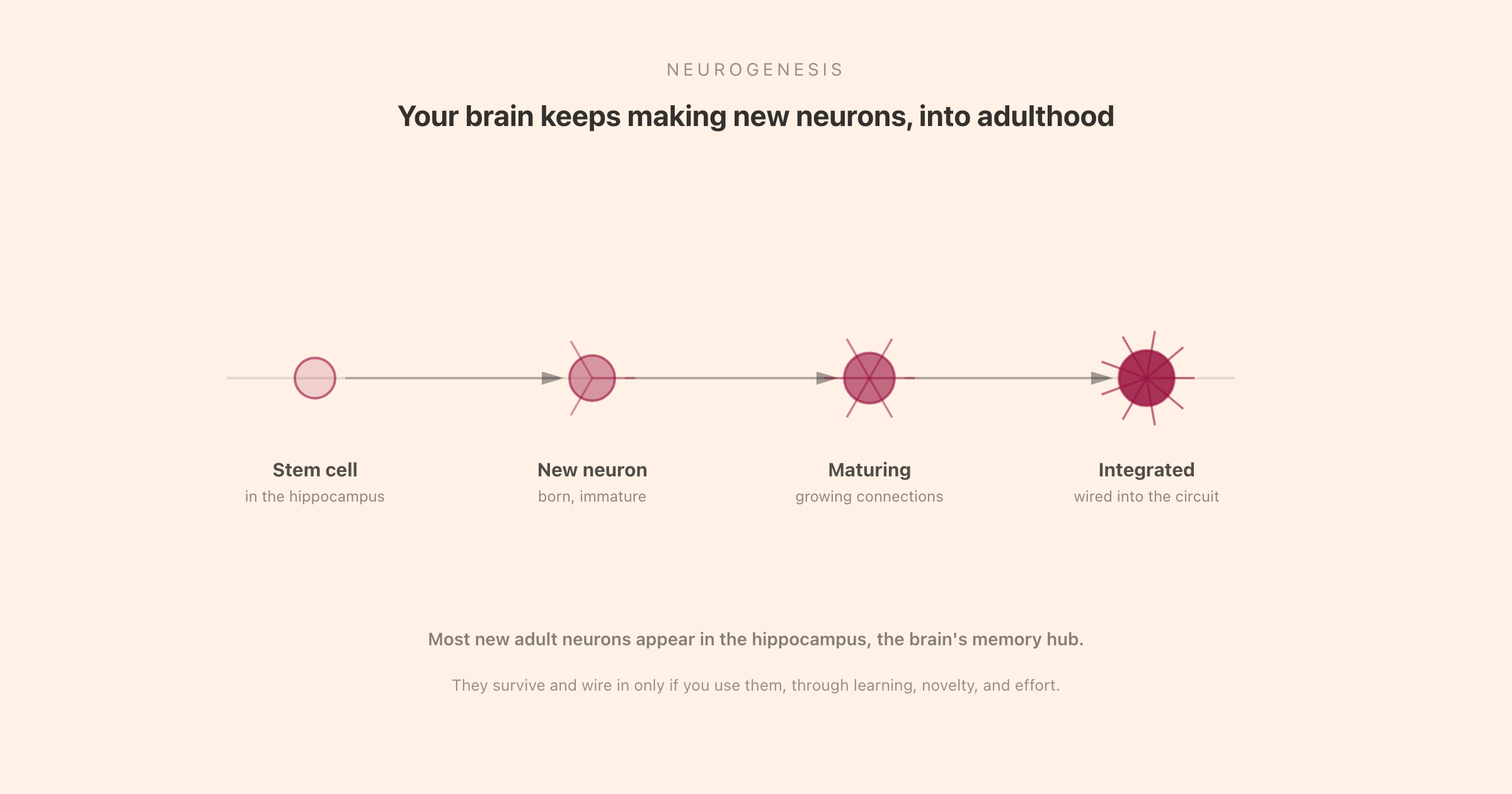
The process runs in stages. A neural stem cell in the hippocampus divides and gives rise to a new, immature neuron. That young neuron then has to do something difficult: survive. Most newborn neurons die within a few weeks unless they are integrated into the existing circuitry, and whether they integrate depends heavily on whether they are used. If the brain is learning, exploring, and being challenged during that window, more of the new neurons survive, mature by growing connections, and wire themselves into the network. If nothing is demanding them, most are lost. Neurogenesis is not just birth; it is birth followed by a use-it-or-lose-it audition.
It is worth being honest that the science here is still debated. The exact rate of adult human neurogenesis, and even whether it continues robustly into old age, is an area of genuine scientific disagreement, with studies pointing in different directions. What is well supported is that it occurs, that the hippocampus is the main site, and that it is sensitive to lifestyle. The practical advice that follows rests on that well-supported core, not on the contested details.
Where It Happens, and Why the Hippocampus Matters
That neurogenesis concentrates in the hippocampus is a strong clue to what it is for. The hippocampus is central to forming new memories and to a function called pattern separation: keeping similar experiences distinct so that today's walk to work does not blur into yesterday's. New neurons appear to be especially important for this. Their addition to the circuit is thought to help the brain tell similar things apart and encode new memories without overwriting old ones.
This connects neurogenesis to the broader phenomenon of neuroplasticity, the brain's capacity to change itself. Plasticity mostly refers to existing neurons rewiring their connections; neurogenesis adds genuinely new hardware to the memory system. The two work together: a brain that both rewires its existing circuits and adds new neurons where it matters most is a brain that keeps its capacity to learn and adapt.
There is also a well-established link between hippocampal neurogenesis and mood. Reduced neurogenesis is associated with depression in animal models, and several antidepressant treatments appear to increase it, with some researchers proposing that boosting neurogenesis is part of how they work. The relationship is not simple, but it points to something intuitive: the health of your memory hub and the health of your mood are connected.
The Habits That Boost and Suppress Neurogenesis
Here is the practical heart of it. Neurogenesis responds to how you live, and the levers are the same unglamorous fundamentals that show up in almost every article about the brain, for a reason.
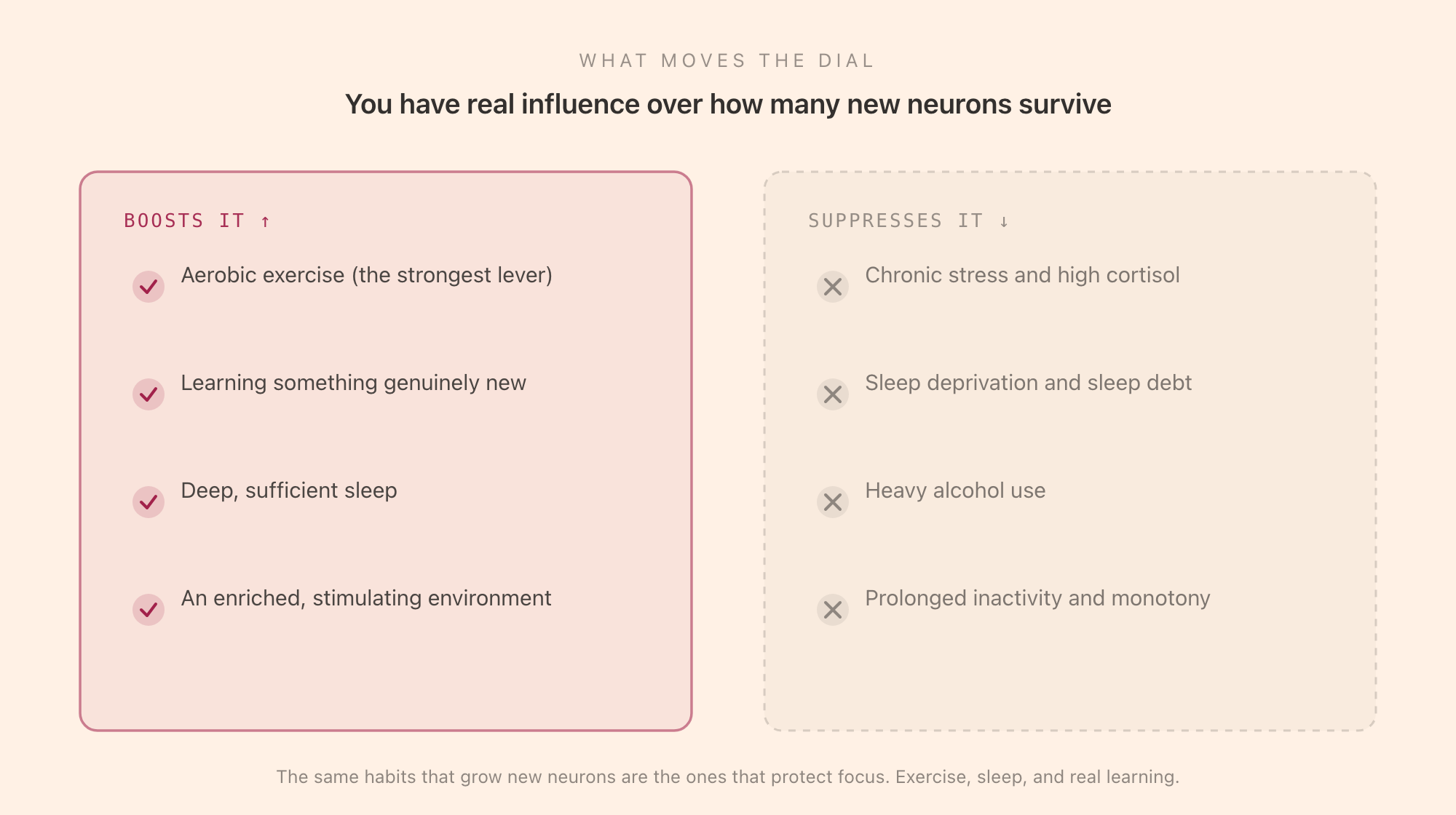
Aerobic exercise is the strongest lever. Of everything studied, sustained aerobic exercise, running in particular in animal studies, has the most robust effect on increasing hippocampal neurogenesis. It appears to work partly by raising levels of a protein called BDNF (brain-derived neurotrophic factor), which supports the survival and growth of new neurons. If you do one thing for your brain's capacity to build new cells, it is regular cardiovascular exercise.
Learning and novelty help the new neurons survive. Because newborn neurons integrate only if they are used, engaging in genuine learning, effortful, novel mental challenge, during the survival window helps more of them wire in. An enriched, stimulating environment does the same. This is the "use it or lose it" side of the process, and it is why passive routine is not enough; the new cells need something demanding to do.
Deep, sufficient sleep protects it. Sleep supports neurogenesis and the consolidation of the memories those new neurons help form, while sleep deprivation suppresses it. This is one more reason that chronic sleep loss, and the sleep debt it builds, quietly erodes cognitive capacity.
On the other side of the ledger, the main suppressors are predictable:
Chronic stress is the biggest one. Sustained stress and the elevated cortisol that comes with it are strongly linked to reduced hippocampal neurogenesis. This is a plausible part of why prolonged stress impairs memory and mood: it is, among other things, throttling the birth of new neurons in the very region that handles both. Acute, short-lived stress is fine; it is the chronic, unrelenting kind that does the damage.
Sleep deprivation, heavy alcohol use, and prolonged inactivity round out the list. None of this is exotic. The recipe for suppressing neurogenesis is simply the modern default of too much stress, too little sleep, too little exercise, and too little novelty.
What This Actually Means for You
It is easy to over-claim here, so let us be measured. You cannot feel neurogenesis happening, you cannot count your new neurons, and no single run will transform your brain. The honest framing is this: the birth and survival of new neurons is a slow, ongoing background process that you tilt in one direction or the other by how you live over months and years, not one you switch on in an afternoon.
But the direction of the tilt is real and it is in your hands. The habits that support neurogenesis, regular aerobic exercise, real learning, good sleep, and managing chronic stress, are not a special brain-training regimen. They are the same fundamentals that support focus, memory, and mood through every other mechanism in the brain. Neurogenesis is one more reason the boring advice is the right advice, and one more way of understanding that the brain is not a fixed asset you spend down, but a living system you can keep investing in.
Where Focus Music Fits
The neurogenesis story contains a specific, useful point for focus: new neurons survive when they are used, through effortful, genuine learning. That means the quality of your mental engagement is not just about getting work done today; it is part of what determines whether the new cells your brain is producing actually integrate and stick. Deep, focused learning is one of the things that gives newborn neurons a reason to live. Distracted, half-present effort gives them much less.
That is where a stable focus environment earns its place. Tomatoes generates focus music designed to help you drop into the kind of sustained, engaged learning and work that challenges the brain, so the effort you put in is deep enough to matter, not just to the task in front of you but to the circuitry your brain is quietly building. It is a one-time $39 app, no subscriptions and no account. If you want your focused hours to count twice, once for the work and once for the brain doing the work, get Tomatoes here.
Neurogenesis is a quietly radical idea: that the adult brain is not finished, that it keeps building, and that you have a hand in it. You will never see the new neurons, but you can create the conditions that let them thrive, by moving your body, challenging your mind, protecting your sleep, and refusing to let chronic stress become your normal. Do that, and you are not just maintaining the brain you have. You are, in a small and steady way, growing a new one.