The Battle of Time Management Techniques
In the world of productivity methods, two techniques have captured the attention of professionals, students, and creatives alike: the classic Pomodoro Technique and its newer cousin, Flowmodoro. While both aim to boost focus and productivity, they take fundamentally different approaches to managing our relationship with time and work.
If you've ever found yourself torn between structured time blocks and natural work rhythms, this comparison will help you understand which method might work best for your unique workflow and personality.
Understanding the Pomodoro Technique
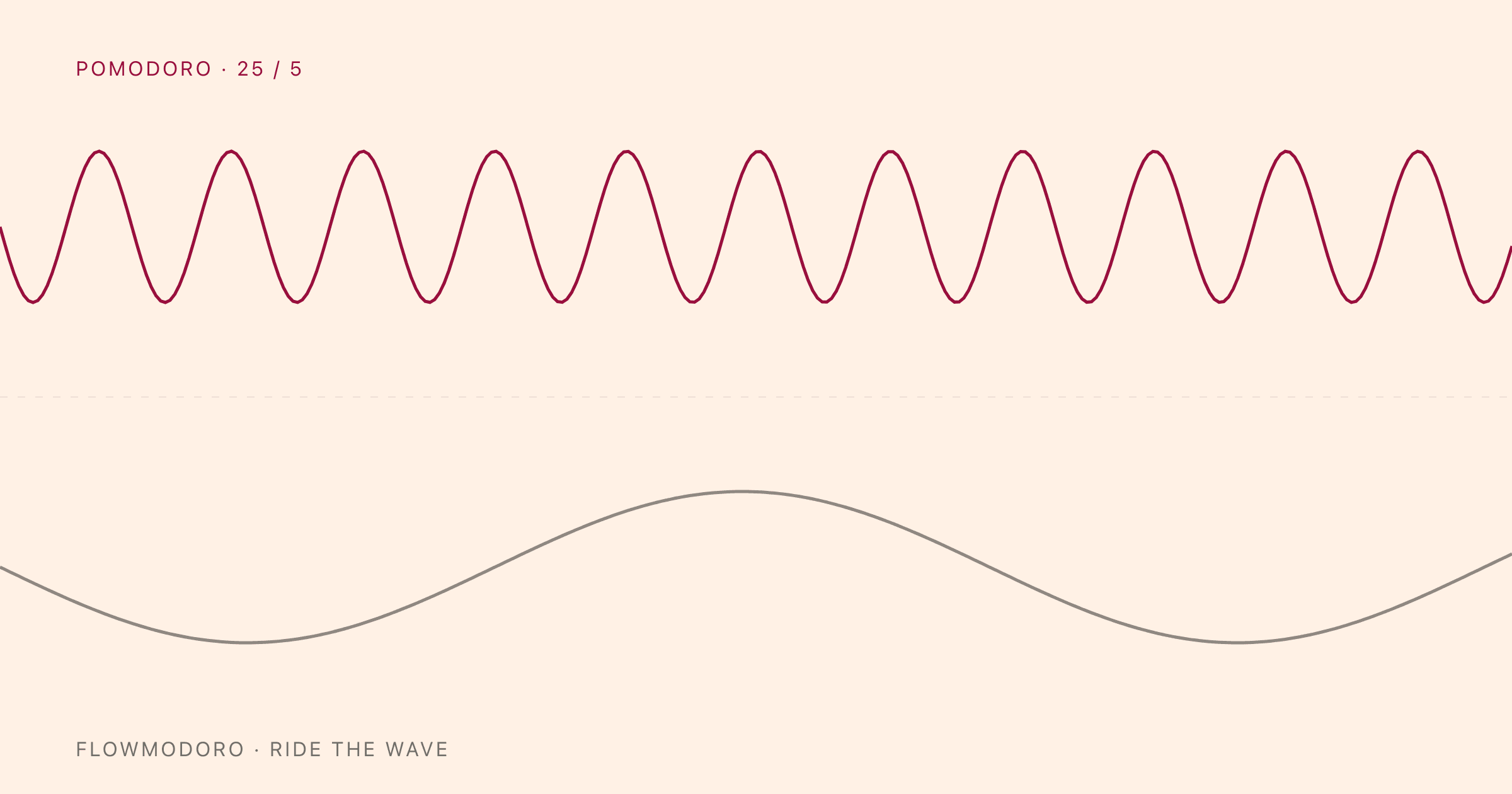
Created by Francesco Cirillo in the late 1980s, the Pomodoro Technique is elegantly simple. You work in focused 25-minute intervals (called "pomodoros"), followed by 5-minute breaks. After completing four pomodoros, you take a longer 15-30 minute break.
The method's strength lies in its predictability and structure:
- Time-boxed focus: 25 minutes is short enough to maintain concentration while being long enough to make meaningful progress
- Built-in rest: Regular breaks prevent mental fatigue and maintain peak performance
- Psychological comfort: Knowing there's a break coming makes it easier to resist distractions
- Progress tracking: Each completed pomodoro provides a tangible sense of accomplishment
The Pomodoro Technique works particularly well for tasks that feel overwhelming or for people who struggle with procrastination. Breaking work into digestible chunks makes large projects feel manageable, while the ticking timer creates a sense of urgency that can overcome inertia.
Enter Flowmodoro: The Flexible Alternative
Flowmodoro emerged as a response to one of Pomodoro's main criticisms: what happens when you're in a deep flow state and the timer goes off? This newer technique adapts the core concept while respecting natural work rhythms.
Here's how Flowmodoro works:
- Start your timer when you begin working
- Work for as long as you feel focused and productive
- When you naturally feel ready for a break, stop the timer
- Take a break that's proportional to your work time (typically 5 minutes for every 25 minutes worked)
- Repeat the cycle
The key insight behind Flowmodoro is that our brains don't operate on fixed 25-minute cycles. Sometimes we're in the zone for 45 minutes, other times we're mentally exhausted after 15. Flowmodoro honors these natural fluctuations while maintaining the accountability of time tracking.
Comparing the Two Approaches
Structure vs. Flexibility
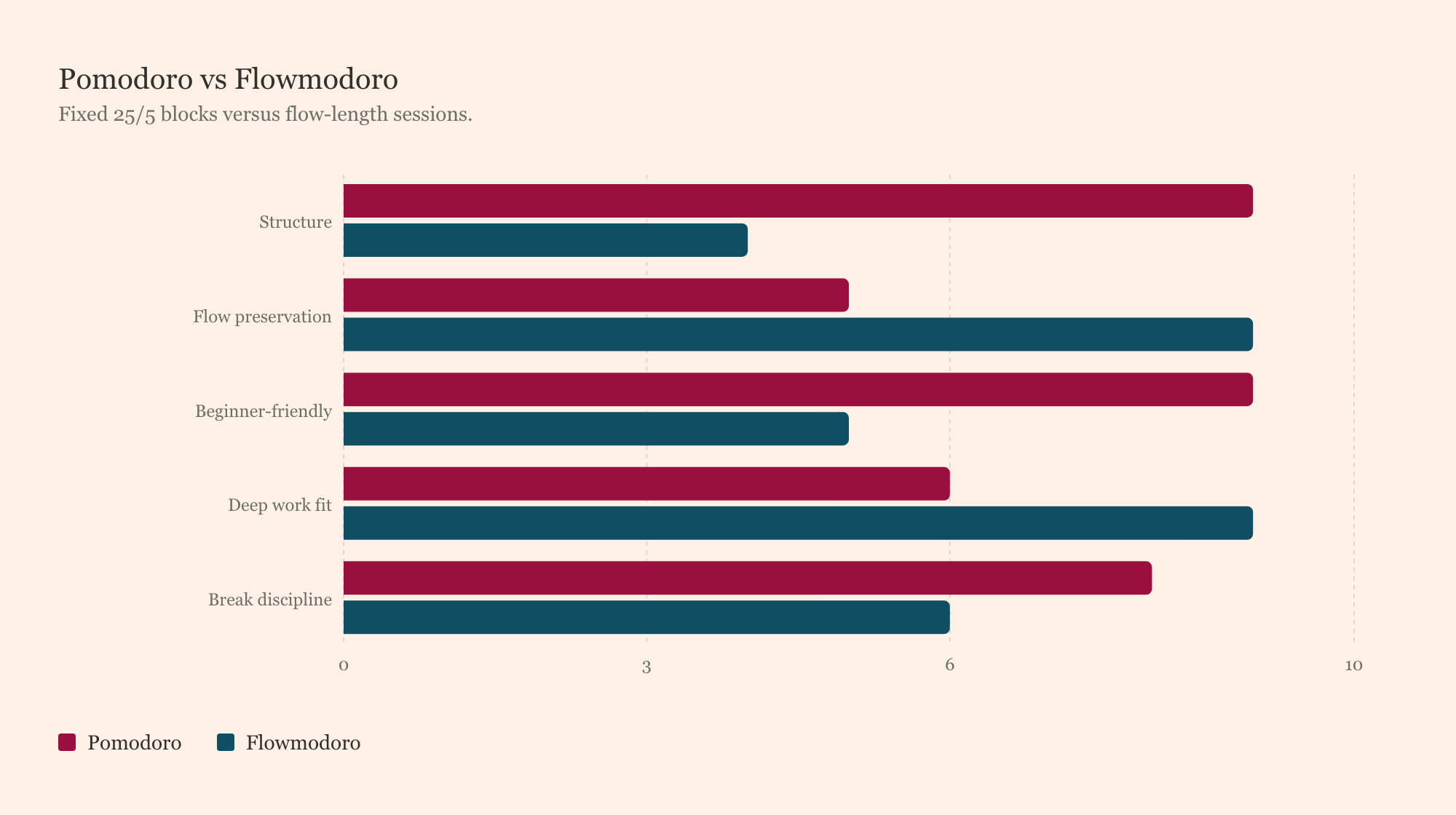
Pomodoro provides unwavering structure. You know exactly when you'll work and when you'll rest, making it easy to plan your day and communicate your availability to others. This predictability can be incredibly comforting for people who thrive on routine or struggle with decision fatigue.
Flowmodoro embraces flexibility. It trusts you to recognize your own mental states and make decisions about when to continue working versus when to take a break. This approach can lead to longer periods of deep work but requires greater self-awareness and discipline.
Task Compatibility
Different types of work respond better to each method:
Pomodoro excels with:
- Administrative tasks and email processing
- Studying or memorization work
- Tasks you're avoiding or find boring
- Work that requires consistent, steady progress
- Collaborative work with scheduled meetings
Flowmodoro shines for:
- Creative work like writing or design
- Complex problem-solving that requires deep thinking
- Programming or technical tasks
- Research and analysis
- Any work where interruptions break valuable mental connections
Learning Curves and Adaptation
The Pomodoro Technique has virtually no learning curve. Set a timer for 25 minutes and you're off. Its simplicity is both a strength and a limitation – while anyone can start immediately, there's little room for customization as your productivity needs evolve.
Flowmodoro requires developing better self-awareness. You need to learn to recognize when you're truly losing focus versus just hitting a minor mental obstacle. This skill takes time to develop but can lead to more sustainable and satisfying work sessions once mastered.
Finding Your Perfect Match
Your ideal technique depends on several personal factors:
Choose Pomodoro if you:
- Are just starting with time management techniques
- Work in an environment with frequent interruptions
- Struggle with procrastination or getting started
- Have ADHD or other attention challenges
- Prefer clear structure and external accountability
- Work primarily on shorter, discrete tasks
Choose Flowmodoro if you:
- Often get into deep flow states
- Work on creative or complex analytical tasks
- Find rigid schedules stifling
- Have developed good self-awareness about your energy levels
- Work in long, uninterrupted blocks of time
- Value autonomy and flexibility in your work style
The Hybrid Approach
Many productivity enthusiasts don't choose sides – they use both techniques strategically. You might use Pomodoro for administrative work in the morning when your willpower is high, then switch to Flowmodoro for creative projects in the afternoon when you're more likely to hit flow states.
Some people also modify the techniques to suit their needs: using 45-minute pomodoros for deeper work, or setting maximum limits on Flowmodoro sessions to prevent burnout.
Making Your Choice
Both Pomodoro and Flowmodoro are tools, not rules. The best technique is the one you'll actually use consistently. Consider experimenting with each method for a full week to see which feels more natural and produces better results for your specific work style and responsibilities.
Remember that productivity techniques should serve you, not the other way around. Whether you choose the structured rhythm of Pomodoro or the flexible flow of Flowmodoro, the goal remains the same: creating a sustainable system that helps you do your best work while maintaining your well-being.
Start with whichever method appeals to you more, and don't be afraid to adapt it as you learn more about your own productivity patterns. Your future focused self will thank you.