Understanding the Two Approaches to Sound Therapy
When exploring audio-based methods for improving focus, relaxation, and overall well-being, two popular approaches often come up: binaural beats and solfeggio frequencies. While both use sound to influence your mental state, they work through entirely different mechanisms and offer distinct benefits.
Understanding these differences can help you choose the right approach for your specific goals, whether you're seeking enhanced concentration for work, deeper meditation, or better sleep quality.
What Are Binaural Beats?
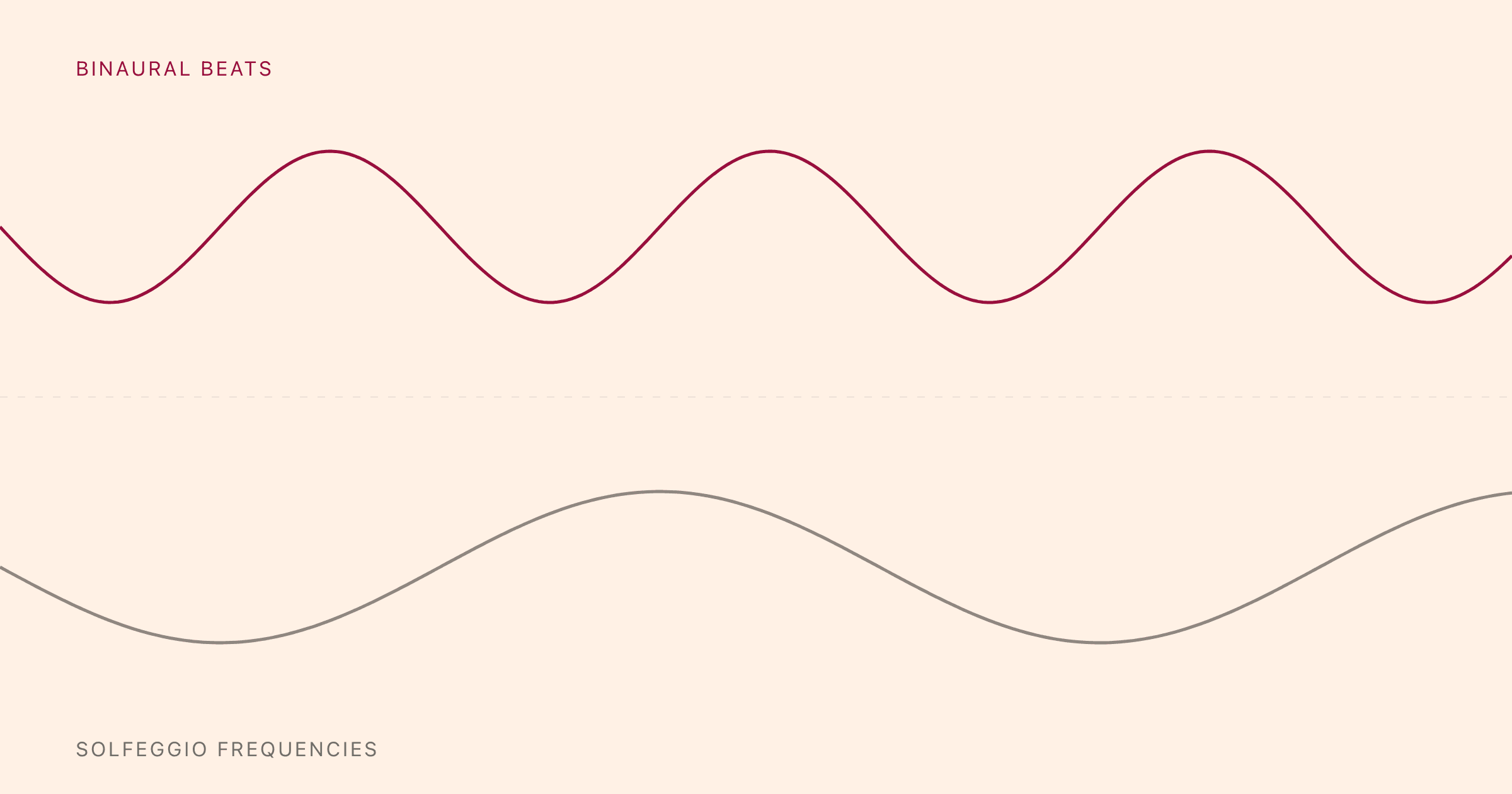
Binaural beats occur when your brain perceives a rhythmic pulsing sound created by playing two slightly different frequencies in each ear. For example, if you hear 440 Hz in your left ear and 444 Hz in your right ear, your brain processes the 4 Hz difference as a beating pattern.
This phenomenon, discovered in 1839 by physicist Heinrich Wilhelm Dove, works through a process called brainwave entrainment. Your brain naturally synchronizes its electrical activity to match the frequency of the perceived beat, potentially shifting you into desired mental states.
How Binaural Beats Affect Your Brain
- Delta waves (0.5-4 Hz): Deep sleep and healing
- Theta waves (4-8 Hz): Deep meditation and creativity
- Alpha waves (8-12 Hz): Relaxed focus and calm alertness
- Beta waves (12-30 Hz): Active concentration and problem-solving
- Gamma waves (30-100 Hz): Peak cognitive performance and insight
The effectiveness of binaural beats depends on consistent listening through stereo headphones, as each ear must receive a distinct frequency for the brain to create the beating effect.
Understanding Solfeggio Frequencies
Solfeggio frequencies are specific pure tones believed to have healing and transformative properties. These six primary frequencies—396, 417, 528, 639, 741, and 852 Hz—trace their origins to ancient Gregorian chants and sacred music traditions.
Unlike binaural beats, solfeggio frequencies work as standalone tones that you can listen to through speakers or headphones. Proponents believe each frequency resonates with different aspects of physical, emotional, and spiritual well-being.
The Six Core Solfeggio Frequencies
- 396 Hz: Liberation from fear and guilt
- 417 Hz: Facilitating change and removing negative energy
- 528 Hz: DNA repair and transformation (the "love frequency")
- 639 Hz: Harmonizing relationships and emotional healing
- 741 Hz: Awakening intuition and problem-solving
- 852 Hz: Spiritual awareness and higher consciousness
Scientific Evidence: What Research Shows
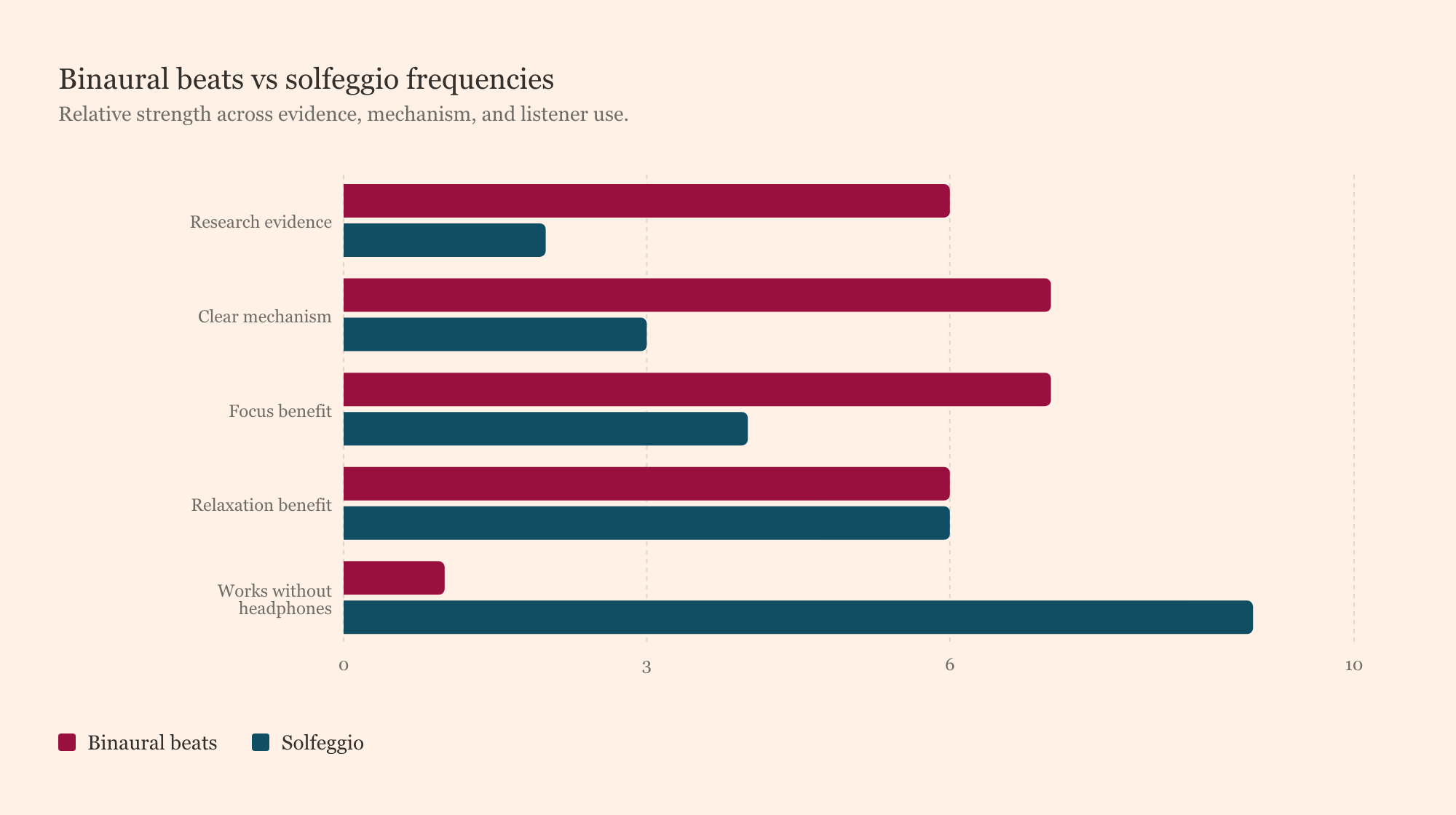
The scientific backing for these approaches varies significantly. Binaural beats have been studied more extensively, with research showing measurable effects on brainwave activity, attention, and mood in controlled studies.
A 2016 meta-analysis found that binaural beats can influence cognitive performance, with the most consistent effects observed in attention and working memory tasks. Studies have also documented changes in anxiety levels, pain perception, and sleep quality.
Solfeggio frequencies, while popular in alternative wellness communities, have limited peer-reviewed research supporting their specific healing claims. However, general research on music therapy and pure tones suggests that certain frequencies can influence mood, stress levels, and physiological responses.
Practical Differences in Usage
Binaural Beats Requirements
- Must use stereo headphones for effectiveness
- Typically require 15-30 minutes of consistent listening
- Volume should be comfortable, not overpowering
- Effects often fade shortly after stopping
Solfeggio Frequencies Flexibility
- Can be played through speakers or headphones
- Often incorporated into ambient music or nature sounds
- Listening duration varies from minutes to hours
- May be used as background audio during other activities
Which Approach Works Best for Different Goals?
For Enhanced Focus and Productivity
Binaural beats typically provide more targeted results for cognitive enhancement. Beta and gamma frequency ranges (12-40 Hz) have shown measurable improvements in attention and mental performance in research studies.
Best choice: Binaural beats in the 15-20 Hz range for general focus, or 40 Hz for peak cognitive performance.
For Relaxation and Stress Relief
Both approaches can be effective for relaxation, but through different pathways. Binaural beats in the alpha range (8-12 Hz) can guide your brain into a calm but alert state, while solfeggio frequencies like 528 Hz may provide a more gentle, ambient relaxation experience.
Best choice: Try both and see which feels more natural and sustainable for your relaxation practice.
For Sleep and Recovery
Binaural beats in the delta range (0.5-4 Hz) directly target brainwave patterns associated with deep sleep. This makes them potentially more effective for sleep enhancement than solfeggio frequencies.
Best choice: Delta binaural beats for targeted sleep improvement.
For Meditation and Spiritual Practice
Solfeggio frequencies often integrate more naturally into meditation practices, especially for those drawn to their spiritual and historical significance. The pure tones can serve as focal points for concentration without requiring specific brainwave entrainment.
Best choice: Personal preference plays a larger role here—try both during meditation sessions.
Finding Your Personal Preference
The effectiveness of either approach depends largely on individual factors including:
- Your sensitivity to different sounds and frequencies
- Personal beliefs about healing and wellness
- Specific goals and desired outcomes
- Lifestyle and listening preferences
- Consistency of practice
Getting Started: Practical Recommendations
Week 1-2: Test Binaural Beats
- Start with alpha frequencies (10 Hz) for 15-20 minutes daily
- Use quality headphones in a quiet environment
- Track your mood and focus levels before and after sessions
Week 3-4: Try Solfeggio Frequencies
- Begin with 528 Hz for general well-being
- Listen through speakers or headphones as preferred
- Experiment with different durations and settings
Week 5+: Compare and Combine
- Evaluate which approach felt more effective
- Consider alternating between methods for different goals
- Some people benefit from using both approaches at different times
Conclusion: The Best Choice Is Personal
While binaural beats have stronger scientific support for cognitive and sleep applications, solfeggio frequencies offer a more flexible and spiritually-oriented approach to sound therapy. The "best" choice ultimately depends on your individual goals, preferences, and responses to each method.
Consider starting with binaural beats if you're seeking measurable changes in focus, sleep, or cognitive performance. Choose solfeggio frequencies if you're drawn to their historical significance, prefer more flexibility in listening, or are incorporating them into existing meditation or wellness practices.
Remember that consistency matters more than perfection—whichever approach you choose, regular practice will yield better results than sporadic sessions with either method.