What Are Beta Waves?
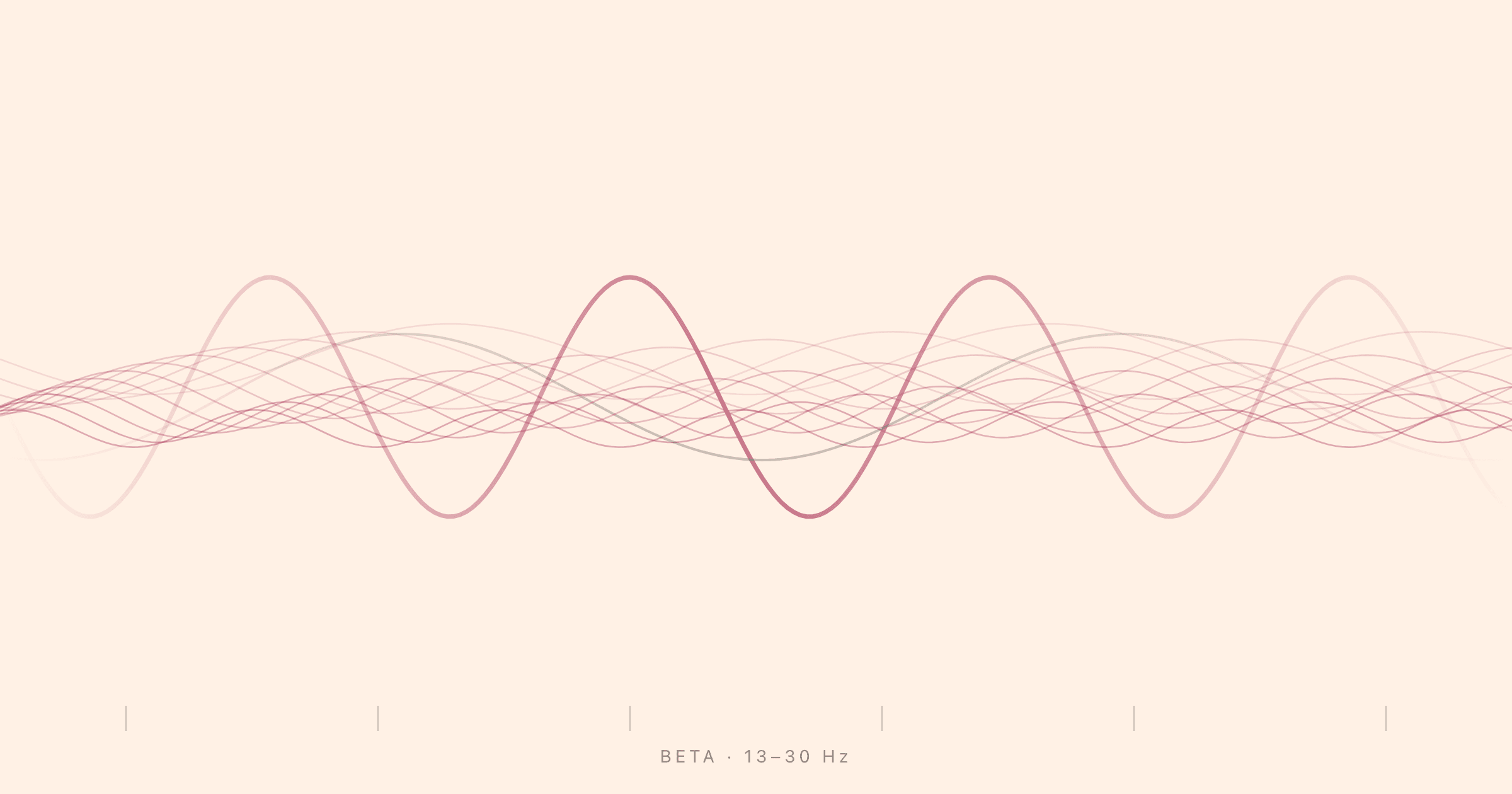
Beta waves are brain waves that oscillate at 13-30 Hz. They're the dominant frequency when you're awake, alert, and engaged in active thinking. Right now, as you read and process this information, your brain is producing beta waves.
Beta is the brain state of action—when you're working, solving problems, making decisions, or having an engaging conversation.
Types of Beta Waves
Low Beta (12-15 Hz)
Relaxed but alert. Good for absorbing information, reading, and light mental work. The bridge between calm alpha and active beta.
Mid Beta (15-20 Hz) ★ Sweet Spot
Active thinking and focus. Ideal for most work tasks, problem-solving, and engaged concentration. The sweet spot for productivity.
High Beta (20-30 Hz)
Intense focus, complex analysis, or anxiety. Useful in short bursts but can lead to stress if sustained too long.
Benefits of Beta Activity
- Clear thinking — Logical, sequential thought processes
- Active concentration — Sustained attention on tasks
- Problem-solving — Analytical and critical thinking
- Verbal processing — Reading, writing, conversation
- Decision making — Evaluating options and choosing
Beta Waves vs. Other Brain States
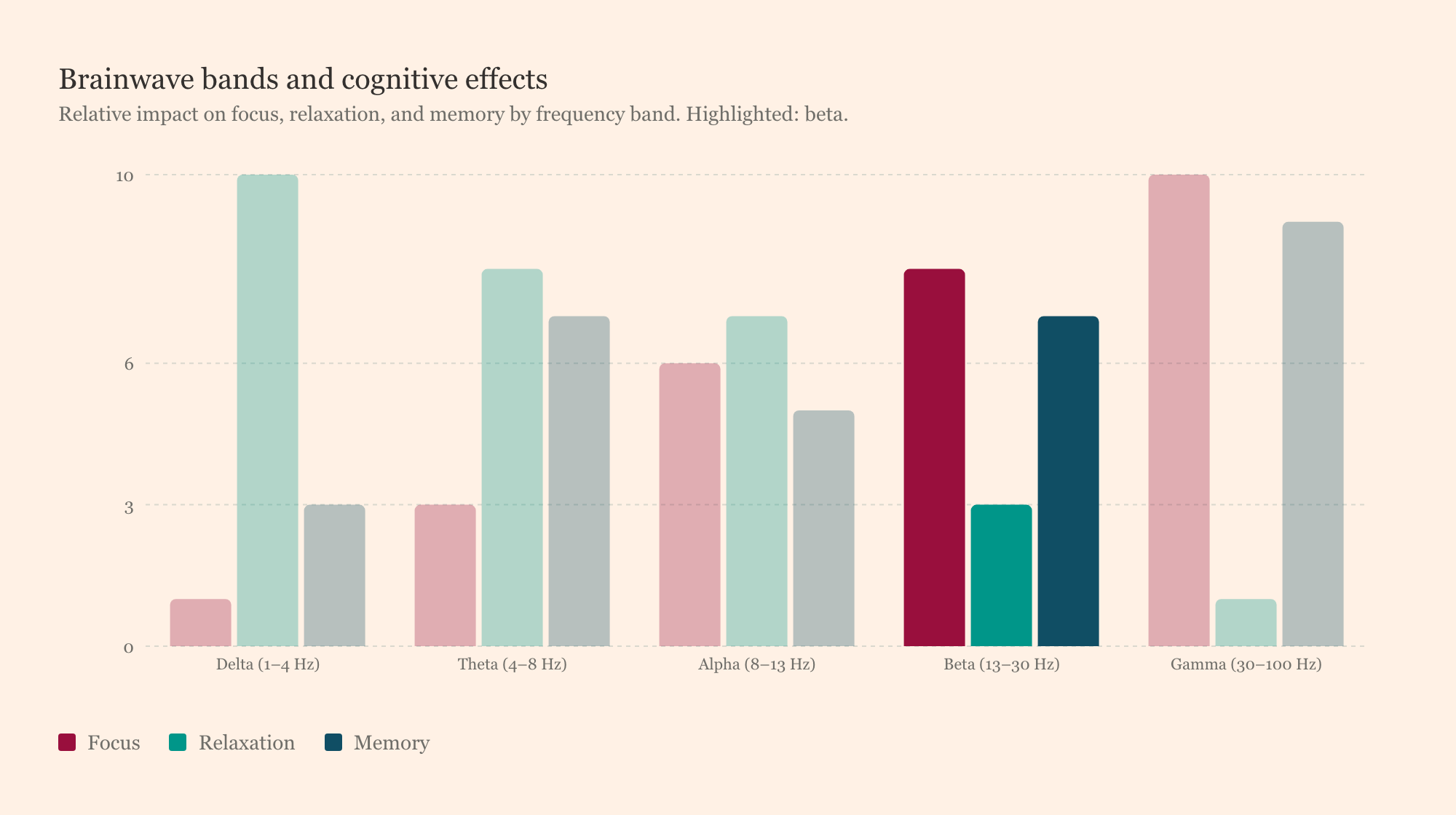
| Wave Type | Frequency | State |
|---|---|---|
| Delta | 0.5-4 Hz | Deep sleep |
| Theta | 4-8 Hz | Drowsy, dreamy, creative |
| Alpha | 8-13 Hz | Relaxed, calm focus |
| Beta | 13-30 Hz | Active thinking, alertness |
| Gamma | 30-100 Hz | Peak concentration, insight |
When Beta Waves Are Best
Beta is ideal for tasks requiring active engagement:
- Writing and editing
- Coding and debugging
- Data analysis
- Project planning
- Meetings and discussions
- Learning new skills
- Responding to emails
The Downside of Too Much Beta
While beta is essential for productivity, too much high beta activity can lead to:
- Anxiety — Racing thoughts and worry
- Mental fatigue — Burnout from sustained intensity
- Tension — Physical stress from mental overwork
- Insomnia — Difficulty calming the mind for sleep
This is why techniques like the Pomodoro method are valuable—they build in breaks that allow your brain to shift from beta to more relaxed states.
How to Optimize Beta Activity
- Take regular breaks — Shift to alpha/theta periodically
- Use ambient music — Helps maintain steady mid-beta without anxiety
- Stay hydrated — Dehydration impairs cognitive function
- Manage caffeine — Supports beta but can push into high beta
- Time-box tasks — Pomodoro technique prevents burnout
Optimize Your Focus
Tomatoes combines Pomodoro timing with ambient focus music to help you maintain productive beta activity without burning out. Built-in breaks let your brain recover, while curated music keeps you in the zone.